Orchidectomy – Radical

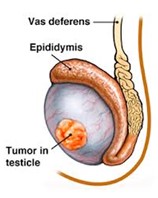
Why is it done?

  • For testis cancer.
  • For testis lesions highly suspicious of testis cancer.
How is it done?

  • This is done under general anesthetic.
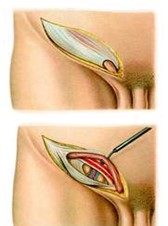
  • A single incision is made in the groin. The underlying muscle layers are split for good oncological control.
  • The affected testis and spermatic cord are then surgically removed through this incision.
  • A metal clip may be left right at the internal inguinal ring, as a future marker, should radiotherapy be required.
  • Subcutaneous sutures (which need not be removed) are used, unless stated otherwise.
  • A dressing is then applied, which should be removed after 72 hours.
  • A local anesthetic is injected into the wound, thus giving post-operative pain relief for the next 4-6 hours.
  • A drain may also be left for 24-48 hours to prevent the collection of serous fluids
 

What to expect after the procedure

  • Any anesthetic has its risks, and the anesthetist will explain such risks.
  • Bleeding is a common complication. If   concerned call the hospital.
  • A hematoma (blood collection under the skin) may form and needs to be reviewed as soon as possible.
  • An infection of the wound may occur and requires immediate attention.
  • Owing to the nature of the surgery and the soft skin of the scrotum, bruising may appear much worse than it is and is no cause for alarm.
  • DANGER SIGNS: A scrotum that swells immediately to the size of a football, fever, or pus. Contact Dr Schoeman or the hospital immediately as this occurs in up to 15 % of all     cases.


What next?

  • The dressing should be kept dry for the initial 72 hours after surgery.
  • The dressing should then be removed in a bath. It should be soaked until it comes off with ease.
  • The dressing may sometimes adhere to the wound causing slight bleeding on removal. Don’t panic, the bleeding will stop.
  • Patients should schedule a follow-up appointment with Dr Schoeman within 2 weeks to review pathology and arrange subsequent management.
  • There will be signs of bruising for at least 10 days.
  • The suture-line will be hard and indurated for at least 8-10 weeks.
  • PLEASE CONTACT THE HOSPITAL DIRECTLY WITH ANY POST-OPERATIVE CONCERNS AND RETURN TO THE     HOSPITAL IMMEDIATELY SHOULD THERE BE ANY SIGNS OF SEPSIS.


NB! Regular self-examination highly recommended.

Wes Orchidectomy Radical

Radical Orchidectomy

Inguinal incision with surgical removal of a testis and its cord for a lesion suspicious for testis cancer, with / without the placement of a prosthesis.

Why is it done?

  • For testis cancer.
  • For lesions highly suspicious of testis cancer.

How is it done?

  • This is done under general anesthetic.
  • A single incision is made in the groin. The underlying muscle layers are split for good oncological control.
  • The affected testis and spermatic cord is then surgically removed through this incision.
  • A metal clip may be left right at the internal inguinal ring, as a future marker, should radiotherapy be required.
  • Subcutaneous sutures (which need not be removed) are used, unless stated otherwise by Dr Schoeman.
  • A dressing is then applied, which should be removed after 72 hours.
  • A local anesthetic is injected into the wound, thus giving post-operative pain relief for the next 4-6 hours.
  • A drain may also be left for 24-48 hours to prevent the collection of serous fluids.

NB! Regular self-examination highly recommended.

What to expect after the procedure

  • Any anesthetic has its risks, and the anesthetist will explain such risks.
  • Bleeding is a common complication. If concerned call the hospital.
  • A hematoma (blood collection under the skin) may form and needs to be reviewed by Dr Schoeman as soon as possible.
  • An infection of the wound may occur and requires immediate attention.
  • Owing to the nature of the surgery and the soft skin of the scrotum, bruising may appear much worse than it is and is no cause for alarm.
  • DANGER SIGNS: A scrotum that swells immediately to the size of a football, fever, or puss. Contact Dr Schoeman or the hospital immediately as this occurs in up to 15 % of all cases.

What next?

  • The dressing should be kept dry for the initial 72 hours after surgery.
  • The dressing should then be removed in a bath. It should be soaked until it comes off with ease.
  • The dressing may sometimes adhere to the wound causing slight bleeding on removal. Don’t panic, the bleeding will stop.
  • On discharge a prescription may be issued for the patient to collect.
  • Patients should schedule a follow-up appointment with Dr Schoeman within 2 weeks to review pathology and arrange subsequent management.
  • There will be signs of bruising for at least 10 days.
  • The suture-line will be hard and indurated for at least 8-10 weeks.
  • Sick leave will be granted for 14 days.
  • Please don’t hesitate to direct any further queries to Dr Schoeman’s rooms.
  • PLEASE CONTACT THE HOSPITAL DIRECT WITH ANY POST-OPERATIVE CONCERNS AND RETURN TO THE HOSPITAL IMMEDIATELY SHOULD THERE BE ANY SIGNS OF SEPSIS.

NB! You are required to bring 2 pairs of tight new undies for post-operative scrotal support.


Download Information Sheet

Wes Orchidectomy Radical

Varicocelectomy – Laparoscopic

Ligation of the testicular veins as they enter the retroperitoneal space through the internal inguinal ring.

Why is it done?

  • Painful scrotal varices
  • Male infertility
  • Exclude: Renal mass causing this!

How is it done?

  • This procedure is done under general anesthetic.
  • Two options are available: Laparoscopic and open (inguinal/flank).
  • Laparoscopy: involves 3 small incisions spaced in a triangle on the lower abdomen.
  • The veins are clipped and cut as they enter the abdomen from the scrotum.
  • Subcutaneous skin sutures (which need not be removed) are used in closing
  • A dressing is then applied, which should be removed after 72 hours.
  • A local anaesthetic is injected into the wound, thus giving post-operative pain relief for the next 4-6 hours.
  • A catheter will be inserted overnight.

What to expect after the procedure?

  • Any anaesthetic has its risks and the anaesthetist will explain such risks.
  • Bleeding is a common complication.
  • A haematoma (blood collection under the skin) may form and needs to be reviewed by Dr Schoeman as soon as possible. Bruising is normal.
  • An infection of the wound may occur and requires immediate review.
  • Shoulder pain, as air is trapped under the diaphragm.
  • A further complication may be that the testis may become smaller after the operation.
  • DANGER SIGNS: A wound that swells immediately, fever, or puss. Contact Dr Schoeman or the hospital immediately as this may occur in up to 10-15% of all cases.
  • There is up to a 50-60% recurrence rate after any procedure

What next?

  • The dressing should be kept dry for the initial 72 hours after surgery and then removed by soaking in a bath until it comes off easily.
  • The dressing may sometimes adhere to the wound causing slight bleeding on removal. Don’t panic, the bleeding will stop.
  • On discharge, a prescription may be issued for patients to collect.
  • Patients should schedule a follow-up appointment with Dr Schoeman 2 weeks after the procedure.
  • There will be signs of bruising for at least 10 days.
  • The suture-line will be hard and indurated for at least 8-10 weeks.
  • Sick leave will be granted for 14 days.
  • Please direct any further queries to Dr Schoeman’s rooms.
  • PLEASE CONTACT THE HOSPITAL DIRECT WITH ANY POST-OPERATIVE CONCERNS AND RETURN TO THE HOSPITAL SHOULD THERE BE ANY SIGNS OF SEPSIS.


Download Information Sheet

Wes Varicocoelectomy Laparoscopic

Varicocoelectomy – Open

Open infra-inguinal ligation of testicular vein-plexus


Why is it done?

  • Painful scrotal varices.
  • Male infertility.
  • Exclude: Renal mass causing this!

How is it done?

  • This procedure is done under general anesthetic.
  • Two options are available: Laparoscopic and open (inguinal/flank),
  • Open inguinal approach: A single incision is made in the groin overlying the spermatic cord. The underlying muscle layers are then opened.
  • The spermatic cord is isolated and opened. Each individual vein is isolated and tied off individually taking care not to injure the artery, or vas.
  • Subcutaneous skin sutures (which need not be removed) are used in closing, unless stated otherwise by Dr Schoeman.
  • A dressing is then applied, which should be removed after 72 hours.
  • A local anesthetic is injected into the wound, thus giving post-operative pain relief for the next 4-6 hours.
  • A catheter will be inserted overnight.

What to expect after the procedure?

  • Any anesthetic has its risks, and the anesthetist will explain such risks.
  • Bleeding is a common complication.
  • A hematoma (blood collection under the skin) may form and needs to be reviewed by Dr Schoeman as soon as possible. Bruising is normal.
  • An infection of the wound may occur and requires immediate review.
  • A further complication may be that the testis may become smaller after the operation.
  • DANGER SIGNS: A wound that swells immediately, fever, or puss. Contact Dr Schoeman or the hospital immediately as this may occur in up to 10-15% of all cases.
  • There is high recurrence rate after any procedure.

What next?

  • The dressing should be kept dry for the initial 72 hours after surgery and then removed by soaking in a bath until it comes off easily.
  • The dressing may sometimes adhere to the wound causing slight bleeding on removal. Don’t panic, the bleeding will stop.
  • On discharge, a prescription may be issued for patients to collect.
  • Patients should schedule a follow-up appointment with Dr Schoeman 2 weeks after the procedure.
  • There will be signs of bruising for at least 10 days.
  • The suture-line will be hard and indurated for at least 8-10 weeks.
  • Sick leave will be granted for 14 days.
  • Please direct any further queries to Dr Schoeman’s rooms.
  • PLEASE CONTACT THE HOSPITAL DIRECT WITH ANY POST-OPERATIVE CONCERNS AND RETURN TO THE HOSPITAL SHOULD THERE BE ANY SIGNS OF SEPSIS.


Download Information Sheet

Wes Varicocoelectomy Open