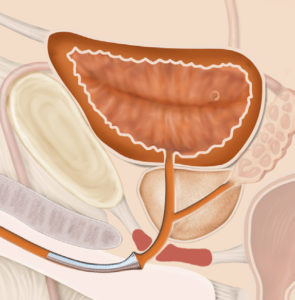
Supra-Pubic Catheter

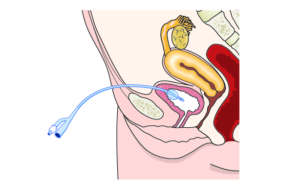
Invasive placement of a silicone tube in a percutaneous supra-pubic puncture site. This is secured inside the bladder (with a balloon) and attached to a drainage bag on the outside, in order to drain an obstructed bladder.
Why is it done?

  • This can be placed as an emergency for patients in acute urinary retention
  • Patients requiring long term catheterization especially spinal cord injury patients
  • Failed urethral catheterization
  • Severe prostate obstruction
  • Urethral strictures
  • Severe sepsis of the urogenital area where diverting urine away from the area is advisable
  • Urethral catheterization impossible


How is it done?

  • Usually done under general anesthesia.
  • This is done as a sterile procedure; therefore, the genital area and suprapubic area will be cleaned with a non-abrasive dis-infectant.
  • A flexible cystoscopy will be placed to inspect the bladder, allow filling with saline and visualize the puncture with a cannula from the skin (outside)
  • A 1cm incision is then made in the midline of the lower abdomen, approximately 2cm above the pubic bone
  • An appropriate size catheter (14-16Fr) will be inserted using a trocar method
  • Correct placement is confirmed with the cystoscopy (direct vision)
  • An anchoring balloon will be inflated with 10cc of sterile water.
  • A drainage urine bag will be attached
  • The catheter will be secured to your leg. (check that this is always secured)


Complications

  • Side effects from a general anesthetic.
  • Bleeding from the wound site. (Anti-coagulants should have been ceased a week prior)
  • Depending on the size of your bladder a possible bowel injury could occur, the odds of this happing will be discussed with you prior to your procedure.


Download Information Sheet

Wes Catheters Suprapubic Catheter CHANGE

Copyright 2019 Dr Jo Schoeman

Urethral Dilatation

Dilatation of urethral stricture. Dine in combination with urethroscopy and placement of IDC is advocated on daily basis at home as management of urethral stricture.

Why is it done?

  • To treat a narrowing in the urethra which has formed due to previous damage/injury to the urethra.
  • Causes: after bypass surgery where a drop in blood pressure has caused an area of low blood supply to the urethra; trauma to the urethra (pelvic fractures/ urethral instrumentation); and sexually transmitted diseases.
  • The procedure placing a dilator un your urethra on a daily basis.
  • It aids in keeping your urethra open and prevents eventual kidney damage / failure.

How is it done?

  • Patients will receive a local anesthetic.
  • A urethroscopy is performed by placing a flexible camera in the urethra, with the help of a lubricant jelly and an irrigate (fluid), to identify the stricture.
  • A guidewire is slipped through the opening of the narrowing.
  • The camera is removed.
  • The stricture is dilated using a graduated S dilators over the guide wire.
  • Prophylactic antibiotics may be given to prevent infection.

What to expect after the procedure?

  • It may be slightly uncomfortable, please don’t hesitate to tell jo and request sedation if required.
  • A catheter will be inserted in the urethra and bladder. This will remain in the bladder for 3 days.
  • Catheters can be very irritating and cause some discomfort.
  • Blood stained urine will be present.
  • Lower abdominal discomfort will persist for a few days.
  • NB! Each person is unique and for this reason symptoms may vary!


What next?

  • Patients will be sent home with a catheter for 3 days after receiving thorough catheter care instructions.
  • Arrangements will be made to remove the catheter on day 3.
  • There may be some blood in the urine. This can be remedied by drinking plenty of fluids until it clears.
  • A referral will be done to BlueCare Nurses, who will assess you to instruct you on daily self-dilatation.
  • PLEASE CONTACT THE HOSPITAL WITH ANY POST-OPERATIVE CONCERNS AND RETURN TO THE HOSPITAL IMMEDIATELY SHOULD THERE BE ANY SIGNS OF SEPSIS.

Download Information Sheet

Wes Urethroscopy & Urethral Dilatation

Urethrectomy

Removal of urethra. Usually in adjunct to a radical cystectomy. Occasionally done some time after a cystectomy where recurrences occur in urethra.


Why is it done?

  • As part of the treatment for aggressive localized Urothelial carcinoma of the bladder.
  • T1G3, > T2 disease.
  • Primary Urethral disease with:
    • Urothelial Carcinoma.
    • Squamous cell carcinoma.
    • Secondary metastatic disease to Urethra: Melanoma, Lung cancer, Breast cancer (all these are rare).
  • Advanced disease may involve a penectomy.
  • The procedure is part of the radical cystectomy, radical cysto-prostatectomy or could be and adjunct later on when recurrences are found with surveillance.
  • Part of a necrotic inflammatory condition ie: Fourniers Gangrene.

How is it done?

  • This procedure is done under general anesthetic.
  • Legs are placed in a lithotomy position.
  • A single incision is made on the midline raphe on the perineum (area between scrotum and anus). Sutures will be dissolvable.
  • The Corpora Spongiosum with the urethra inside it is mobilized off the Corpora Cavernosa.
  • Urethral meatus is removed distal and glans is closed.
  • Proximally the urethra is taken up to the sphincter and freed.
  • You will have already had a diversion of the urine with an ileostomy, or this will be done with your cystectomy part of the operation.
  • A drain will be left for 24-48 hours to prevent the collection of serous fluids.
  • A dressing is then applied, which should be removed after 72 hours.

What to expect after the procedure?

  • Any anesthetic has its risks, and the anesthetist will explain all such risks.
  • If this is the only operation you have undergone, you will be sent home as soon as the drain is removed on D2 or D3.
  • Swelling is a common complication.
  • A hematoma (blood collection under the skin) may form and needs to be reviewed by Dr Schoeman as soon as possible. Bruising is normal.
  • An infection of the wound may occur and requires immediate attention.
  • Owing to the area of the surgery the wound should be kept clean and dry.
  • DANGER SIGNS: A wound that swells immediately, fever, or puss. Please contact Dr Schoeman or the hospital immediately as this may occur in up to 15 % of all cases.

What next?

  • The dressing should be kept dry for the initial 72 hours after surgery and then soaked in a bath until it comes off easily.
  • The dressing may sometimes adhere to the wound causing slight bleeding on removal. Don’t panic, the bleeding will stop.
  • On discharge a prescription may be issued for patients to collect.
  • There will be signs of bruising for at least 10 days.
  • The suture-line will be hard and indurated for at least 8-10 weeks.
  • PLEASE CONTACT THE HOSPITAL DIRECTLY WITH ANY POST-OPERATIVE CONCERNS AND RETURN TO THE HOSPITAL IMMEDIATELY SHOULD THERE BE ANY SIGNS OF SEPSIS.

Download Information Sheet

Wes Urethrectomy

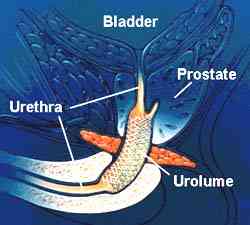
UROLUME / Memocath Urethral Stent

Minimal invasive management for the relief of lower urinary tract symptoms (LUTS) or urinary retention caused by a urethral stricture

Why is it done?

  • This procedure is performed when concentric scarring in the urethra causes LUTS and /or Urinary Retention
  • Symptoms include: a weak stream, nightly urination, frequent urination, inability to urinate, (LUTS) and Urinary Retention
  • This is alternative to an invasive procedure where long periods of anesthetic are contraindicated.
  • Usually for chronically sick patients who cannot undergo surgery yet are active enough not to want a permanent catheter.
  • Patients who don’t want to / cannot do intermittent self-dilatation of these strictures
  • Don’t want a permanent Indwelling Catheter

How is it done?

  • Patients will receive sedation with local anesthetic gel placed in the urethra.
  • A cystoscopy is performed by placing a camera in the urethra with the help of a lubricant jelly and an irrigate (fluid).
  • The measurements of the urethral are taken (length)
  • Appropriate length coil is chosen.
  • The device is placed through the cystoscopy sheath, to sit snug in the prostate urethra stretching over the length of the stricture
  • Prophylactic antibiotics will be given to prevent any infections.


Complications

Side–effects

  • Persistent pain in penile shaft
  • Pain in Perineum when seated
  • Migration of the device
  • Erosion of device
  • Possible infection
  • Long term yields the risk for encrustation and recurrent infections
  • NB! Each person is unique and for this reason, symptoms vary!


Download Information Sheet

Wes UROLUME Urethral Stent

Copyright 2019 Dr Jo Schoeman