Rectus Fascial Sling

Why is it done?

  • Stress urinary incontinence
  • A combination of stress incontinence and detrusor over-activity of which DO is the lesser
  • Involuntary urine leakage with any exertion, coughing or sneezing
  • Risk factors
    •  More than 2 pregnancies, big babies
    • Complicated deliveries, episiotomy
    • Smokers
    • Being overweight
    • Diabetes
  • Where Intrinsic Sphincter Deficiency has been proved due to a failed previous sling
  • Failed previous incontinence procedures

How is it done?

  • This procedure is done under a spinal/general anesthetic, as decided by the anesthetist.
  • The legs will be elevated into the lithotomy position.
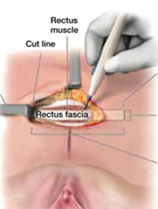
  • A 10cm horizontal incision is made above the pubic bone.
  • A 10-15cm X 5cm strip of rectus sheath fascia is harvested and prepared with 2 Prolene or Nylon arms
  • A small incision is made in the vagina.
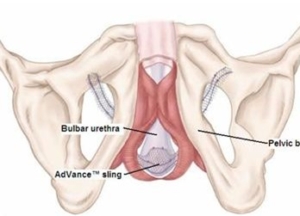
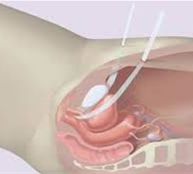
  • The sling is placed behind the pubic bone and brought to the skin above the pubic bone, through the incision.
  • The sling is placed with some tension.
  • The bladder will be inspected with a cystoscopy to exclude any injuries to the bladder wall.
  • The wounds are closed with dissolvable sutures and/or skin glue.
  • A local anesthetic is given for pain relief.
  • A urinary catheter is placed for 24hrs.
  • A vaginal plug will also be placed.
  • The catheter and plug will be removed early the next morning.
  • The patient’s urine output will be measured each time they urinate, and the residual will be measured. (Patients will be required to do this up to 3 times.)
  • If the residual amount of urine is more than 1/3 of the total bladder capacity, the patient may have to self-catheterize, until the residual volume is acceptable.
  • Prophylactic antibiotics will be given to prevent infection.


Complications

  • Patients will have a trial of void without catheter the next day.
  • Patients will be discharged as soon as they can completely empty the bladder.
  • Patients may be required to self-catheterize for a week or two.
  • The sling may be loosened if placed too tight, requiring going back to the operating room.
  • Patients may initially suffer from urge incontinence, but this will improve within the next 6 weeks.
  • Allow 6 weeks for symptoms to stabilize.
  • May also have abdominal pain with coughing and sneezing due to tension on rectus muscle
  • There may be some blood in the urine. This can be remedied by drinking plenty of fluids until it clears.


Download Information Sheet

Wes Sling Rectus Fascial

Copyright 2019 Dr Jo Schoeman

Retropubic Mid-Urethral Synthetic Sling Procedure

Placement of a minimally invasive polypropylene sling in the retropubic space with a flexible cystoscopy.

Also view the section on urinary incontinence in the TAB above.

Why is it done?

  • Stress urinary incontinence.
  • A combination of stress incontinence and lesser degree of detrusor overactivity – mixed incontinence.
  • Involuntary urine leakage with any exertion, coughing or sneezing.
  • Risk factors:
    • More than 2 pregnancies, big babies.
    • Complicated deliveries, episiotomy.
    • Smokers.
    • Being overweight.
    • Diabetes
  • Where Intrinsic Sphincter Deficiency has been proved due to a failed previous sling.

How is it done?

  • This procedure is done under a spinal / general anesthetic, as decided by the anesthetist.
  • The legs will be elevated into the lithotomy position.
  • A small incision is made in the vagina. The sling is placed behind the pubic bone and brought to the skin above the pubic bone, with a small incision.
  • A synthetic mesh is used after in detail consultation with yourself
  • This will be used as a last resort
  • You will be made aware of the TGA mesh withdrawal in Australia and Europe – especially involving mesh used for vaginal prolapse surgery
  • The sling is placed tension free.
  • If you have a suspected Intrinsic Sphincter Deficiency (ISD), the sling may be placed tighter.
  • The bladder will be inspected with a Cystoscopy to exclude any injuries to the bladder wall.
  • The wounds are closed with dissolvable sutures and/or skin glue.
  • A local anesthetic is given for pain relief.
  • A urinary catheter is placed for 24hrs.
  • A vaginal plug will also be placed.
  • The catheter and plug will be removed early the next morning.
  • The patient’s urine output will be measured each time they urinate, and the residual will be measured. (Patients will be required to do this up to 3 times).
  • If the residual amount of urine is more than 250-300 cc, the patient may have to self-catheterize, until the residual volume is acceptable.
  • Prophylactic antibiotics will be given to prevent infection.

What to expect after the procedure?

  • Any anesthetic has its risks, and the anesthetist will explain all such risks.
  • Complications:
    • hemorrhaging, requiring blood transfusion <1%.
    • bladder perforation, requiring an open repair <1%.
  • Patients will wake up with a catheter in the urethra and bladder. This will remain in the bladder for 24 hrs.
  • Above pubic bone area discomfort/pain will persist for a few days, but this will subside or settle.
  • If you cannot urinate after 2-3 attempts, the sling may be readjusted.
  • You may be required to self catheterize for a week or two.
  • If there is no improvement the sling may be cut, to allow spontaneous urination.
  • NB! Each person is unique and for this reason symptoms may vary!


What next?

  • Patients will have a trial of void without catheter the next day.
  • Patients will be discharged as soon as they can completely empty the bladder.
  • Patients may be required to self-catheterize for a week or two.
  • Patients may initially suffer from urge incontinence and frequency, but this will improve within the next 6 weeks.
  • Your flow will be slower.
  • Allow 6 weeks for symptoms to stabilize.
  • There may be some blood in the urine. This can be remedied by drinking plenty of fluids until it clears.
  • On discharge a prescription may be issued for patients to collect.
  • Patients are to schedule a follow-up appointment in 6 weeks.
  • Please direct all queries to Dr Schoeman’s rooms.
  • PLEASE CONTACT THE HOPSITAL DIRECT WITH ANY POST-OPERATIVE CONCERNS AND RETURN TO THE HOSPITAL IMMEDIATELY SHOULD THERE BE ANY SIGNS OF SEPSIS.

Remember to discuss mesh and its complications with Jo. This is used as a last resort, and you should be aware of the risks!


Download Information Sheet

Wes Mid-urethral Retropubic sling

Sacro Neuromodulation – Second Stage

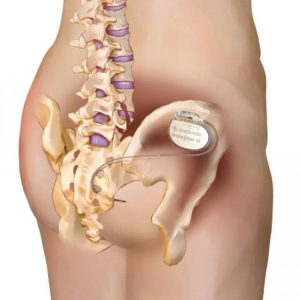
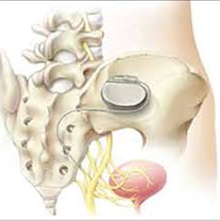
When the Temporary leads for SNM have proven to have given an improvement in symptoms a permanent lead placement is done

The aim was to alter the neurotransmission from the Spinal Centre to the Bladder

Why is it done?

  • To alter the neurotransmission from the spinal bladder center to the bladder and treat your overactive bladder.
  • Refractory overactive bladders with urge urinary incontinence. OAB
  • Under active Bladders – UAB
  • Chronic pelvic pain – CPP
  • Fecal Incontinence
  • Causative factors:
    • Undetermined
    • Neurogenic causes such as Multiple Sclerosis
  • When at least 2 anticholinergic drugs or B-adrenergic drugs have failed to have provided an improvement in symptoms of OAB
  • An alternative for ISC or permanent IDC for UAB
  • The aim was to alter the neurotransmission from the Spinal Centre to the Bladder
  • This initial 2-week trial would have provided > 50% improvement in urinary symptoms


How is it done?

  • Sedation or GA is administered with a local anesthetic
  • You will be placed prone (on your stomach) with lower back and buttocks exposed
  • The tined lead that has been placed in the S3 foramina of the sacrum has been connected to an external battery
  • The external lead connection will be removed, and a larger pocket will be made for the permanent subcutaneous battery and connection
  • Subcutaneous sutures will be placed, which will dissolve.


Complications

  • Some local discomfort may be experienced.
  • A nerve stimulator may provide abnormal sensations, which your body adjusts to.
  • A Representative from Medtronic will be in contact with you to check on your settings and responses.
  • NB! Each person is unique and for this reason, symptoms may vary!


Download Information Sheet

Wes Sacro Neuro Modulation-Second Stage Permanent leads

Copyright 2019 Dr Jo Schoeman

Urodynamic Studies and Cystoscopy – Female

  • Urodynamics is a collective name for a number of tests of bladder functions.
  • The main test is called Cystometry, which measures your bladder’s ability to store and pass urine.
  • Flow Rate measures the top speed and average speed of your urine flow
  • A Voiding Cystogram will be done while you are emptying your bladder to exclude a neurological cause and Vesico-Ureteric Reflux


Why is it done?

Urinary problems, especially incontinence, may affect women of any age. Commonly more in over-65s.

Problems such as these usually increase with age and is associated with a history of spinal injury, the onset of Diabetes, Parkinsons and history of Cerebro-Vascular Incidents. Longstanding bladder outlet obstruction is a common cause.

Your symptoms may include:

  • Loss of urine while coughing, sneezing, laughing or exercising
  • Sudden and/or frequent urge to pass urine, occasional urge incontinence.
  • Getting up at night frequently to pass urine
  • Difficulty in emptying your bladder
  • Recurrent bladder infections

Results from urodynamic tests may demonstrate the reason why you have the symptoms you have, and allows an opportunity to offer you the best treatment for your problems.

How is it done?

  • You may first be asked to pass urine into a special toilet – Flowmeter- to measure how quickly your bladder is able to empty.
  • You may have a bladder scan immediately after you have passed urine to assess how well your bladder has emptied.
  • Following this, a small plastic tube called a catheter will be inserted into your bladder so it can be filled with fluid.
  • It also has a fine sensor on the end which records the pressures in your bladder.
  • A second catheter is placed in the vagina. These lines will record pressures measured in your abdomen.
  • You will be asked to do a series of exercises (cough, laugh, strain) with a full bladder to see how bad your leakage is. This is called a leak test.
  • If no leaking has been observed, these tests may be repeated in the standing position
  • Don’t worry, you will not be expected to do anything which you are not normally able to do easily.
  • Where a neurogenic bladder is suspected, the fluid placed in your bladder will contain radiological contrast medium, to exclude vesicoureteric reflux and to anatomically define the bladder anatomy and posterior urethra.
  • The information contained in this brochure is intended to be used to aid in obtaining a diagnosis and/or evaluate the effects of treatment
  • During the procedure, you will be asked questions about the sensations in your bladder.
  • You will also be asked to do some of the things which might trigger the problem you have (e.g. cough, strain, jog, stand up, or listen to the sound of running water).
  • Let the person doing the test know when your bladder feels full.
  • Finally, you will be asked to empty your bladder again, with the two fine sensors still in place. This will be done with X-ray imaging. The sensors are then removed.
  • Post voided residual volumes are checked either with ultrasound measurement or by aspirating urine through the bladder catheter.
  • This is followed by a Flexible Cystoscopy (see Flexible Cystoscopy)
  • The procedure is now complete, and you can get dressed
  • Jo will discuss the findings with you and formulate management options specific to your problem


Flexible Cystoscopy

  • Once the procedure is done, the area is cleaned again.
  • Local anaesthetic placed again in the urethra
  • A Flexible camera (cystoscope) is passed with water opening the urethra as is progresses.
  • The urethra, prostatic urethra and bladder are inspected.
  • You could experience light bleeding and burning with initial urination afterwards


Complications

  • No matter how carefully the test is performed urine infections can sometimes occur after it.
  • You should drink more water than usual for a day or two to flush out any bacteria.
  • You may be advised to take antibiotics for a short period of time after the test


Download Information Sheet

Wes Urodynamic Studies-Women

Copyright 2019 Dr Jo Schoeman

Urodynamic Studies and Cystoscopy – Male

  • Urodynamics is a collective name for a number of tests of bladder functions.
  • The main test is called Cystometry, which measures your bladder’s ability to store and pass urine.
  • Flow Rate measures the top speed and average speed of your urine flow
  • A Voiding Cystogram will be done while you are emptying your bladder to exclude a neurological cause and Vesico-Ureteric Reflux


Why is it done?

Urinary problems, especially incontinence, may affect men of any age. Commonly more in over-65s.

Problems such as these usually increase with age and are associated with a history of spinal injury, the onset of Diabetes, Parkinsons and history of Cerebro-Vascular Incidents. Longstanding bladder outlet obstruction is a common cause.

Your symptoms may include:

  • Loss of urine while coughing, sneezing, laughing or exercising
  • Sudden and/or frequent urge to pass urine, occasional urge incontinence.
  • Getting up at night frequently to pass urine
  • Difficulty in emptying your bladder
  • Recurrent bladder infections

Results from urodynamic tests may demonstrate the reason why you have the symptoms you have, and allows an opportunity to offer you the best treatment for your problems.


How is it done?

  • You may first be asked to pass urine into a Flowmeter to measure how quickly your bladder is able to empty.
  • You may have a bladder scan immediately after you have passed urine to assess how well your bladder has emptied.
  • Following this, a small plastic tube called a catheter will be inserted into your bladder so it can be filled with fluid.
  • It also has a fine sensor on the end which records the pressures in your bladder.
  • A second catheter is placed in the rectum (men). These lines will record pressures measured in your abdomen.
  • You will be asked to do a series of exercises (cough, laugh, strain) with a full bladder to see how bad your leakage is. This is called a leak test.
  • If no leaking has been observed, these tests may be repeated in the standing position
  • Don’t worry, you will not be expected to do anything which you are not normally able to do easily.
  • Where a neurogenic bladder is suspected, the fluid placed in your bladder will contain radiological contrast medium, to exclude vesicoureteric reflux and to anatomically define the bladder anatomy and posterior urethra.
  • The information contained in this brochure is intended to be used to aid in obtaining a diagnosis and/or evaluate the effects of treatment
  • During the procedure, you will be asked questions about the sensations in your bladder.
  • You will also be asked to do some of the things which might trigger the problem you have (e.g. cough, strain, jog, stand up, or listen to the sound of running water).
  • Let the person doing the test know when your bladder feels full.
  • Finally, you will be asked to empty your bladder again, with the two fine sensors still in place. This will be done with X-ray imaging. The sensors are then removed.
  • Post voided residual volumes are checked either with ultrasound measurement or by aspirating urine through the bladder catheter.
  • This is followed by a Flexible Cystoscopy (see Flexible Cystoscopy)
  • The procedure is now complete, and you can get dressed
  • Jo will discuss the findings with you and formulate management options specific to your problem


Flexible Cystoscopy

  • Once the procedure is done, your old fellow is cleaned again.
  • Local anaesthetic placed again in the urethra
  • A Flexible camera (cystoscope) is passed with water opening the urethra as is progresses.
  • The urethra, prostatic urethra and bladder are inspected.
  • You could experience light bleeding and burning with initial urination afterwards


Complications

  • No matter how carefully the test is performed urine infections can sometimes occur after it.
  • You should drink more water than usual for a day or two to flush out any bacteria.
  • You may be advised to take antibiotics for a short period of time after the test


Download Information Sheet

Wes Urodynamic Studies-Men

Copyright 2019 Dr Jo Schoeman