
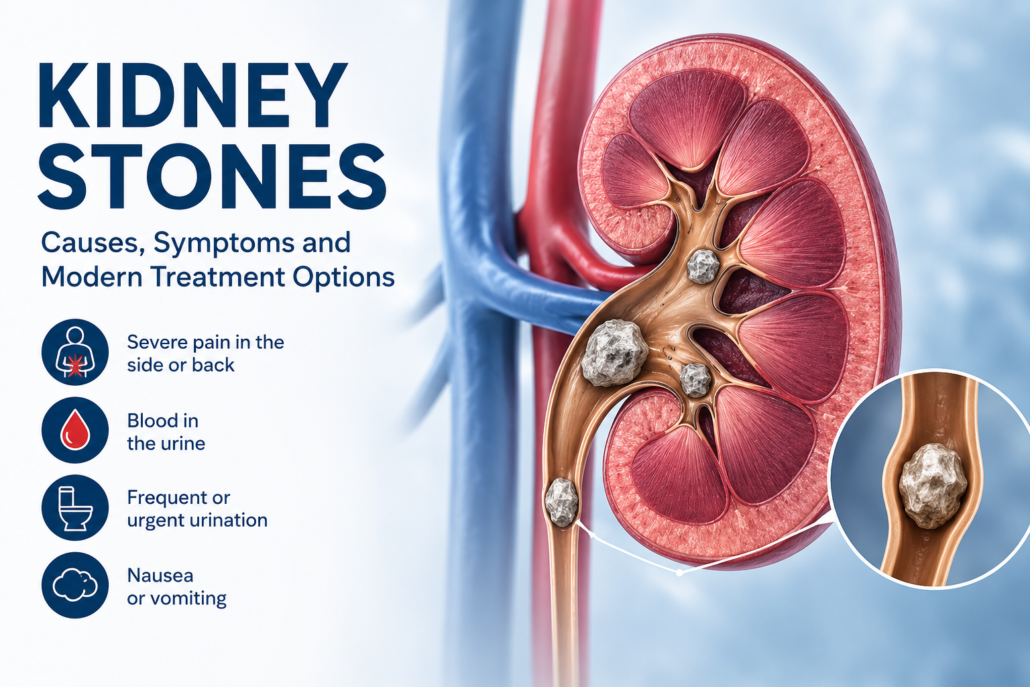
Kidney Stones: Causes, Symptoms and Modern Treatment Options
Kidney stones are a common urinary condition that can cause significant pain and, in some cases, require treatment by a urologist. While some kidney stones are small enough to pass naturally, larger stones may become lodged in the urinary tract and require medical or surgical treatment.
Understanding the symptoms of kidney stones and knowing when to seek medical attention can help prevent complications and ensure appropriate treatment.
What Are Kidney Stones?
Kidney stones are hard deposits that form from minerals and salts within the urine. They develop inside the kidneys but may move into the ureter — the narrow tube that carries urine from the kidney to the bladder.
Kidney stones vary considerably in size. Some are only a few millimetres across and may pass without treatment, while larger stones can obstruct the urinary tract.
There are several types of kidney stones, including calcium stones, uric acid stones, struvite stones and cystine stones. Calcium-based stones are the most common.
What Causes Kidney Stones?
Kidney stones can develop when the urine becomes concentrated, allowing minerals and other substances to crystallise.
Factors that may increase the risk of developing kidney stones include:
- Not drinking enough water
- Hot weather and dehydration
- A previous history of kidney stones
- Family history of kidney stones
- Certain dietary factors
- High levels of calcium, uric acid or other substances in the urine
- Recurrent urinary tract infections
- Certain medications
- Some metabolic and medical conditions
People who have previously experienced kidney stones are also at increased risk of developing another stone in the future.
What Are the Symptoms of Kidney Stones?
A kidney stone may cause no symptoms while it remains inside the kidney. Symptoms often begin when the stone moves into the ureter.
One of the most recognisable symptoms is renal colic — severe pain caused by obstruction of urine flow.
Symptoms can include:
- Sudden and severe pain in the side or back
- Pain that travels towards the lower abdomen or groin
- Pain that comes and goes in waves
- Blood in the urine
- Nausea or vomiting
- Frequent or urgent urination
- Pain or burning when urinating
The location and severity of the pain can change as the stone moves through the urinary tract.
When Is a Kidney Stone an Emergency?
Kidney stone pain can be extremely uncomfortable, but certain symptoms require urgent medical assessment.
Seek urgent medical attention if kidney stone symptoms are accompanied by fever, chills, difficulty passing urine or feeling significantly unwell.
A stone that obstructs the urinary tract while an infection is present can become a medical emergency and may require urgent drainage of the kidney.
How Are Kidney Stones Diagnosed?
Your doctor or urologist may use several investigations to determine whether a kidney stone is present and assess its size and location.
These may include:
- Urine testing
- Blood tests
- Ultrasound
- CT imaging
- Analysis of a previously passed stone
CT scans are commonly used because they can provide detailed information about the size and location of urinary stones.
Once the stone has been identified, treatment depends on factors including its size, position, symptoms and whether it is causing obstruction or infection.
Can Kidney Stones Pass Naturally?
Many small kidney stones can pass through the urinary tract without surgery.
Treatment may involve pain relief, increased fluid intake when appropriate, and monitoring while waiting for the stone to pass. In selected patients, medication may also be prescribed to assist stone passage.
Larger stones or stones that remain lodged within the urinary tract are less likely to pass naturally and may require treatment.
Modern Treatments for Kidney Stones
There are several procedures available for treating kidney stones. The most appropriate treatment depends on the size, location and characteristics of the stone.
Ureteroscopy and Laser Lithotripsy
Ureteroscopy involves passing a small telescope through the urinary tract to locate the stone.
A laser can then be used to break the stone into smaller fragments. These fragments may be removed or allowed to pass naturally.
Because the procedure is performed through the urinary tract, no external surgical incision is usually required.
Shock Wave Lithotripsy
Shock wave lithotripsy uses externally generated shock waves to break selected kidney or ureteric stones into smaller pieces.
The fragments can then pass through the urinary tract.
This treatment is suitable for some stones, although factors such as stone size, location and composition influence whether it is appropriate.
Percutaneous Nephrolithotomy
Very large or complex kidney stones may require percutaneous nephrolithotomy (PCNL).
During this procedure, the kidney is accessed through a small incision in the back, allowing the surgeon to remove or break up larger stones.
PCNL is generally reserved for stones that are too large or complex for less invasive treatments.
Can Kidney Stones Be Prevented?
For people who have experienced kidney stones, prevention is an important part of ongoing care.
One of the most important measures for many patients is maintaining adequate hydration so that the urine remains diluted.
Depending on the type of stone and the individual’s risk factors, prevention may also involve dietary changes, urine testing, blood tests or medication.
Patients who develop recurrent kidney stones may benefit from a metabolic assessment to identify factors contributing to repeated stone formation.
When Should You See a Urologist?
You may benefit from seeing a urologist if you have:
- Recurrent kidney stones
- Persistent pain associated with a urinary stone
- A stone that is not passing naturally
- Blood in the urine
- Recurrent urinary infections associated with stones
- A large kidney stone identified on imaging
- Evidence of urinary obstruction
A urologist can assess the location and size of the stone and recommend whether observation or treatment is appropriate.
Kidney Stone Treatment
Kidney stones can range from a minor problem that resolves naturally to a condition requiring urgent treatment.
Modern urological techniques allow many stones to be treated using minimally invasive procedures such as ureteroscopy, laser lithotripsy and shock wave therapy.
If you have symptoms of kidney stones or have been diagnosed with a urinary stone, a urological assessment can help determine the most appropriate treatment and whether further investigation is required to reduce the risk of future stones.
This information is general in nature and does not replace individual medical advice. If you have severe pain, fever, chills or difficulty passing urine, seek urgent medical attention.
Come and have a chat to your local Brisbane Based Urologist, Dr Jo, to discuss options in management


Leave a Reply
Want to join the discussion?Feel free to contribute!