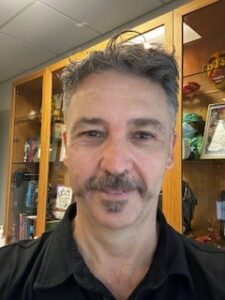
Understanding Urology

Urology is a specialised field of medicine that focuses on the diagnosis and treatment of disorders related to the urinary tract and male reproductive system. We will delve into what urology entails, who is most likely at risk, and what patients can expect when seeking the expertise of Dr. Jo Schoeman.

Understanding Urology:
Urology encompasses a wide range of conditions, including urinary tract infections, kidney stones, bladder issues, prostate disorders, and more. Dr. Jo Schoeman brings a wealth of experience to Brisbane, specialising in the latest advancements in urological care. His commitment to patient-centred care ensures that individuals receive comprehensive and compassionate treatment tailored to their specific needs.


Who Is at Risk:
Various factors can contribute to urological issues, and certain demographics are more susceptible. Men and women of all ages may encounter urological challenges, but risk factors such as age, gender, family history, and lifestyle choices can increase susceptibility. Dr. Jo Schoeman addresses concerns related to both genders, providing expert care for a diverse range of urological conditions.

urologist brisbane, urologist brisbane bulk billing , best urologist brisbane, urologist brisbane wesley hospital

What to Expect When You See Dr. Jo Schoeman:
Patients visiting Dr. Jo Schoeman can anticipate a thorough and personalised approach to their urological health. The journey begins with a comprehensive consultation, where Dr. Schoeman takes the time to understand the patient’s medical history, symptoms, and concerns. Diagnostic tests may be recommended, including imaging studies and laboratory tests, to pinpoint the root cause of the issue.

Dr. Schoeman values open communication and actively involves patients in their treatment plans. Whether it’s a routine check-up, managing a chronic condition, or exploring surgical options, he ensures that patients are well-informed and comfortable throughout the process. With access to state-of-the-art facilities, Dr. Jo Schoeman employs cutting-edge technology to deliver accurate diagnoses and effective treatments.

Choosing Dr. Jo Schoeman as your urologist in Brisbane means choosing a dedicated professional committed to your urological well-being. Whether you’re facing a specific concern or seeking preventive care, Dr. Schoeman’s expertise and patient-centric approach make him a trusted partner in your urological health journey.

Schedule your consultation today and take the first step toward optimal urological wellness with Dr. Jo Schoeman.


Phone : (07) 3371 7288

Fax : (07) 3870 5350

The Steam, Laser-Beam, dream-stream Uro-Team

Building Team Spirit

A healthy cohesive work environment is generally what we all want. Nobody likes to experience those really awful days at work, especially with high stress levels and underlying friction being part of a complex surgery environment.

I am fortunate to have the privilege to work with genuinely nice people every day across all 4 hospitals I work at. I was recently inspired to create a team identity at St Andrew War Memorial Hospital. Maybe the fact that the other urology practice at the hospital had designed their own cap…  I thought I would try it out as this is a hospital where I do my niche surgeries: Rezum therapy and Greenlight laser vaporization of the prostate. Therefore, a catchy slogan would go well.


Cool Hey! Keep an eye out for us at St Andrews War Memorial hospital.

Test the strength of your urine flow

Do I have the toy for you guys! Ever wondered how fast you urinate? When seeing foam in the bowl is not enough… Remember those days when we could see who urinated the furthest… I am obviously referring to your childhood, out in the bush or garden with your mates, and on the odd occasion of taking a leak at the same time, it would always end in a competition (boys will be boys). Hopefully you have outgrown this as it is probably not socially acceptable to do this anymore. We do experience a bit of this in public toilets occasionally with younger blokes urinating next to you, taking you back down memory-lane to the good-old days.

I generally ask the guys how fast their flow is. I occasionally get a puzzled look… My response would be: “Can you still wee over the fence, or do you wet your shoes? Can you still put foam in the bowl?” There is purpose in the question: A flow rate reveals a lot about a man’s lower urinary tract health. This forms part of the assessment your LUTS (lower urinary tract symptoms). LUTS consist of voiding symptoms and storage symptoms. A slow flow, interrupted flow, stop-start and inability to empty completely are your voiding symptoms. The storage symptoms are urgency, frequency, urge incontinence and urinating more than once a night. These are more prevalent with a bladder issue (overactive bladder) or significant outflow obstruction irritating your bladder. You could also have an overflow incontinence caused by the longstanding obstruction, whether it’s your prostate or a neurological (nerve) issue.

Pre-requirements for a Flowrate is a full bladder with a minimum of 150 cc present in the bladder. For this test, you will urinate into a special funnel that is connected to a measuring device. The device calculates the amount of urine, rate of flow in seconds, and the length of time until all urine has been passed. This information helps evaluate how well the lower urinary tract is working. It also helps figure out if there is a blockage of normal urine outflow. I look at the shape of the curve created on a graph. There a many tell-tale signs in this one examination. Once the flow rate is completed, I do an ultrasound to check how much urine remains in your bladder. I then have a wealth of information regarding the function of your bladder. This assists in decision making in the management of your urological issue.   

A Normal flow rate averages between 11-20ml/s. As you age over 50 your flow rate deteriorates. The flow rate should have a nice bell-curve. Usually, you would empty your bladder in less than 60 seconds. The average bladder volume is 600cc. Residual urine volumes vary with age and gender and should be as low as possible. A value between 100-150 cc is acceptable over the age of 60.

Results from a study published in the Indian Journal of Urology. Flow rates (Qmax values) in adult males were significantly higher than in the elderly and Qmax values in young females were significantly higher than in young males. Qmax values in males increased with age until 15 years old; followed by a slow decline until reaching 50 years old followed by a rapid decline after 50 years old even after correcting voided volume. Qmax values in females increased with age until they reached age 15 followed by decline in flow rate until a pre-menopausal age followed by no significant decline in post-menopausal females. Qmax values increased with voided volume until 700 cc followed by a plateau and decline.  (Age, gender, and voided volume dependency of peak urinary flow rate and uroflowmetry nomogram in the Indian population – PMC (nih.gov)


Mean maximum and average flow rate parameters in different age group.

Male population Maximum flow rate Average flow rate

16-50 years old 22.8 ml/sec 13.22ml/sec
>50 year 17.04 ml/sec 8.9ml/sec

Female population Maximum flow rate Average flow rate

Pre-menopausal 21.8 ml/sec 12 ml/sec
Post-menopausal 17.59 ml/sec 10.2 ml/sec

Pediatric population Maximum flow rate Average flow rate

Girls 19.33 ml/sec 11.25 ml/sec
Boys 16.9 ml/sec 9.6 ml/sec


Factors influencing your flow rate:

  • Benign prostatic hypertrophy (BPH). This is enlargement of the prostate gland. It is not caused by cancer and often happens in men over age 50. The prostate wraps around the urethra. When it is enlarged, it can narrow the urethra and interfere with normal passage of urine from the bladder. If left untreated, the enlarged prostate can block the urethra completely.
  • Cancer of the prostate or bladder
  • Urinary blockage. A urinary tract blockage can happen for many reasons along any part of the urinary tract, from the kidneys to the urethra. It can lead to a urine backup. This can cause infection, scarring, or even kidney failure if untreated.
  • Neurogenic bladder dysfunction. This is trouble with bladder function due to a nervous system problem, such as a spinal cord tumor or injury.
  • Frequent urinary tract infections. These can cause scarring and damage in the urinary tract.
  • Urine Flow Test | Johns Hopkins Medicine


What do I use it for:

  • Diagnosis of an outflow obstruction.
  • Assess the outcome of interventions: medical or surgical.
  • With addition of Urodynamic studies, functional and neurogenic bladder issues can be managed appropriately.


So, guys come see me with your full bladders at the Wesley Hospital in Brisbane. Let’s see how well and effective you urinate, and then discuss how we can get you back to care-free urinating. The good old days.