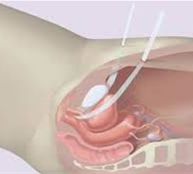
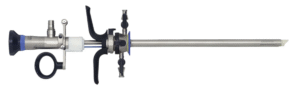
Prostatic Stent

Minimal invasive management for the relief of LUTS (lower urinary tract symptoms) or Urinary Retention

Why is it done?

  • This procedure is performed when the prostate gland is causing LUTS and you want an alternative to invasive procedures
  • Symptoms include:
    • a weak stream,
    • nocturia,
    • frequent urination,
    • inability to urinate,
    • Urinary Retention
  • This is alternative to an invasive procedure where long periods of anesthetic are contraindicated.
  • Usually for chronically sick patients who cannot undergo surgery yet are active enough not to want a permanent catheter.
  • Usually, a trial of alpha-blockers would be attempted and Step-up Therapy with 5 Alpha Reductase Inhibitors have been unsuccessful
  • Any prostate size


How is it done?

  • Patients will receive sedation with local anesthetic gel placed in the urethra.
  • A cystoscopy is performed by placing a camera in the urethra with the help of a lubricant jelly and an irrigate fluid.
  • The measurements of the prostatic urethra are taken (length)
  • Appropriate length coil is chosen.
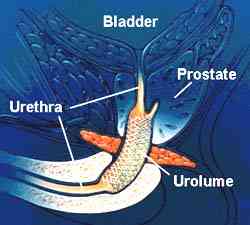
  • The device is placed through the cystoscopy sheath, to sit snug in the prostate urethra stretching from the bladder neck to the apex of the prostate
  • Prophylactic antibiotics will be given to prevent any infections.

Complications

  • Retrograde Ejaculation
  • Stress incontinence especially in the elderly and diabetic patients
  • Urgency and urge incontinence especially until detrusor hyperactivity dissipate
  • Urge symptoms may persist due to detrusor fibrosis caused by long term bladder outlet obstruction
  • May experience a slower stream initially due to swelling
  • Possible infection due to cystoscopy (<2%)
  • Migration of the device into the bladder, requiring a procedure to retrieve this.
  • Long term yields the risk for encrustation and recurrent infections
  • NB! Each person is unique and for this reason, symptoms vary!


Download Information Sheet

Wes UROLUME Urethral Stent

Wes Prostate Stent

Copyright 2019 Dr Jo Schoeman

Radical Orchidectomy

Inguinal incision with surgical removal of a testis and its cord for a lesion suspicious for testis cancer, with / without the placement of a prosthesis.

Why is it done?

  • For testis cancer.
  • For lesions highly suspicious of testis cancer.

How is it done?

  • This is done under general anesthetic.
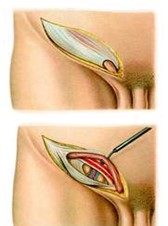
  • A single incision is made in the groin. The underlying muscle layers are split for good oncological control.
  • The affected testis and spermatic cord is then surgically removed through this incision.
  • A metal clip may be left right at the internal inguinal ring, as a future marker, should radiotherapy be required.
  • Subcutaneous sutures (which need not be removed) are used, unless stated otherwise by Dr Schoeman.
  • A dressing is then applied, which should be removed after 72 hours.
  • A local anesthetic is injected into the wound, thus giving post-operative pain relief for the next 4-6 hours.
  • A drain may also be left for 24-48 hours to prevent the collection of serous fluids.

NB! Regular self-examination highly recommended.

What to expect after the procedure

  • Any anesthetic has its risks, and the anesthetist will explain such risks.
  • Bleeding is a common complication. If concerned call the hospital.
  • A hematoma (blood collection under the skin) may form and needs to be reviewed by Dr Schoeman as soon as possible.
  • An infection of the wound may occur and requires immediate attention.
  • Owing to the nature of the surgery and the soft skin of the scrotum, bruising may appear much worse than it is and is no cause for alarm.
  • DANGER SIGNS: A scrotum that swells immediately to the size of a football, fever, or puss. Contact Dr Schoeman or the hospital immediately as this occurs in up to 15 % of all cases.

What next?

  • The dressing should be kept dry for the initial 72 hours after surgery.
  • The dressing should then be removed in a bath. It should be soaked until it comes off with ease.
  • The dressing may sometimes adhere to the wound causing slight bleeding on removal. Don’t panic, the bleeding will stop.
  • On discharge a prescription may be issued for the patient to collect.
  • Patients should schedule a follow-up appointment with Dr Schoeman within 2 weeks to review pathology and arrange subsequent management.
  • There will be signs of bruising for at least 10 days.
  • The suture-line will be hard and indurated for at least 8-10 weeks.
  • Sick leave will be granted for 14 days.
  • Please don’t hesitate to direct any further queries to Dr Schoeman’s rooms.
  • PLEASE CONTACT THE HOSPITAL DIRECT WITH ANY POST-OPERATIVE CONCERNS AND RETURN TO THE HOSPITAL IMMEDIATELY SHOULD THERE BE ANY SIGNS OF SEPSIS.

NB! You are required to bring 2 pairs of tight new undies for post-operative scrotal support.


Download Information Sheet

Wes Orchidectomy Radical

Radical Penectomy

Complete removal of penis with creation of a perineal urethrostomy.


Why is it done?

  • Confirmed penis cancer, infiltrating most of the penis.
  • Cancer involving the base of the penis.
  • Lymph nodes are palpable, could also be draining pus.

How is it done?

  • This procedure is done under general anesthetic.
  • Supine position.
  • The whole penis is removed, sparing the proximal urethra, (if not involved).
  • The urethra is opened onto the perineum (perineostomy).
  • Hemostatic dressings are placed.
  • Specimen is sent to a histopathologist.
  • An indwelling catheter will be inserted.
  • A dressing is then applied, which should be removed after 72 hours.

What to expect after the procedure?

  • Any anesthetic has its risks, and the anesthetist will explain such risks.
  • Bleeding is a possible complication.
  • Your catheter will be removed on Day 3.
  • Long-term risk of a urethral opening stenosis.
  • An infection of the wound may occur and requires immediate attention.
  • DANGER SIGNS: A wound that swells immediately, fever, and puss. Contact Dr Schoeman or the hospital immediately as this occurs in up to 15–20% of all cases.

What next?

  • Dressings should be kept dry for the initial 72 hours after surgery and soaked off in a bath thereafter.
  • The dressing may sometimes adhere to the wound causing slight bleeding on removal. Don’t panic, the bleeding will stop.
  • The catheter will be removed after 3 days.
  • On discharge, a prescription for 4 weeks of Antibiotics will be issued for patients to collect
  • Betadine sit baths are advised.
  • Patients should schedule a follow-up appointment with Dr Schoeman 4-6 weeks after the procedure.
  • At this stage you will be scheduled for a superficial and deep inguinal node dissection.
  • If your nodes are positive for cancer, Radiation and Chemotherapy will be discussed by an Oncologist.
  • There will be signs of bruising for at least 10 days.
  • PLEASE CONTACT THE HOSPITAL DIRECTLY WITH ANY POST-OPERATIVE CONCERNS AND RETURN TO THE HOSPITAL IMMEDIATELY SHOULD THERE BE ANY SIGNS OF SEPSIS.

Complication of Inguinal Node dissection

  • Any anesthetic has its risks, and the anesthetist will explain such risks.
  • Bleeding is a possible complication.
  • Longterm leg lymphedema, requiring compression stockings.
  • Lymphoedema requires attending Lymphoedema Clinics.
  • Wound dehiscence’s and poor healing.
  • An infection of the wound may occur and requires immediate attention.
  • DANGER SIGNS: A wound that swells immediately, fever, and pus. Contact Dr Schoeman or the hospital immediately.


Download Information Sheet

Wes Penectomy Radical

Radical Perineal Prostatectomy

Why is it done?

This is the alternate surgical management option for a localized prostate cancer. Widely used in the USA in the early 2000’s prior to robotic assisted surgery.

  • Still a great technique to avoid a frozen abdomen due to multiple previous surgeries
  • Transplanted kidney.
  • Obesity
  • Smaller than 50 cc prostates are better

Criteria include:

  • PSA less than 10.
  • Gleason 3,4 adenocarcinoma prostate.
  • Higher grades with no extra-prostatic extension
  • Staging negative, (bone scan negative, CT negative).
  • 75 years and younger.
  • It is the complete removal of the prostate, seminal vesicles and bladder neck.
  • A nerve sparing procedure is attempted for those guys who have good erections and wish to maintain this.
  • The procedure takes 2-3hours excluding the anesthetic time.


How is it done?

    • General anesthetic.
    • You will be placed in hyper-lithotomy.
    • Anus at eye-level.
    • The surgical filed is prepared.
    • A flexible cystoscopy is done to exclude any urethral strictures, bladder cancers and any other pathology.
    • An IDC is then placed.
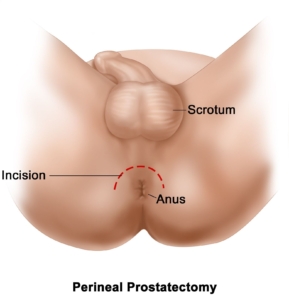
    • A horseshoe incision is made around the anus.
    • The space in the front part of the rectum is entered and passed under the sphincteric muscle.
    • Dennon Villiers Fascia is cleared and opened in the midline, this brushing the erectile nerves laterally.
    • The urethra is encircled and cut just distal to the prostate sparing the sphincter.
    • The prostate is loosened anteriorly from the dorsal venous complex, thus sparing the complex and avoiding major blood loss (DVC).
    • The anterior bladder neck is opened.
    • The UO identified.
    • The posterior bladder neck cut.
    • The lateral pedicles are clipped.
    • The seminal vesicles and ampullae of the Vas Deferens, the SV are removed and the Vas clipped.
    • The prostate is loosened and removed.
    • The bladder mucosa is everted.
    • The bladder neck reconstructed.
    • The anastomosis with the urethra completed over an Indwelling Catheter.
    • A drain is left.

Complications

  • Blood loss 200-400cc.
  • Wound infections.
  • Wound breakdown.
  • Managed with Betadine sit baths.
  • Stress incontinence which will improve over the next 12 months (12%).
  • Complete incontinence at 12 months (2%).
  • Erectile dysfunction (40-50%) where a nerve sparing procedure has been performed. It may take 12-18 months to recover.
  • Anejaculation/ Infertility.
  • Testicular pain similar to vasectomy for 2-3 day.

Post operative care:

  • Sutures are dissolvable and will not be required to be removed.
  • Normal diet.
  • A salt water or Betadine Douche is required after every stool for the first week.
  • Apical wound dehiscence can occur in 7% which requires extra care in the form of prolonged Salt water or Betadine Douches.
  • Wounds generally heal in 7-10 days.

Post-operative review:

  • Your catheter will remain for 10-14 days.
  • Only after a cystogram (radiological investigations where radio-opaque contrast is placed in the bladder) confirms no leakages from the bladder-urethra-anastomosis, will the catheter be removed.
  • Should there be any urine leakages on the cystogram, the catheter may remain another 7 days.
  • Review PSA roughly 6 weeks after the surgery to assess post-operative Nadir.
  • Review in rooms a week later.
  • 3-6 monthly review depending on risk factors.
  • If stable with good PSA outcomes, refer back to GP for 6 monthly PSA review.
  • You will be referred to a Men’s Health Physician to assist with erectile function recovery – erections can take as long as 18 months to recover
  • Continue your pelvic physiotherapy

PSA failure:

  • PSA never dropping to undetectable with positive margins in histology.
  • 3 consecutive PSA rises following RRP.


Download Information Sheet

Wes Prostatectomy Radical (Perineal)

Radical Retropubic Prostatectomy – Open

Why is it done?

This is the surgical management option for a prostate cancer which fits all the criteria set out by the Urology Society of Australia for Surgery.

Largely been replaced by the robotic technique.
Indication:

  • PSA less than 20
  • Gleason 3,4 to low volume Gleason 4,5 contained adenocarcinoma prostate.
  • Higher grades may be considered with patients fully informed of the positive margins and need for adjuvant radiation therapy. See D’Amico criteria in terminology. These patients will be counselled about multiple therapy approach which may involve salvage radiation therapy.
  • Staging negative, (bone scan negative, CT negative).
  • 75 years and younger.
  • It is the complete removal of the prostate, seminal vesicles and bladder neck.
  • It may include a bilateral pelvic lymphadenectomy. (Gleason 4,3 and higher)
  • A nerve sparing procedure is attempted for those guys who have good erections with no tumour infiltrating the erectile nerves.
  • The procedure takes 2-3hours excluding the anesthetic time.

PSA failure:

  • PSA never dropping to undetectable with positive margins in histology
  • 3 consecutive PSA rises following RRP

How is it done?

  • General anesthetic.
  • The surgical filed is prepared
  • A flexible cystoscopy is done to exclude any urethral strictures, bladder cancers and any other pathology.
  • An IDC is then placed.
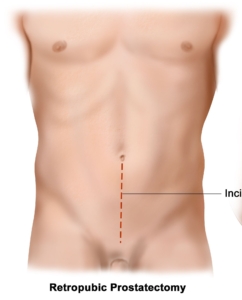
  • A midline lower abdominal incision is made.
  • The retropubic space of Retzuis is entered.
  • Endopelvic fascia is cleared and opened exposing the lateral sides of the prostate.
  • The urethra is cut just distal to the prostate sparing the sphincter.
  • The ‘Veil of Aphrodites’ is loosened from the prostate sparing the neuro-vascular bundle.
  • The prostate is lifted off the rectal bed.
  • The lateral pedicles are tied.
  • Dennon Villiers fascia is opened to expose the Seminal Vesicles and ampullae of the Vas Deferens, the SV are removed and the Vas clipped.
  • The prostate is loosened from the bladder neck.
  • Prostate is removed.
  • The bladder mucosa is everted.
  • The bladder neck reconstructed with a Rocco repair.
  • The anastomosis with the urethra completed over an Indwelling Catheter.

Obturator nodes may be removed depending on the D’Amico Risk category. (Controversial)

Complications

  • Blood loss 400-1200cc.
  • Wound infections.
  • The first 6 weeks are the worst with frequency and urgency as a result.
  • Stress incontinence may occur and will improve over the next 12 months (12%).
  • Complete incontinence at 12 months (2%).
  • Erectile dysfunction (40-50%) where a nerve sparing procedure has been performed yet may improve over the next 18 months.
  • Bladder neck stenosis 5 % requiring intermittent self-dilatation.
  • Anejaculation/ Infertility.
  • Testicular pain similar to vasectomy for up to a week.

Post operative care:

  • Sutures are subcutaneous and will be dissolved.
  • You will have a drain in the wound for 24-48 hours until it drains less than 30ml / 24 hours.
  • You spend your first 24 hours in a High Dependency Unit.
  • Normal diet will be commenced.

Catheter care

  • Your catheter will remain for 10-14 days.
  • Only after a cystogram (radiological investigations where radio-opaque contrast is placed in the bladder) confirms no leakages from the bladder-urethra-anastomosis, will the catheter be removed.
  • Remember you will leak initially, with gradual improvement up to 6 weeks post-operatively.
  • Nursing staff will teach you catheter care.
  • Your catheter should always be fixed to your leg with a catheter dressing.

Post-operative review:

  • Cystogram at 10 days post-operatively to assess complete healing of urethra bladder neck anastomosis to exclude any leakages.
  • Should there be any leakages, the catheter may remain another 7 days.
  • Review PSA roughly 6 weeks after the surgery to assess post-operative Nadir.
  • Review in rooms a week later.
  • 6 monthly reviews depending on risk factors.
  • If stable with good PSA outcomes, refer back to GP for 6 monthly PSA review.
  • You will be referred to a Men’s Health Physician to assist with erectile function recovery – erections can take as long as 18 months to recover
  • Continue your pelvic physiotherapy


Download Information Sheet

Wes Radical Retropubic Prostatectomy -Open

Rectus Fascial Sling

Why is it done?

  • Stress urinary incontinence
  • A combination of stress incontinence and detrusor over-activity of which DO is the lesser
  • Involuntary urine leakage with any exertion, coughing or sneezing
  • Risk factors
    •  More than 2 pregnancies, big babies
    • Complicated deliveries, episiotomy
    • Smokers
    • Being overweight
    • Diabetes
  • Where Intrinsic Sphincter Deficiency has been proved due to a failed previous sling
  • Failed previous incontinence procedures

How is it done?

  • This procedure is done under a spinal/general anesthetic, as decided by the anesthetist.
  • The legs will be elevated into the lithotomy position.
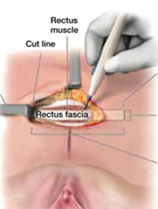
  • A 10cm horizontal incision is made above the pubic bone.
  • A 10-15cm X 5cm strip of rectus sheath fascia is harvested and prepared with 2 Prolene or Nylon arms
  • A small incision is made in the vagina.
  • The sling is placed behind the pubic bone and brought to the skin above the pubic bone, through the incision.
  • The sling is placed with some tension.
  • The bladder will be inspected with a cystoscopy to exclude any injuries to the bladder wall.
  • The wounds are closed with dissolvable sutures and/or skin glue.
  • A local anesthetic is given for pain relief.
  • A urinary catheter is placed for 24hrs.
  • A vaginal plug will also be placed.
  • The catheter and plug will be removed early the next morning.
  • The patient’s urine output will be measured each time they urinate, and the residual will be measured. (Patients will be required to do this up to 3 times.)
  • If the residual amount of urine is more than 1/3 of the total bladder capacity, the patient may have to self-catheterize, until the residual volume is acceptable.
  • Prophylactic antibiotics will be given to prevent infection.


Complications

  • Patients will have a trial of void without catheter the next day.
  • Patients will be discharged as soon as they can completely empty the bladder.
  • Patients may be required to self-catheterize for a week or two.
  • The sling may be loosened if placed too tight, requiring going back to the operating room.
  • Patients may initially suffer from urge incontinence, but this will improve within the next 6 weeks.
  • Allow 6 weeks for symptoms to stabilize.
  • May also have abdominal pain with coughing and sneezing due to tension on rectus muscle
  • There may be some blood in the urine. This can be remedied by drinking plenty of fluids until it clears.


Download Information Sheet

Wes Sling Rectus Fascial

Copyright 2019 Dr Jo Schoeman

Retropubic Mid-Urethral Synthetic Sling Procedure

Placement of a minimally invasive polypropylene sling in the retropubic space with a flexible cystoscopy.

Also view the section on urinary incontinence in the TAB above.

Why is it done?

  • Stress urinary incontinence.
  • A combination of stress incontinence and lesser degree of detrusor overactivity – mixed incontinence.
  • Involuntary urine leakage with any exertion, coughing or sneezing.
  • Risk factors:
    • More than 2 pregnancies, big babies.
    • Complicated deliveries, episiotomy.
    • Smokers.
    • Being overweight.
    • Diabetes
  • Where Intrinsic Sphincter Deficiency has been proved due to a failed previous sling.

How is it done?

  • This procedure is done under a spinal / general anesthetic, as decided by the anesthetist.
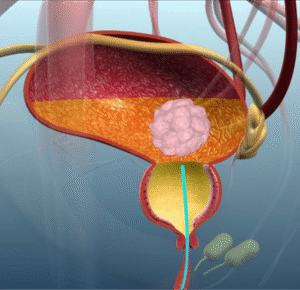
  • The legs will be elevated into the lithotomy position.
  • A small incision is made in the vagina. The sling is placed behind the pubic bone and brought to the skin above the pubic bone, with a small incision.
  • A synthetic mesh is used after in detail consultation with yourself
  • This will be used as a last resort
  • You will be made aware of the TGA mesh withdrawal in Australia and Europe – especially involving mesh used for vaginal prolapse surgery
  • The sling is placed tension free.
  • If you have a suspected Intrinsic Sphincter Deficiency (ISD), the sling may be placed tighter.
  • The bladder will be inspected with a Cystoscopy to exclude any injuries to the bladder wall.
  • The wounds are closed with dissolvable sutures and/or skin glue.
  • A local anesthetic is given for pain relief.
  • A urinary catheter is placed for 24hrs.
  • A vaginal plug will also be placed.
  • The catheter and plug will be removed early the next morning.
  • The patient’s urine output will be measured each time they urinate, and the residual will be measured. (Patients will be required to do this up to 3 times).
  • If the residual amount of urine is more than 250-300 cc, the patient may have to self-catheterize, until the residual volume is acceptable.
  • Prophylactic antibiotics will be given to prevent infection.

What to expect after the procedure?

  • Any anesthetic has its risks, and the anesthetist will explain all such risks.
  • Complications:
    • hemorrhaging, requiring blood transfusion <1%.
    • bladder perforation, requiring an open repair <1%.
  • Patients will wake up with a catheter in the urethra and bladder. This will remain in the bladder for 24 hrs.
  • Above pubic bone area discomfort/pain will persist for a few days, but this will subside or settle.
  • If you cannot urinate after 2-3 attempts, the sling may be readjusted.
  • You may be required to self catheterize for a week or two.
  • If there is no improvement the sling may be cut, to allow spontaneous urination.
  • NB! Each person is unique and for this reason symptoms may vary!


What next?

  • Patients will have a trial of void without catheter the next day.
  • Patients will be discharged as soon as they can completely empty the bladder.
  • Patients may be required to self-catheterize for a week or two.
  • Patients may initially suffer from urge incontinence and frequency, but this will improve within the next 6 weeks.
  • Your flow will be slower.
  • Allow 6 weeks for symptoms to stabilize.
  • There may be some blood in the urine. This can be remedied by drinking plenty of fluids until it clears.
  • On discharge a prescription may be issued for patients to collect.
  • Patients are to schedule a follow-up appointment in 6 weeks.
  • Please direct all queries to Dr Schoeman’s rooms.
  • PLEASE CONTACT THE HOPSITAL DIRECT WITH ANY POST-OPERATIVE CONCERNS AND RETURN TO THE HOSPITAL IMMEDIATELY SHOULD THERE BE ANY SIGNS OF SEPSIS.

Remember to discuss mesh and its complications with Jo. This is used as a last resort, and you should be aware of the risks!


Download Information Sheet

Wes Mid-urethral Retropubic sling

Simple Prostatectomy – Robotic Assisted Enucleation

Robotic assisted enucleation of the prostate adenoma.

  • For those large benign prostates where a TURP would be too time consuming, and too dangerous.
  • Generally, prostates over 150cc.

Why is it done?

  • This procedure is performed when the prostate gland is enlarged to such an extent that medication cannot relieve the urinary symptoms.
  • Your prostate is larger than 120 cc
  • Symptoms include: LUTS
    • a weak stream,
    • nightly urination,
    • frequent urination,
    • inability to urinate,
    • kidney failure due to the weak urination (obstruction),
    • bladder stones,
    • recurrent bladder infections.
  • Medication such as Flomaxtra, Xatral Minipress etc. should always be given as a first resort.
  • Step-up therapy should have been used for prostates larger than 35-50cc with either Duodart, Avodart or Proscar and can be used as a first line in these huge prostates.
  • Conservative management with medication has failed
  • Doing transurethral resection may take excessively long causing side-effects to your urethra as well as risk of irrigation fluid being reabsorbed in your vascular system leading to increased cardiac load
  • You may be at risk for electrolyte disturbances with a transurethral resection of the prostate when Glycine is used
  • You have BPH—benign prostate enlargement
  • Prostate cancer has been ruled out by doing a PSA, and when indicated, with a 3T MRI scan of the prostate with an abnormal PSA with a possible prostate biopsy of any suspicious lesions.
  • A staged-TURP can also be performed to dis-obstruct a huge prostate. Either Bipolar resection or Laser can be utilized.
  • Patient informed decision is vital.
  • It provides a quicker solution with more marked side-effects and risks.

How is it done?

  • Patients will receive a general anesthesia, unless contra-indicated.
  • Prophylactic anti-biotics is given.
  • A Flexible cystoscopy is done to exclude any urethral strictures, bladder cancers and any other pathology
  • An IDC is then placed
  • A Camera port is placed above the Umbilicus
  • 3 Additional ports for robotic arms in a horizontal line on the abdomen with 2 assistant ports on the right side of the abdomen
  • The abdominal space is entered and the bladder dropped from the abdominal wall.
  • Bladder opened at the dome as the prostate will be removed through the bladder
  • Bladder neck opened
  • Prostate adenoma enucleated
  • Haemostasis
  • Trigonalization of bladder, bladder pulled down into prostate cavity
  • Catheter replaced
  • Drain placed if required

What next?

  • You will spend up to 5-7 nights in hospital.
  • You will have a catheter for that time.
  • A drain for 2-3 days.
  • You will a trial without the catheter on the 5th day.
  • You will be discharged as soon as you can completely empty your bladder.
  • You may initially suffer from urge incontinence and dysuria (irritable voiding) and will improve within the next 6 weeks.
  • Allow for 6 weeks for stabilization of symptoms.
  • There may be some blood in your urine. You can remedy this by drinking plenty of fluids until it clears.
  • A ward prescription will be issued on your discharge, for your own collection at any pharmacy.
  • A follow-up appointment will be scheduled for 6 weeks. Remember there is no pathology due to vaporisation.
  • Don’t hesitate to ask Jo if you have any queries.
  • DON’T SUFFER IN SILENCE, OR YOU WILL SUFFER ALONE!

Side-effects

  • Blood loss requiring blood transfusion.
  • Infection.
  • Prolonged hospital stays.
  • Retrograde ejaculation in more than 90% of patients. Therefore, if you have not completed your family, this procedure is not for you unless absolutely necessary.
  • Infertility as a result of the retrograde ejaculation.
  • Stress incontinence especially in the elderly and the diabetic patients.
  • Patients with Multiple Sclerosis, Strokes and Parkinsons have a higher risk of incontinence and risks should be discussed and accepted prior to surgery.
  • Less chance of growth of prostate lobes usually within 3-5 years requiring a second procedure.
  • NB! Each person is unique and for this reason symptoms vary!

Remember

You still have a peripheral zone of your prostate and regular PSA reviews are required up to the age of 75.


Download Information Sheet

Wes RA-Enucleation Prostatectomy BPH


Rezum Water Vapor Therapy

Minimal invasive management for the relief of LUTS (lower urinary tract symptoms)

Why is it done?

  • This procedure is performed when the prostate gland is causing LUTS and you want an alternative to medication without the complications of a permanent procedure.
  • Symptoms include (LUTS):
    • a weak stream,
    • nightly urination,
    • frequent urination,
    • inability to urinate,
    • kidney failure due to the obstruction,
    • bladder stones,
    • recurrent bladder infections.
  • Medication such as Flomaxtra, Urorec Minipress etc. should always be given as a first resort. All have side effects that you may not like.
  • This is alternative to medication where the ejaculatory function is to be preserved.
  • Prostate cancer first needs to be ruled out by doing a PSA, and when indicated, with a 3T MRI scan of the prostate with an abnormal PSA with a possible prostate biopsy of any suspicious lesions. Prostate sizes up to 80 cc, even mid lobe are acceptable


How is it done?

  • Patients will receive general anesthesia, unless contra-indicated.
  • A cystoscopy is performed by placing a camera in the urethra with the help of a lubricant jelly and an irrigant (fluid).
  • The inside of the bladder is viewed for pathology. If any suspicious lesions are seen, a biopsy will be taken.
  • The device is placed through the cystoscopy sheath.
  • Prostate lobes are injected with water vapor, 2-6 injections 10 seconds each
  • Prophylactic antibiotics will be given to prevent any infections.
  • Any anesthesia has its risks, and the anesthetist will explain this to you.
  • You will require an indwelling urinary catheter for 5-10 days depending on the size of your prostate
  • Lower abdominal discomfort for a few days
  • Could have an inflammatory response requiring antibiotics.
  • Discomfort in urination can last 6 weeks.
  • Full results will be experienced at 3 months

 NB! Hang in there, it is worth it! Each person is unique and for this reason, symptoms vary!

Complications

  • Ejaculation will mostly not be affected as is the case with medication, TURP and TUVP, therefore no retrograde ejaculation, thus preserving sexual function,
  • In a small % of cases the bladder neck is treated, there may be retrograde ejaculation, this will be discussed with you.
  • Infertility should not be an issue as there is no retrograde ejaculation. Don’t do it if you still want children.
  • You will be discharged with a catheter.
  • A trial of void (removal catheter) will be scheduled 5-10 later as soon as the major swelling has gone down
  • Larger prostates may fail and require the catheter for a further 5 days.
  • Suprapubic pain will improve over the next 7 days.
  • No Stress incontinence especially in the elderly and the diabetic patients
  • You may experience a slower stream initially due to swelling
  • Some urgency and dysuria for 6 weeks
  • Possible infection due to avascular / necrotic tissue
  • You will pass the hemolyzed dead tissue in the form of brown discolored fluid at the 14-day mark.
  • Allow for 6 weeks for stabilization of symptoms thereafter.
  • There may be some blood in your urine. You can remedy this by drinking plenty of fluids until it clears.
  • A follow-up appointment will be scheduled for 6 weeks.
  • The full extent of this procedure will only appreciated at 3 months.


Download Information Sheet

Wes REZUM Therapy

Copyright 2019 Dr Jo Schoeman

Rigid Cystoscopy

Placement of a rigid cystoscope in the bladder +/- retrograde pyelogram

A diagnostic day procedure under general anesthetic, where a rigid cystoscope is placed in the bladder via the urethra

Why is it done?

To investigate:

  • Hematuria (blood in the urine).
  • Recurrent urinary tract infections.
  • Space occupying lesions in the kidneys, ureters and bladder.
  • Abnormal cells suggestive of urothelial carcinoma, on urine cytology.

Risk factors:

  • Strong family history of bladder cancer.
  • Smokers or passive smokers.
  • Factory workers: dyes, paints, etc.
  • Exposure to Schistosoma (Bilharzia).
  • Renal stone disease, bladder stones.

How is it done?

  • This is done under general anesthesia.
  • A cystoscopy is performed by placing a camera in the urethra with the help of a lubricant gel and saline irrigation.
  • The bladder is then distended with saline.
  • The inside of the bladder is viewed for pathology.
  • A retrograde pyelogram could be done at the same time, (placement of small silicone catheters up the kidney pipes). Through this iodine contrast is injected up into the kidney collecting systems. This facilitates the viewing of kidney pipes and kidney collecting systems on X-ray to exclude any upper tact pathology.
  • If any abnormalities are found in the kidney/ ureters, a ureteroscopy (which is the placement of a long thin camera up the ureter) will be performed.
  • If any suspicious lesions are seen, a biopsy will be taken.
  • Urine would have been sent for cytology, to rule out the existence of cancer.
  • Antibiotics may be given to prevent infection.

What to expect after the procedure?

  • Pain on initial passing of urine.
  • Bladder infection ranging from a burning sensation to, fever, to puss (rare).
  • Blood stained urine.
  • Lower abdominal discomfort which will persist for a few days.
  • NB! Each person is unique and for this reason symptoms vary.

What next?

  • This all depends on what is found during the procedure. All the options will be discussed in detail.
  • With the removal of stents, the ureters have been dilated and will regain function (peristalsis) as soon as the stents are out. Thus slight pain can be expected in the first 24-48hrs.
  • There may be some blood in the urine. This can be remedied by drinking plenty of fluids until it clears.
  • A ward prescription will be issued to patients on discharge, for own collection at any pharmacy.
  • Patients should schedule a follow-up appointment within 7 days.
  • Please don’t hesitate to direct all further queries to Jo.
  • REMEMBER: THOSE WHO SUFFER IN SILENCE, SUFFER ALONE!

Download Information Sheet

Wes Cystoscopy RIGID