16 DOT ‘Nesbitt’ Plication

Correction of penile chordee / curvature.

Why is it done?

  • To treat an acquired deviation of an erect penis.
  • Usually occurs in males 55-65 years of age.
  • Can be associated with previous penile trauma, usually no associated history.
  • A dorsal (up) curvature is more common than a ventral (down) one. Can also deviate to the side.
  • Pain is usually the presenting symptom with a gradually worsening curvature.
  • The curvature may be so bad that penetration becomes impossible.
  • Associated with the connective tissue disorder: Dupuytren’s Contracture, which is an auto-immune disease.
  • Worse cases may require a penile prosthesis.

Pre-requirements

  • An informed consent is required from the patient/ parents.
  • Patients are informed that this may shorten the penis to the length of the shorter side of the penis, usually 2-3 cm.
  • In patients who wish to preserve penile length, a lengthening technique using buccal mucosa may be indicated and will be referred to a colleague.
  • Patients may not eat or drink from 6-8 hours prior to surgery according to age.
  • Any anti-coagulants such as Warfarin or Aspirin must be stopped 7 days prior to surgery. Clexane injections may be substituted.
  • Be prepared for an overnight stay.

How is it done?

  • This procedure is done under general anesthetic.
  • Supine position.
  • The foreskin is loosened proximal to the glans with a circumferential incision and the whole penile skin is retracted to the base of the penis.
  • An artificial erection will be induced by injecting a sterile saline solution into the penile corpora cavernosa with a tourniquet around the base.
  • Non-dissolvable sutures will be placed on the sides opposite to the diseased areas in an attempt to pull the erect penis into a straight alignment.
  • Occasionally a circumcision may result due to complications with this technique, yet foreskin preservation is attempted.
  • If there is a dorsal curvature, ventral sutures are laced and the penis pulled in upright position, therefore sutures are always placed on the opposite site avoiding vital structures such as.
  • An indwelling catheter will be inserted until you are awake.
  • A dressing is then applied, which should be removed after 72 hours.
  • A local anesthetic is injected at the base of the penis as a penile block thus giving post-operative pain relief for the next 4-6 hours.

What to expect after the procedure?

  • Any anesthetic has its risks, and the anesthetist will explain such risks.
  • Bleeding is a common complication.
  • A hematoma (blood collection under the skin) may form and needs to be reviewed by Dr Schoeman as soon as possible. Bruising is normal.
  • Sutures may tear loose with vigorous use of erect penis, and the procedure may then require revision.
  • An infection of the wound may occur and requires immediate attention.
  • Necrosis of the foreskin and some penile skin can occur in rare circumstances. This may require skin-grafting.
  • DANGER SIGNS: A wound that swells immediately, fever, and puss. Contact Dr Schoeman or the hospital immediately as this occurs in up to 15–20% of all cases.

What next?

  • Dressings should be kept dry for the initial 72 hours after surgery and soaked off in a bath thereafter.
  • The dressing may sometimes adhere to the wound causing slight bleeding on removal. Don’t panic, the bleeding will stop.
  • The catheter will be removed as soon as you are awake, or if there are concerns, the following morning.
  • On discharge, a prescription may be issued for patients to collect.
  • Patients should schedule a follow-up appointment with Dr Schoeman 2 weeks after the procedure.
  • There will be signs of bruising for at least 10 days.
  • Refrain from using your erect penis for 6 weeks.
  • The suture-line will be hard and indurated for at least 8-10 weeks.
  • Sick leave will be granted for 10 days.
  • Please direct all further queries to Dr Schoeman’s rooms.
  • PLEASE CONTACT THE HOSPITAL DIRECTLY WITH ANY POST-OPERATIVE CONCERNS AND RETURN TO THE HOSPITAL IMMEDIATELY SHOULD THERE BE ANY SIGNS OF SEPSIS.

Download Information Sheet
Wes 16 Dot Nesbitt Plication

Artificial Urinary Male Sphincter – AUS

Why is it done?

  • Male Stress incontinence/ Incontinence
  • Usually after a TURP/TUVP, Radical Prostatectomy in 2% of cases as pre-described complication of surgery

How is it done?

  • ·This procedure is done under a spinal /general anesthetic, as decided by the anesthetist.
  • The legs will be elevated into the lithotomy position.
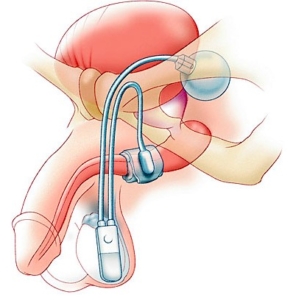
  • A 7cm incision is made on the perineum space between scrotum and anus).  Or penoscrotal junction. You will also have a small suprapubic incision.
  • The silicone inflatable cuff is placed around the upper end of the corpora cavernosa of the penis under the muscle.
  • The reservoir is placed behind the pubic bone
  • The access port is placed in the scrotum; make sure it is on the side of your dominant hand.
  • The cuff will only be activated 6 weeks after the surgery
  • The wounds are closed with dissolvable sutures and/or skin glue.
  • A local anesthetic is given for pain relief.
  • A urinary catheter is placed for 24hrs.
  • The catheter will be removed early the next morning.
  • Prophylactic antibiotics will be given to prevent infection.


Complications

  • Any anesthetic has its risks, and the anesthetist will explain all such risks.
  • Complications: hemorrhaging, requiring blood transfusion <1%.
  • Patients will wake up with a catheter in the urethra and bladder. This will remain in the bladder for 24 hrs.
  • Pelvic pain for 10-14 days may occur, making it difficult to sit.
  • You will be incontinent until the cuff is activated
  • This may be less effective in irradiated patients

NB! Each person is unique and for this reason, symptoms may vary


What next?

  • Patients will have a trial of void without catheter the next day. You will be incontinent until the device is activated in 6 weeks
  • Patients will be discharged as soon as they can completely empty the bladder.
  • Patients may initially suffer from urge incontinence, but this will improve within the next 6 weeks.
  • Allow 6 weeks for symptoms to stabilize.
  • Initial period of pelvic pain is expected.


Download Information Sheet

Wes AUS Male Sphincter

Copyright 2019 Dr Jo Schoeman

Burch Colposuspension

  • Main incontinence surgery for ladies in the previous millennium. Making a resurgence in the post mesh-era.
  • Open retropubic vs robotic assisted procedure.
  • Lower success rates as the Sling procedure, and more invasive.

Indication:

  • Confirmed SUI
  • Hypermobile urethra

Procedure:

  • Robotic assisted procedure
  • Done under a GA
  • Sterile filed with BETADINE
  • 4 Robotic ports and 2 assistant ports placed
  • Abdomen insufflated with CO2
  • Head in Trendelenburg
  • Prophylactic antibiotics
  • An IDC placed
  • The retropubic space opened and the para-urethra vaginal wall is lifted and fixed to the pectineal line with 3 sutures on each side
  • Tension on these sutures to create a kink in the urethra
  • Vagina is inspected to exclude any sutures placed through the wall.
  • Abdomen is inspected for any bowel injuries
  • Drain is placed

Complications:

  • Wound infection
  • Ileus
  • Acute urine retention
  • May require self-catheterization
  • Return to theatre to release the tension


Download Information Sheet

Wes Burch Para-Urethral Repair – Open

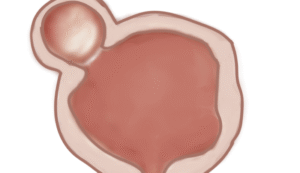
Bladder Diverticulectomy – Robotic-assited

Open excision of bladder diverticulum. Controversial procedure for the excision of a bladder diverticulum where there is bladder calculus and bladder function is compromised/

Why is it done?

  • This procedure is performed when all other treatment options are exhausted with recurrent symptoms.
  • Symptoms include: a weak stream, nightly urination, frequent urination, inability to urinate, sudden cut-off of stream, (LUTS), recurrent bladder infections, recurrent bladder calculi (stones).
  • Medication such as Flomaxtra, Urorec or Minipress etc. should always be given as a first resort.
  • Step-up therapy should have been used for prostates larger than 35-50cc with either Duodart, Avodart or Proscar and can be used as a first line in these huge prostates.
  • A TURP may have been performed to dis-obstruct a huge prostate.
  • Neurogenic causes of bladder dysfunction should be excluded by means of a Urodynamic study.
  • Patient informed decision is vital.
  • It provides a quicker solution with more marked side-effects and risks.

How is it done?

  • Patients will receive a general anaesthesia, unless contra-indicated.
  • Prophylactic anti-biotics is given.
  • An indwelling catheter is placed, and the bladder is filled with saline.
  • Robotic access with 6 port placements.
  • The retropubic space of Retzuis is entered.
  • The bladder is opened anteriorly in the midline.
  • A Foleys catheter is placed in the diverticulum.
  • The bladder incision is extended to the diverticulum. Diverticulum is excised.
  • Special care is required for diverticula close to the ureters. Placement of ureteric catheters are done to prevent ureteric injury.
  • Bladder is closed in 2 layers over a 3-way irrigation catheter.
  • A drain is left for a couple of days.
  • You may have continuous Antibiotics over the next few days.

What next?

  • You will spend 2-3 nights in hospital.
  • You will have a catheter for 14 days.
  • A drain for 1 -2 days.
  • You will be discharged as soon as you are drain free, temperature free and have opened your bowels.
  • You may initially suffer from urge symptoms caused by the catheter.
  • There may be some blood in your urine. You can remedy this by drinking plenty of fluids until it clears.
  • A ward prescription will be issued on your discharge, for your own collection at any pharmacy.
  • A follow-up appointment will be scheduled for 2 weeks for a cystogram.
  • Should the cystogram confirm to urine leaks, your catheter will be removed.
  • A review appointment is scheduled 6 weeks later.
  • Don’t hesitate to ask Jo if you have any queries.
  • DON’T SUFFER IN SILENCE, OR YOU WILL SUFFER ALONE!

Side–effects

  • Rarely blood loss requiring blood transfusion.
  • Infection.
  • Prolonged hospital stays.
  • Urine leak requiring prolonged catheterization.
  • NB! Each person is unique and for this reason symptoms vary!

Download Information Sheet

Wes Bladder Diverticulectomy

Bladder Fistulectomy

Why is it done?

  • Bladder intestinal fistula is an abnormal communication between bladder and bowel.
  • Causes:
    • Previous surgery
    • Diverticular disease
    • Colonic cancers
    • Radiation
  • This procedure is performed when all other treatment options are exhausted with recurrent symptoms and persistent pneumaturia and fecal uria due to a colonic-vesical fistula
  • Symptoms include:
    • pneumaturia (air in urine),
    • fecal Uria (stool in Urine),
    • recurrent bladder infections.
  • This surgery is usually done with a colo-rectal surgeon and may involve a partial bowel resection, possibly a temporary loop ileo/colostomy (diversion of bowel with an external bag)


How is it done?

  • Patients will receive a general anaesthesia,  unless contra-indicated.
  • Prophylactic antibiotics are given.
  • An indwelling catheter is placed, and the bladder is filled with saline.
  • Open procedure or robotic assisted.
  • A lower midline incision is made, or robotic ports are placed
  • The retropubic space of Retzuis is entered
  • The bladder is resected away from the bowel.
  • The affected piece of bowel may be resected with either a temporary diversion of the bowel to a bag or a primary anastomosis depending on the colo-rectal surgeon’s findings
  • The affected part of the bladder may be resected. The bladder is closed in 2 layers over a 3-way irrigation catheter
  • Omentum will be placed between bladder and bowel where at all possible to limit recurrences
  • A drain is left for a couple of days
  • You may have continuous Antibiotics over the next few days.
  • You have a few days stay in ICU or high care facility


Complications

Side–effects

  • Rarely blood loss requiring a blood transfusion.
  • Infection/ sepsis
  • Prolonged hospital stays.
  • Urine leak requiring prolonged catheterization.
  • Bowel leak etc.
  • NB! Each person is unique and for this reason symptoms vary!


Download Information Sheet

Wes Bladder Fistulectomy

Copyright 2019 Dr. Jo Schoeman

Cauterization of Penile Condylomata

Fulguration of penile condyloma, with penile block

Why is it done?

  • One of the non-medical treatment options for condylomas (genital warts)..

How is it done?

  • This procedure is done under local or general anaesthetic.
  • Supine position.
  • The foreskin may be the only affected area and therefore a circumcision is done.
  • Otherwise, the affected area is exposed and cleaned.
  • The affected lesions are cauterized, including the root of the wart.
  • Due to charring, and good hemostasis, no sutures are required.
  • Hemostatic dressings are placed.
  • Specimen is sent to a histopathologist.
  • An indwelling catheter may be inserted if the biopsy area involves the meatus of your urethra.
  • A dressing is then applied, which should be removed after 72 hours.
  • A local anesthetic is injected at the base of the penis as a penile block thus giving post-operative pain relief for the next 4-6 hours.

What to expect after the procedure?

  • Any anesthetic has its risks, and the anesthetist will explain such risks.
  • Bleeding is an uncommon complication.
  • Eschar may loosen with vigorous use of erect penis and could lead to bleeding.
  • An infection of the wound may occur and requires immediate attention.
  • DANGER SIGNS: A wound that swells immediately, fever, and puss. Contact Dr Schoeman or the hospital immediately as this occurs in up to 15–20% of all cases.

What next?

  • Dressings should be kept dry for the initial 72 hours after surgery and soaked off in a bath thereafter.
  • The dressing may sometimes adhere to the wound causing slight bleeding on removal. Don’t panic, the bleeding will stop.
  • The catheter will be removed as soon as you are awake, or if there are concerns, the following morning.
  • Patients should schedule a follow-up appointment with Dr Schoeman 4-6 weeks after the procedure.
  • There will be signs of bruising for at least 10 days.
  • Refrain from using your erect penis for 6 weeks.
  • Sick leave will be granted for a few days.
  • Please direct all further queries to Dr Schoeman’s rooms.
  • PLEASE CONTACT THE HOSPITAL DIRECTLY WITH ANY POST-OPERATIVE CONCERNS AND RETURN TO THE HOSPITAL IMMEDIATELY SHOULD THERE BE ANY SIGNS OF SEPSIS.


Download Information Sheet
Wes Cauterization of Penile Condylomata

Caverject Intra-Cavernosal Injections

Intra cavernous injections for erectile dysfunction, demonstrating and teaching self-administration.

Why is it done?

    • A treatment option for erectile dysfunction.
    • Usually when oral techniques have failed ie Viagra, Levitra and Cialis.
    • Or where the patient wishes to skip the oral phase for something more effective.
    • ED can occur from the age of 40.
    • Risk factors:
      • Older.
      • Overweight.
      • Diabetic,
      • Hypertensive,
      • Cardiac issues.
    • An alternative is a Vacuum Pump Device.
    • Worse cases may require a penile prosthesis.

How is it done?

  • This procedure is done at home.
  • You will be given a ‘hands-on’ instruction.
  • An effective dose will be determined.
  • A pre-made-up syringe with a determined dose is made ready prior to the injection.
  • The penis is pulled away from your body with the non-dominant hand.
  • The injection site is cleaned with an alcohol wipe.
  • Caverject is injected at the base of the corpora cavernosa at an angle of 45 degrees with the shaft. See hand-out.
  • Allow 5 minutes for an erection to be obtained.
  • The erection lasts approximately 20 minutes.

What next?

  • Once the correct the dose has been established.
  • You feel comfortable using the injections.
  • A repeat script will be issued.
  • Your GP will continue with the medication.
  • Dr Michael Gillman, Men’s Health Physician is a fantastic alternative.

Complications?

  • Dose too high for the individual.
  • Prolonged painful erection.
  • If erection lasts longer than 4-6 hours, it becomes an emergency, and you are required to visit your local Emergency Department.
  • This will be drained with a syringe.
  • A surgical bypass my be done with possible erectile dysfunction as complication.


Download Information Sheet

Wes Caverject Intra-Cavernosal Injections

Circumcision

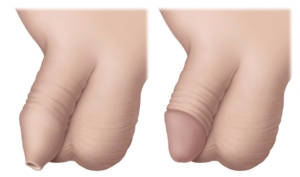
Surgical removal of foreskin with penile block for post-operative pain relief

Why is it done?

  • Religious reasons.
  • Health reasons.
  • Personal reasons.
  • Medical reasons:
    • Narrowing of foreskin -phimosis.
    • Foreskin stuck behind head of penis – paraphimosis.
    • Severe infection of the foreskin and head of penis -balanoposthitis.
    • Cancer of the foreskin – SCC.
    • Trauma.

How is it done?

  • This is done under general anesthetic or penile block.
  • A cut is made at the level of the glans penis, circumferentially around the penis, through the skin.
  • The foreskin is then retracted, and a second incision is made circumferentially around the base of the glans penis.
  • The skin between the 2 incisions is then surgically removed.
  • Dissolvable sutures are then placed between the 2 remaining edges.
  • A Jelonet and Bactroban dressing is then placed tightly around the penis, still allowing urine to pass through the end.
  • A local anesthetic is injected into the base of the penis thus giving post-operative pain relief for the next 4-6 hours.

Unfortunately, no infants younger than 12 months can be operated on in any of the private hospitals ONLY at Children’s Hospital.


What to expect after the procedure

  • Any anesthetic has its risks, and the anesthetist will explain such risks.
  • Bleeding is a common complication.
  • With any subsequent erections post operatively, the sutures may pull out causing an opening of the wound with subsequent bleeding.
  • An infection of the wound can occur if the dressings are left on too long.
  • If the dressing has been applied too tightly, or if there is any discomfort, please remove the dressing immediately. If some hemorrhaging re-occurs, REDO the dressing!
  • In very young patients, the foreskin may still be attached to the head of the penis, thus leaving a raw and red glans penis after surgery. Keep the affected area clean and apply ointment as prescribed.
  • NB! Each person is unique and for this reason symptoms may vary!

What next?

  • The dressing should be removed in a bath 48 hours after the procedure.
  • The dressing should be soaked until it comes off with ease.
  • The dressing may sometimes adhere to the wound causing slight bleeding on removal. Don’t panic the bleeding will stop.
  • As soon as the dressing has been removed, Bactroban (or similar) ointment should be applied on the wound twice a day.
  • This may not be required if the foreskin was not adhered to the glans penis.
  • On discharge a prescription may be issued for the patient to collect.
  • A follow-up appointment should be scheduled to see Dr Schoeman within 2 weeks.
  • Please don’t hesitate to direct all pre-operative queries to Dr Schoeman’s rooms.
  • PLEASE CONTACT THE HOSPITAL WITH ANY POST-OPERATIVE CONCERNS AND RETURN TO THE HOSPITAL IMMEDIATELY SHOULD THERE BE ANY SIGNS OF SEPSIS.


Download Information Sheet

Wes Circumcision

Colpocleisis

Permanent closure of the vagina in the elderly who suffer from pelvic organ prolapse and who aren’t and never will be sexually active.

Why is it done?

  • The aim of surgery is to relieve the symptoms of vaginal bulge and / or laxity.
  • Improve bladder function.
  • Used where women are elderly and have no desire to be sexually active again.
  • Vaginal prolapse is a common condition causing symptoms such as a sensation of dragging or fullness in the vagina, and difficulty emptying the bowel or bladder and back ache.
  • About 1 in 10 women need surgery for prolapse of the uterus or vagina.


How is it done?

  • This procedure is done under a spinal / general anesthetic, as decided by the anesthetist.
  • A large portion of the vaginal mucosa is removed on the bladder and rectal side, from the vault to the introitus.
  • The edges of the front wall are sewn to the back wall, therefore occluding the whole urethra.
  • The side of the vagina is not occluded to allow drainage of fluids.
  • A catheter is placed into the bladder at the end of surgery.
  • The catheter is removed the next day

Complications?

There are also general risks associated with surgery:

  • Wound infection.
  • Urinary tract infection.
  • NO MORE VAGINAL INTERCOURSE.
  • Rarely – Bleeding requiring a blood transfusion and Deep vein thrombosis (clots) in the legs, Chest infection.


Download Information Sheet

Wes Colpocleisis