
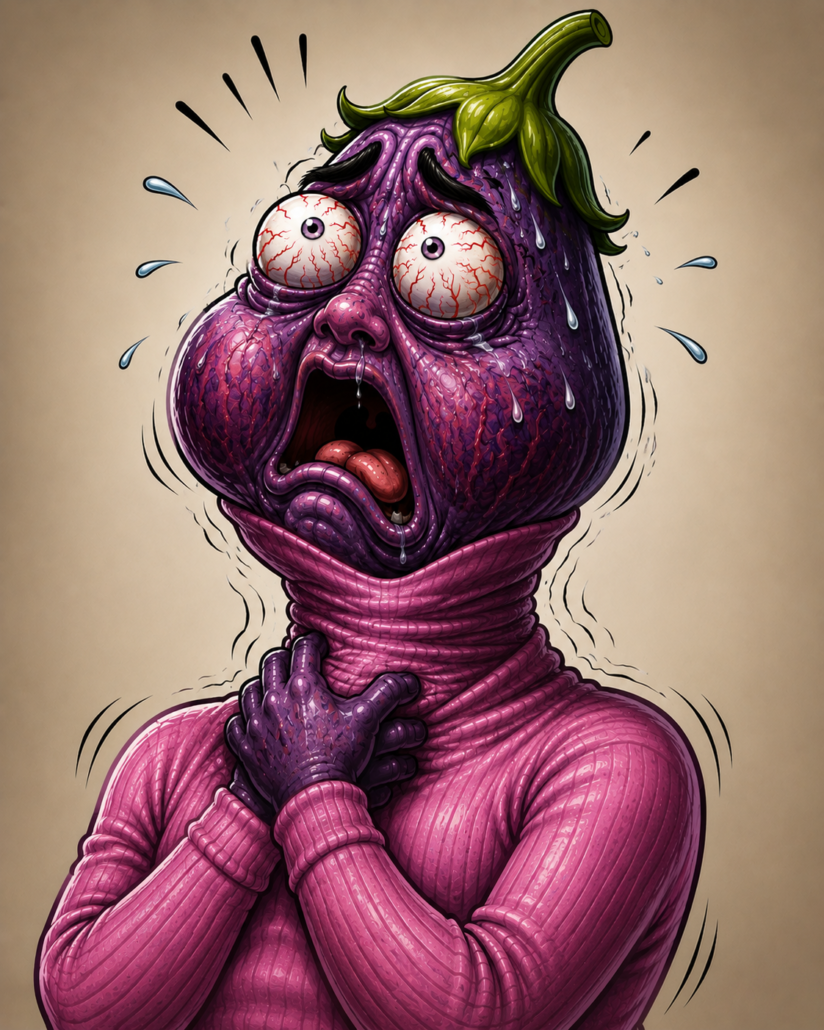
Paraphimosis: When the Foreskin Gets Stuck
Paraphimosis is one of those urological problems where the phrase “I’ll see how it goes overnight” is not a particularly good plan.
It occurs when the foreskin of an uncircumcised penis is pulled back behind the head of the penis (glans) and becomes trapped there. The tight band of foreskin can interfere with normal drainage of blood and fluid from the glans, causing increasing swelling. As the swelling worsens, the foreskin becomes progressively more difficult to return to its normal position.
Although the appearance can be alarming and the circumstances occasionally embarrassing, paraphimosis is a genuine urological emergency. Early treatment is usually relatively straightforward. Delay can make treatment considerably more difficult and, in severe cases, threaten the blood supply to the penis.
What is paraphimosis?
Normally, a mobile foreskin can be gently retracted behind the glans and then returned forward to cover it.
In paraphimosis, the foreskin has been retracted but cannot be brought forward again.
The retracted foreskin forms a tight constricting ring behind the glans. This initially obstructs lymphatic and venous drainage, causing fluid to accumulate and the glans and foreskin to become swollen.
This creates an unfortunate little feedback loop:
Tight foreskin → swelling → tighter constriction → more swelling.
In severe or prolonged cases, arterial blood flow can eventually be compromised.
That is why paraphimosis should not simply be regarded as “a tight foreskin”. It requires prompt assessment and treatment.
What does paraphimosis look and feel like?
The typical presentation is fairly characteristic.
Symptoms and signs can include:
- A foreskin that is stuck behind the glans
- A tight band or “collar” of foreskin behind the head of the penis
- Increasing swelling of the glans
- Swelling of the retracted foreskin
- Penile pain or tenderness
- Difficulty pulling the foreskin forward
- Difficulty passing urine in more severe cases
The glans may initially look red or congested. With worsening obstruction to its circulation, it can become increasingly dark red, purple or dusky.
Severe pain, marked swelling, loss of sensation or a dark/blue/black appearance requires immediate emergency medical assessment.
What causes paraphimosis?
Paraphimosis usually occurs after the foreskin has deliberately or inadvertently been pulled backwards and then left behind the glans.
Medical procedures
A surprisingly common cause is retraction of the foreskin during:
- Urinary catheter insertion
- Examination of the penis
- Cystoscopy or other urological procedures
- Cleaning or nursing care
After manipulating an uncircumcised penis, the foreskin should always be returned to its normal position.
It is a small final step that can prevent a disproportionately large problem.
Phimosis or a tight foreskin
Men with a relatively tight foreskin may be able to retract it, but struggle to return it once it has passed behind the widest part of the glans.
Repeated episodes of inflammation or scarring can increase this risk.
Sexual activity
Retraction during sexual intercourse or masturbation can occasionally result in the foreskin becoming trapped.
Infection and inflammation
Balanitis and balanoposthitis can cause swelling of the glans and foreskin, making paraphimosis more likely.
Trauma
Penile swelling following trauma can occasionally trap a previously retracted foreskin.
Poor foreskin care
Paraphimosis can occur in elderly, debilitated or hospitalised men when a foreskin is retracted for cleaning or catheterisation and is inadvertently left in that position.
Why is paraphimosis an emergency?
The problem is not simply that the foreskin is in the wrong place.
The tight band acts rather like a tourniquet around the penis.
Venous and lymphatic drainage are affected first. Blood and fluid enter the glans more easily than they can leave, producing increasing oedema.
As the glans enlarges, the constricting ring becomes tighter.
If this progresses sufficiently, arterial circulation can also become compromised.
Rarely, severe untreated paraphimosis can result in:
- Ischaemia
- Ulceration
- Tissue necrosis
- Gangrene
- Permanent penile injury
Fortunately, these complications are unusual when treatment is sought promptly.
Urgent treatment
The immediate objective is simple:
Reduce the swelling and return the foreskin over the glans.
Treatment depends on the degree of swelling, duration of the problem, pain and whether there are signs of compromised blood flow.
Pain relief and local anaesthesia
Reduction can be uncomfortable, particularly when substantial swelling has developed.
Depending on the circumstances, treatment may involve:
- Oral or intravenous analgesia
- Local anaesthetic gel
- Penile nerve block
- Occasionally sedation
Adequate pain control also allows the patient to relax, which can make reduction easier.
Reducing the swelling
Before attempting reduction, pressure may be applied to the swollen glans and foreskin for several minutes to encourage oedema to disperse.
Compression techniques or dressings may sometimes be used.
The principle is straightforward: make the glans smaller before asking the foreskin to travel back over it.
Manual reduction
Once swelling has been reduced, the clinician gently compresses the glans while simultaneously drawing the foreskin forward.
Successful reduction usually produces rapid improvement in the constriction and discomfort.
This should be performed carefully. Forceful repeated manipulation of a severely swollen penis can cause additional trauma.
What if manual reduction doesn’t work?
Occasionally the constricting ring is simply too tight.
In that situation, further attempts at heroic squeezing are unlikely to win any medals.
A dorsal slit may be required.
After appropriate local anaesthesia, a small incision is made through the constricting portion of the foreskin. This releases the tight band and allows the foreskin to be repositioned.
If the tissue appears significantly compromised, urgent surgical assessment is particularly important.
What happens after successful reduction?
Successful reduction solves the immediate emergency, but it does not necessarily solve the underlying problem.
There may still be:
- Residual swelling
- Inflammation
- Small tears or abrasions
- Infection
- Phimosis
- Scarring of the foreskin
Patients are generally advised not to repeatedly retract the foreskin while significant swelling and inflammation remain.
Any associated infection or inflammatory condition should also be treated.
Delayed treatment: preventing it happening again
Once the acute episode has settled, the underlying foreskin should be reassessed.
This is particularly important after recurrent paraphimosis or when there is significant phimosis.
Treatment options may include observation, topical therapy in selected cases, foreskin-preserving surgery or circumcision.
Circumcision
For men with significant scarring, persistent phimosis or recurrent paraphimosis, circumcision provides a definitive solution by removing the problematic foreskin.
Circumcision is usually performed after the acute swelling and inflammation have settled, rather than during the initial emergency, unless circumstances require otherwise.
Preputioplasty
Selected patients wishing to preserve their foreskin may be suitable for a foreskin-widening procedure such as preputioplasty.
Whether this is appropriate depends on the degree and cause of the narrowing.
Can paraphimosis be prevented?
Often, yes.
The most important rule is wonderfully uncomplicated:
If the foreskin is pulled back, put it back.
After catheterisation, examination, washing or any medical procedure, the foreskin should be returned to its normal position over the glans.
Men with a persistently tight foreskin, recurrent inflammation or previous paraphimosis should consider discussing definitive treatment with a urologist rather than waiting for another episode.
When should I seek medical attention?
If the foreskin is trapped behind the glans and cannot easily be returned to its normal position, seek urgent medical attention.
Do not wait for the swelling to settle by itself.
Increasing pain, rapidly worsening swelling, difficulty urinating or a glans that is becoming dark purple, blue or black requires immediate emergency assessment.
Embarrassment should never delay treatment. Urologists have seen essentially every variation the human anatomy can produce, and a stuck foreskin is very much part of the job description.
The take-home message
Paraphimosis occurs when a retracted foreskin becomes trapped behind the glans and forms a constricting band.
It may begin as an uncomfortable inconvenience, but progressive swelling can turn it into a genuine emergency.
Early treatment is usually simple and highly effective.
The priorities are to reduce swelling, restore the foreskin to its normal position and protect the circulation to the penis. Once the emergency has resolved, any underlying phimosis or foreskin disease should be assessed to reduce the chance of recurrence.
And perhaps the easiest piece of preventative urological advice to remember:
Foreskin back? Put it back.
This information is intended for general patient education and does not replace individual medical assessment. Suspected paraphimosis requires prompt medical attention.


Leave a Reply
Want to join the discussion?Feel free to contribute!