
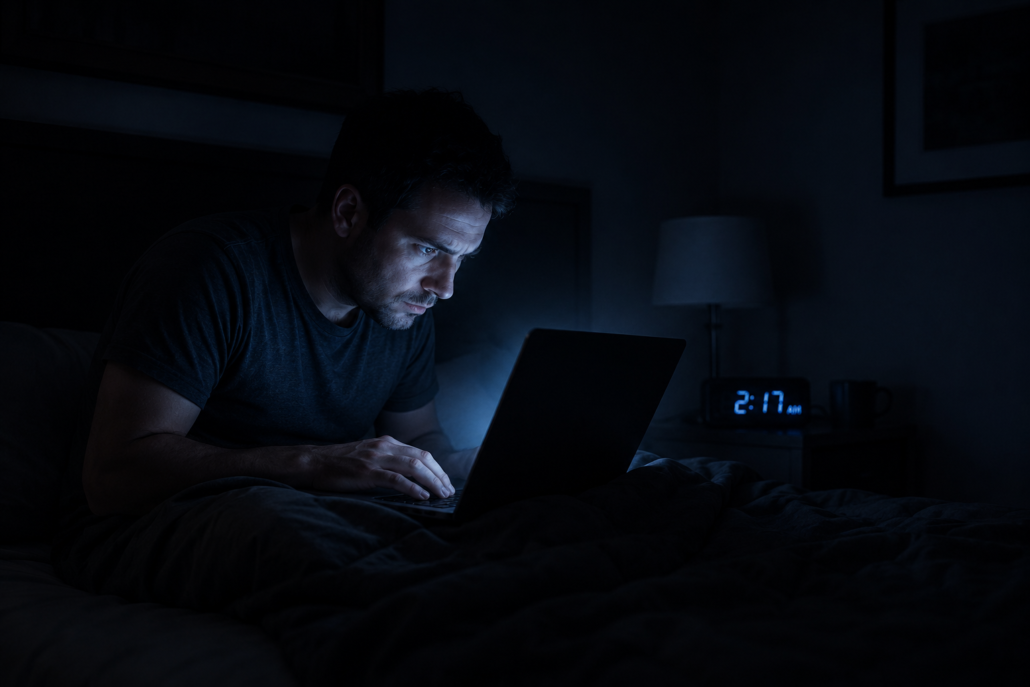
Pornography and Men’s Health: When Sexual Entertainment Starts Taking More Than It Gives
Pornography has never been easier to access. What once required some effort to obtain is now available privately, instantly and endlessly through a phone.
For many men, occasional pornography use does not necessarily cause a medical or psychological problem. However, frequent, escalating or compulsive use can become troublesome. It may affect sexual arousal, erections, orgasm, mood, self-esteem, relationships and the way a man experiences intimacy.
For some men, pornography gradually changes from something they choose to watch into something they feel they need to watch.
That distinction matters.
When does pornography use become a problem?
There is no medically defined number of minutes, videos or episodes per week that automatically makes pornography use unhealthy.
The more useful questions are:
- Do you repeatedly watch pornography for longer than you intended?
- Have you tried unsuccessfully to cut down?
- Do you need increasingly novel, intense or specific material to maintain interest?
- Is pornography replacing sexual intimacy with your partner?
- Do erections seem easier with pornography than with a real partner?
- Do you struggle to reach orgasm during partnered sex?
- Are you hiding your pornography use?
- Is it interfering with sleep, work, exercise or family life?
- Do you feel anxious, irritable or preoccupied when trying not to use it?
- Do you continue despite knowing that it is hurting your relationship?
When several of these occur together, pornography may no longer simply be entertainment.
It may have become part of a compulsive behavioural pattern.
Pornography, the brain and sexual arousal
Male sexual arousal is not simply a hydraulic event involving blood entering the penis.
It begins in the brain.
Sexual images activate attention, motivation, reward and arousal pathways. The brain then communicates through the spinal cord and autonomic nerves to produce genital arousal and erection.
Internet pornography can provide an unusually powerful combination:
sexual stimulation + novelty + instant availability + almost unlimited choice.
With repeated exposure, some men describe needing more novelty or more stimulating material to achieve the same degree of excitement.
Importantly, this does not mean that every pornography user develops an “addicted brain”, nor should every sexual difficulty automatically be blamed on pornography. Human sexual behaviour is considerably more complicated.
But in some men, repeated pornography use can become strongly linked to masturbation and arousal. The man’s sexual response may become increasingly conditioned to a particular combination of screen, imagery, novelty, masturbation technique and privacy.
A real partner cannot, and should not have to, compete with an endless stream of rapidly changing digital stimulation.
Can pornography cause erectile dysfunction?
This is one of the most common questions men ask.
The relationship is complicated.
Some observational studies have found associations between problematic pornography use and sexual dissatisfaction or erectile difficulties, but this does not prove that pornography directly causes erectile dysfunction in every man.
Erectile dysfunction can also result from:
- ageing
- diabetes
- cardiovascular disease
- high blood pressure
- obesity
- smoking
- medications
- low testosterone
- neurological disease
- prostate surgery
- depression
- anxiety
- relationship difficulties
- performance anxiety.
Nevertheless, some younger men report an interesting pattern:
Good erections during pornography and masturbation, but unreliable erections with a partner.
When this occurs, physical erectile function may actually be relatively intact.
The difficulty may instead involve arousal conditioning, anxiety, expectations, relationship factors or a combination of these.
A urological assessment is still worthwhile because physical causes should not simply be assumed away.
Delayed ejaculation and difficulty reaching orgasm
Problematic pornography use may also be associated with difficulty reaching orgasm during partnered sex.
Some men become accustomed to a very particular masturbation technique: specific pressure, speed, position and visual stimulation.
Partnered sexual activity is different.
The result can sometimes be:
normal erection → prolonged intercourse → increasing effort → frustration → loss of erection → disappointment for both partners.
Sex gradually stops feeling spontaneous and starts feeling like an examination nobody volunteered to sit.
Reducing pornography use, modifying masturbation habits and removing the pressure to “perform” can sometimes help restore a more natural sexual response.
Mental health
Pornography can also become a way of managing uncomfortable emotions.
A man may reach for pornography when he feels:
- stressed
- lonely
- rejected
- bored
- anxious
- angry
- depressed
- emotionally disconnected.
The behaviour temporarily provides distraction or relief.
But afterwards there may be regret, secrecy or shame.
A cycle can develop:
stress → pornography → temporary relief → guilt or isolation → more stress → pornography again.
The pornography may therefore be only part of the problem.
The more important question can become:
“What am I using pornography to escape from?”
That question often opens a much more useful conversation.
Pornography and relationships
The greatest harm may sometimes occur outside the bedroom.
Secret or compulsive pornography use can affect trust between partners.
A partner may wonder:
Am I attractive enough?
Why does he prefer pornography to me?
What has he been watching?
Why did he hide it?
Can I trust him?
For the man, the experience may be equally difficult. He may genuinely love his partner while simultaneously feeling unable to control a behaviour that is damaging the relationship.
Arguments about pornography therefore often become arguments about something much deeper:
trust, intimacy, honesty, vulnerability and connection.
Unrealistic expectations about sex
Pornography is entertainment. It is not sex education.
Bodies are selected. Scenes are edited. Performances are exaggerated. Erections appear permanently reliable. Sexual encounters often progress with very little communication, awkwardness, humour or emotional connection.
Real sexuality is considerably more human.
Bodies change.
Erections occasionally disappear.
Orgasms do not always occur.
People need reassurance.
Couples sometimes laugh.
Sometimes sex simply does not work particularly well that evening.
That is normal.
When pornography becomes a man’s principal source of sexual education, however, unrealistic expectations can develop regarding penis size, erection duration, sexual positions, frequency of intercourse and what partners supposedly enjoy.
Effects on partners and families
Problematic pornography use can extend beyond the couple’s sexual relationship.
Secrecy may produce emotional distance.
Late-night viewing may interfere with sleep.
Preoccupation can reduce attention given to children or a partner.
Arguments may become increasingly frequent.
In severe situations, substantial amounts of time or money can disappear into online sexual activity.
The man may be physically sitting in the family home while psychologically living somewhere entirely different.
That disconnection is often what families feel most strongly.
Is pornography addiction a recognised diagnosis?
The terminology requires some care.
“Porn addiction” is widely used in everyday conversation, but clinicians may instead assess whether a person has compulsive sexual behaviour.
Compulsive Sexual Behaviour Disorder is recognised in the World Health Organization’s ICD-11 classification. It involves persistent difficulty controlling intense repetitive sexual impulses or behaviours that result in significant impairment in personal, family, social, educational or occupational life.
Simply having a strong sex drive does not qualify.
Nor should distress caused purely by moral or religious disagreement with one’s own sexual behaviour automatically be labelled a disorder.
The issue is loss of control and meaningful harm.
What can a man do about it?
Recovery does not necessarily require declaring war on sexuality.
The goal is to regain choice.
A useful starting point is to honestly observe the pattern.
1. Identify your triggers
Ask when pornography use tends to occur.
Is it when you are:
- alone?
- stressed?
- drinking alcohol?
- lying awake at night?
- arguing with your partner?
- bored?
- feeling rejected?
Understanding the trigger is often more useful than simply trying to suppress the behaviour.
2. Make access less automatic
Consider removing pornography from your phone, deleting saved material, unfollowing triggering accounts and using website or device restrictions.
Most importantly, change the environment associated with the behaviour.
A smartphone beside the bed at midnight can become a surprisingly persuasive little rectangle.
3. Take a break from pornography
For men experiencing sexual difficulties, a period without pornography can be useful.
This is not based on the idea that the brain requires a magical predetermined “reset period”.
Rather, it provides an opportunity to discover how much pornography has become connected to arousal, masturbation and emotional regulation.
4. Reconsider masturbation habits
If masturbation has become very frequent, rushed or dependent on intense visual stimulation, try changing the pattern.
Slower masturbation without pornography and with less intense pressure may help some men reconnect sexual arousal with bodily sensation rather than constant visual novelty.
5. Rebuild partnered intimacy
Do not make every sexual encounter a test of whether the penis works.
Spend time touching, kissing and being physically close without demanding intercourse or orgasm.
Sexual confidence often returns more readily when the scoreboard disappears.
6. Exercise, sleep and reconnect
Exercise, meaningful social contact, adequate sleep, hobbies and time outdoors sound remarkably ordinary.
That is precisely their strength.
Compulsive behaviours often flourish in isolation, boredom and emotional exhaustion.
Building a fuller life leaves less territory for pornography to occupy.
Talk to your partner
If pornography has damaged trust, simply promising:
“I’ll never do it again.”
may not repair the relationship.
Trust usually returns through consistent behaviour rather than dramatic promises.
A more constructive conversation might acknowledge:
- what has happened
- the effect on your partner
- what you are changing
- what support you are seeking
- what boundaries you will agree upon together.
Couples counselling can be extremely valuable when pornography has become entangled with intimacy, resentment or secrecy.
Psychological treatment can help
A psychologist, counsellor or appropriately trained sex therapist can help identify why the behaviour has become difficult to control.
Treatment may include:
- cognitive behavioural therapy
- strategies for managing urges and triggers
- mindfulness-based approaches
- treatment of anxiety or depression
- addressing loneliness or trauma
- sexual therapy
- couples counselling
- rebuilding intimacy and communication.
Seeking psychological help does not mean that the problem is “all in your head”.
Sexual function lives at the intersection of the brain, body, emotions and relationship.
Treating only one part can miss the larger picture.
When should you see a urologist?
Consider discussing the problem with your GP or urologist if you are experiencing:
- erectile dysfunction
- reduced libido
- delayed ejaculation
- inability to orgasm
- penile pain or curvature
- concerns about testosterone
- loss of morning erections
- significant changes in sexual function.
It is important not to assume that pornography explains every sexual problem.
Diabetes, cardiovascular disease, hormonal abnormalities, medication effects and other medical conditions can produce very similar symptoms.
A proper assessment helps separate the physical from the psychological, and frequently discovers elements of both.
Where can men get help in Australia?
There is no need to wait until pornography has destroyed a relationship before asking for help.
Centre for Men and Families
The Centre for Men and Families provides counselling and support for men as well as men’s circles and programs designed to create genuine connection between men.
For some men, this is particularly valuable because problematic pornography use can thrive in secrecy and isolation. Being able to speak honestly with another person can be an important part of breaking that cycle.
MensLine Australia
MensLine Australia provides free professional telephone and online counselling to Australian men, 24 hours a day, seven days a week.
Phone: 1300 78 99 78
Men can seek help with relationships, mental health, loneliness, stress, addiction and other personal difficulties.
Your GP can also arrange referral to a psychologist, psychiatrist, relationship counsellor or sexual-health professional where appropriate.
If pornography use is accompanied by severe depression, hopelessness or thoughts of suicide, seek urgent professional help. In Australia, Lifeline can be contacted on 13 11 14. If there is immediate danger, call 000.
There is a way forward
Pornography does not make someone a bad man.
But when a behaviour begins stealing intimacy, sexual confidence, sleep, honesty, relationships or time with the people who matter, it deserves attention.
The objective is not shame.
It is awareness.
It is learning to recognise what drives the behaviour, restoring control over sexual choices and rediscovering something pornography can imitate visually but cannot provide:
genuine intimacy with another human being.
For many men, recovery begins with a surprisingly small act:
telling someone the truth.

Leave a Reply
Want to join the discussion?Feel free to contribute!