
Robotic-Assisted Radical Prostatectomy for Prostate Cancer
Understanding Robotic Prostate Cancer Surgery
A diagnosis of prostate cancer brings with it several important decisions. For men with cancer that is confined to the prostate, or selected cancers that have extended just beyond it, radical prostatectomy remains an established curative treatment option.
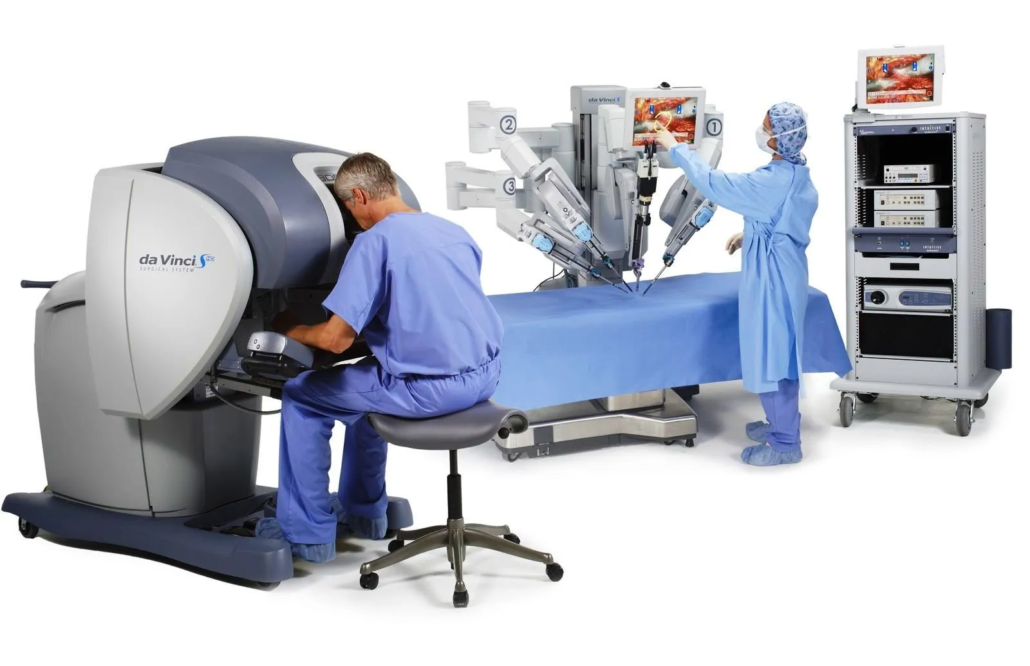
Robotic-assisted radical prostatectomy (RARP) is a minimally invasive approach in which the prostate and seminal vesicles are removed using a robotic surgical system. Depending on the characteristics of the cancer, lymph nodes in the pelvis may also be removed.
The robotic system does not perform the operation independently. Every movement is controlled by the surgeon. The technology provides magnified three-dimensional vision and highly manoeuvrable instruments, allowing precise dissection within the confined space of the male pelvis.
Compared with traditional open surgery, robotic-assisted surgery generally offers smaller incisions, less blood loss, a shorter hospital stay and faster early recovery. Importantly, however, the experience and skill of the surgeon remain more important than the particular surgical platform used.
Who May Benefit from Radical Prostatectomy?
Radical prostatectomy is most commonly considered for men with localised prostate cancer who have a sufficiently long-life expectancy to benefit from definitive treatment.
It may also form part of treatment for selected men with locally advanced or higher-risk prostate cancer, sometimes combined with additional treatments such as radiotherapy or androgen deprivation therapy.
The decision is individual and takes into account:
- PSA level and PSA history
- Prostate biopsy results and Grade Group/Gleason score
- Clinical stage of the cancer
- MRI findings
- PSMA PET/CT or other staging investigations when indicated
- Age and general health
- Other medical conditions
- Baseline urinary function
- Baseline erectile and sexual function
- Expected life expectancy
- Patient preferences regarding cancer control and treatment side effects
For some men with low-risk prostate cancer, active surveillance may be preferable to immediate surgery. Radiotherapy is also an important alternative to surgery for many patients.
The objective is therefore not simply to determine whether an operation can be performed, but whether surgery represents the most appropriate treatment for that individual patient.
When May Surgery Not Be Appropriate?
There are relatively few absolute contraindications to robotic prostatectomy, but surgery may not be the preferred treatment when the potential risks outweigh the expected benefits.
Examples include:
- Significant medical illness making general anaesthesia or major surgery unsafe
- Limited life expectancy from other health conditions
- Some cases of metastatic prostate cancer where systemic therapy is the principal treatment
- Situations where another treatment offers a better balance between cancer control and quality of life
- Large BMI, requiring a weight loss program prior to surgery
Previous abdominal or pelvic surgery, obesity, a very large prostate or previous prostate procedures may make robotic surgery technically more challenging, but they are not necessarily absolute contraindications.
Previous pelvic radiotherapy can make surgery substantially more complex and may increase the risk of complications. Such cases require careful individual assessment.
What Happens During Robotic Radical Prostatectomy?
Several small incisions are made in the abdomen through which robotic instruments and a camera are introduced.
The prostate and seminal vesicles are carefully separated from surrounding structures and removed. The bladder is then reconnected to the urethra, creating a new join called the vesicourethral anastomosis.
A urinary catheter is left across this join while it heals.
For men with intermediate- or high-risk prostate cancer, a pelvic lymph node dissection may also be recommended depending on the estimated likelihood of lymph node involvement.
One of the most important decisions made before and during surgery concerns the nerves responsible for erections.
Nerve-Sparing Versus Non-Nerve-Sparing Surgery
Running immediately alongside the prostate are delicate neurovascular structures that contribute to erectile function.
Whenever oncologically safe, the surgeon may attempt to preserve these nerves.
Bilateral nerve sparing
Both neurovascular bundles are preserved where the cancer characteristics and anatomy allow.
This offers the greatest opportunity for recovery of natural erections, particularly in younger men who had good erectile function before surgery.
Unilateral nerve sparing
Sometimes cancer is close to the nerves on one side of the prostate but appears safely separated on the other.
In this situation, the surgeon may preserve the neurovascular bundle on one side while performing a wider excision on the cancer-bearing side.
Non-nerve-sparing surgery
When cancer appears to extend close to or beyond the prostate adjacent to the neurovascular bundles, preserving these structures may compromise the completeness of cancer removal.
One or both bundles may therefore need to be removed.
Cancer control takes priority over preservation of erectile function.
Nerve-sparing is most appropriate when there is a reasonable expectation that the cancer can be completely removed while leaving the neurovascular tissue intact. Cancer Council Australia similarly notes that nerve-sparing surgery is most suitable when cancer is not close to these nerves and that erectile difficulties can still occur despite successful nerve preservation.
Modern MRI and biopsy information can help the surgeon plan whether nerve sparing is appropriate on each side of the prostate.
Preparing for Robotic Prostatectomy
Successful recovery begins before the operation.
Preparation may include a pre-operative medical and anaesthetic assessment, blood tests and review of medications. Blood-thinning medications may need to be stopped or modified under medical supervision.
Patients should maintain regular physical activity where possible and optimise conditions such as diabetes, hypertension and cardiovascular disease. Smoking cessation is strongly encouraged.
Patients should also understand what to expect regarding the urinary catheter, hospital stay, postoperative activity restrictions and recovery at home.
Pelvic Floor Physiotherapy Before Surgery
Pelvic floor rehabilitation should ideally begin before surgery rather than after the catheter is removed.
A consultation with a physiotherapist experienced in men’s pelvic health can help identify the correct muscles and teach an individualised exercise program.
The Prostate Cancer Foundation of Australia recommends at least one pre-operative assessment with a specialist men’s health pelvic floor physiotherapist to optimise urinary continence recovery.
The goal is not simply to perform hundreds of pelvic floor contractions. Correct technique, coordination, endurance and appropriate relaxation of the muscles are important.
What Happens After Surgery?
Hospitalisation following uncomplicated robotic prostatectomy is generally relatively short.
Patients are encouraged to mobilise soon after surgery to reduce the risk of blood clots and assist recovery.
A urinary catheter remains in place while the connection between the bladder and urethra heals. Catheter removal is commonly performed approximately one to two weeks after surgery, depending on the surgeon and individual circumstances.
Patients can gradually increase their activity after discharge but should avoid heavy lifting and strenuous exercise during the early healing period. Many patients return towards their usual activities over approximately six weeks.
The removed prostate is examined by a specialist pathologist. The final pathology provides important information including:
- Cancer Grade Group
- Pathological tumour stage
- Whether cancer extends outside the prostate
- Seminal vesicle involvement
- Surgical margin status
- Lymph node involvement, when lymph nodes have been removed
A PSA blood test is subsequently performed. Following successful radical prostatectomy, PSA should fall to a very low or undetectable level.
Ongoing PSA monitoring is essential.
Pelvic Floor Rehabilitation and Urinary Continence
Temporary urinary leakage is common after radical prostatectomy.
Leakage is usually most noticeable when coughing, sneezing, standing from a chair, exercising or lifting. Continence generally improves progressively over the following weeks and months and may continue improving for up to a year.
Once the catheter has been removed and the surgeon has given approval, pelvic floor exercises are recommenced.
A structured program may involve:
- Correct pelvic floor muscle activation
- Strength and endurance training
- Functional contractions before coughing, lifting or standing
- Bladder training where appropriate
- Gradual return to exercise
- Monitoring of pad usage and urinary leakage
Patients with troublesome persistent incontinence should undergo further assessment rather than simply being advised to continue exercises indefinitely.
For persistent stress urinary incontinence, surgical treatments including a male sling or artificial urinary sphincter may eventually be considered. Cancer Council notes that surgical treatment may be appropriate when significant incontinence fails to improve over approximately 6–12 months.
Erectile Function and Penile Rehabilitation
Erectile dysfunction is one of the most important potential consequences of radical prostatectomy.
Even when both neurovascular bundles are preserved perfectly, erections usually do not return immediately.
The nerves may temporarily lose function following surgery because of manipulation, inflammation and changes in their blood supply. Recovery can take months and sometimes several years. Cancer Council Australia notes that erectile function can continue improving for up to three years after prostate cancer treatment.
Recovery depends on several factors including:
- Age
- Erectile function before surgery
- Cardiovascular health
- Diabetes and other medical conditions
- Smoking
- Whether one or both nerves could be preserved
- Extent of the cancer
- Surgical factors
What Is Penile Rehabilitation?
Penile rehabilitation aims to maintain penile tissue health while the nerves recover and to assist patients in returning to satisfactory sexual function.
Treatment is individualized and may include:
PDE5 inhibitor tablets
Medications such as sildenafil or tadalafil increase blood flow to the penis and may be introduced following surgery when clinically appropriate.
They are more likely to produce erections when functional nerve pathways remain.
Vacuum erection device
A vacuum erection device draws blood into the penis mechanically. Regular use may help maintain penile tissue health and can also provide erections for sexual activity.
Penile injection therapy
Intracavernosal injections can produce erections independently of normal nerve signalling and can be particularly useful when tablets are ineffective during the early recovery period.
Penile prosthesis
For men with persistent erectile dysfunction who have not achieved satisfactory results with less invasive therapies, implantation of a penile prosthesis can provide a reliable long-term solution.
Cancer Council Australia recommends discussing penile rehabilitation before and after treatment and describes tablets, vacuum devices, injections and penile implants among the available treatment options.
Sexual rehabilitation should ideally be discussed before surgery, so that the patient and partner understand what changes to expect and what treatment options are available afterwards.
Changes to Orgasm, Ejaculation and Fertility
Radical prostatectomy permanently changes ejaculation.
Because the prostate and seminal vesicles are removed and the vas deferens are divided, semen is no longer produced during orgasm.
Men can usually still experience orgasm, but it is a dry orgasm.
Some men describe altered orgasmic sensation, and a small proportion experience discomfort or urinary leakage during orgasm.
Natural fertility is lost following radical prostatectomy. Men who may wish to father children in the future should therefore discuss sperm banking before treatment.
Possible Complications of Robotic Radical Prostatectomy
Most patients recover without major complications, but radical prostatectomy remains major pelvic surgery.
Potential complications include:
Bleeding
Blood loss is generally lower with robotic surgery than traditional open surgery, although significant bleeding or transfusion is still possible.
Infection
Urinary, wound or other infections can occur and may require antibiotics.
Blood clots
Deep vein thrombosis and pulmonary embolism are uncommon but potentially serious complications. Early mobilisation and, where indicated, compression devices or anticoagulant medication help reduce this risk.
Urinary leakage
Stress urinary incontinence is common initially and usually improves progressively.
Persistent significant leakage should be assessed by a urologist and may eventually require a male sling or artificial urinary sphincter.
Erectile dysfunction
This is managed through a structured sexual and penile rehabilitation program using medication, vacuum therapy, injection therapy or, where appropriate, penile prosthesis surgery.
Urine leak from the bladder-urethral join
Occasionally the new connection between the bladder and urethra takes longer to heal. The urinary catheter may simply need to remain in place for longer.
Bladder neck contracture or urethral narrowing
Scar tissue can occasionally narrow the urinary passage and cause a weak urinary stream or difficulty emptying the bladder. Further investigation and endoscopic treatment may be required.
Lymphocele
Following pelvic lymph node dissection, lymphatic fluid can occasionally collect within the pelvis. Small collections may resolve without treatment, while larger or symptomatic collections may require drainage.
Injury to adjacent structures
Damage to structures such as the rectum, ureters, blood vessels or bowel is uncommon but recognised and may require immediate repair or further treatment.
What If Cancer Is Found at the Surgical Margin?
The pathology report determines whether cancer cells extend to the edge of the removed specimen. This is called a positive surgical margin.
A positive margin does not automatically mean that prostate cancer will return.
Management depends on the final pathology, PSA results and other risk factors. Some patients can be safely monitored, while others may benefit from additional treatment.
If PSA remains detectable after surgery or subsequently begins to rise, investigations and salvage radiotherapy, sometimes combined with hormone therapy, may be considered.
Regular PSA surveillance therefore remains an essential part of prostate cancer care after surgery.
Balancing Cancer Control and Quality of Life
Robotic radical prostatectomy is not simply an operation to remove the prostate. Successful treatment involves three overlapping goals:
Cancer control
Complete removal of the cancer remains the primary objective.
Urinary recovery
Early pelvic floor assessment and structured rehabilitation can assist recovery of continence.
Sexual recovery
Appropriate nerve preservation, where oncologically safe, combined with early penile rehabilitation can maximise the opportunity for recovery of sexual function.
These priorities sometimes compete with one another. In particular, aggressive nerve preservation should never compromise cancer clearance.
For this reason, treatment should be tailored to the individual patient, the individual cancer and even the individual side of the prostate.
Questions to Ask Your Urologist
Before deciding on robotic radical prostatectomy, useful questions include:
- Is surgery the best treatment for my particular prostate cancer?
- What alternatives should I consider?
- Is my cancer suitable for nerve-sparing surgery?
- Can both nerves be preserved, or only one?
- Will I require pelvic lymph node dissection?
- What is my individual risk of urinary incontinence?
- What is my likelihood of recovering erections?
- When should I start pelvic floor physiotherapy?
- What penile rehabilitation program do you recommend?
- How long will the catheter remain in place?
- When can I return to driving, exercise and work?
- How will my PSA be monitored after surgery?
- What happens if my PSA does not become undetectable or rises later?
The Importance of Individualized Treatment
No two prostate cancers, and no two patients, are exactly alike.
Robotic-assisted radical prostatectomy can provide excellent cancer control for appropriately selected men while offering the advantages of minimally invasive surgery. The best outcomes, however, depend on careful patient selection, appropriate surgical planning, experienced surgery and structured rehabilitation following treatment.
A comprehensive approach should therefore begin before the operation and continue well beyond discharge from hospital, incorporating cancer surveillance, urinary continence rehabilitation, sexual rehabilitation and attention to overall physical and psychological wellbeing.
This information is intended for general education and does not replace individual medical advice. Treatment recommendations should be discussed with your urologist, radiation oncologist and multidisciplinary prostate cancer team.


Leave a Reply
Want to join the discussion?Feel free to contribute!