
Phimosis: When the Foreskin Refuses to Cooperate
The foreskin is normally a fairly cooperative piece of anatomy. It moves forward, it moves backward, and for the most part it quietly gets on with its job.
Phimosis occurs when the foreskin becomes too tight to comfortably pull back, or retract, over the head of the penis (glans).
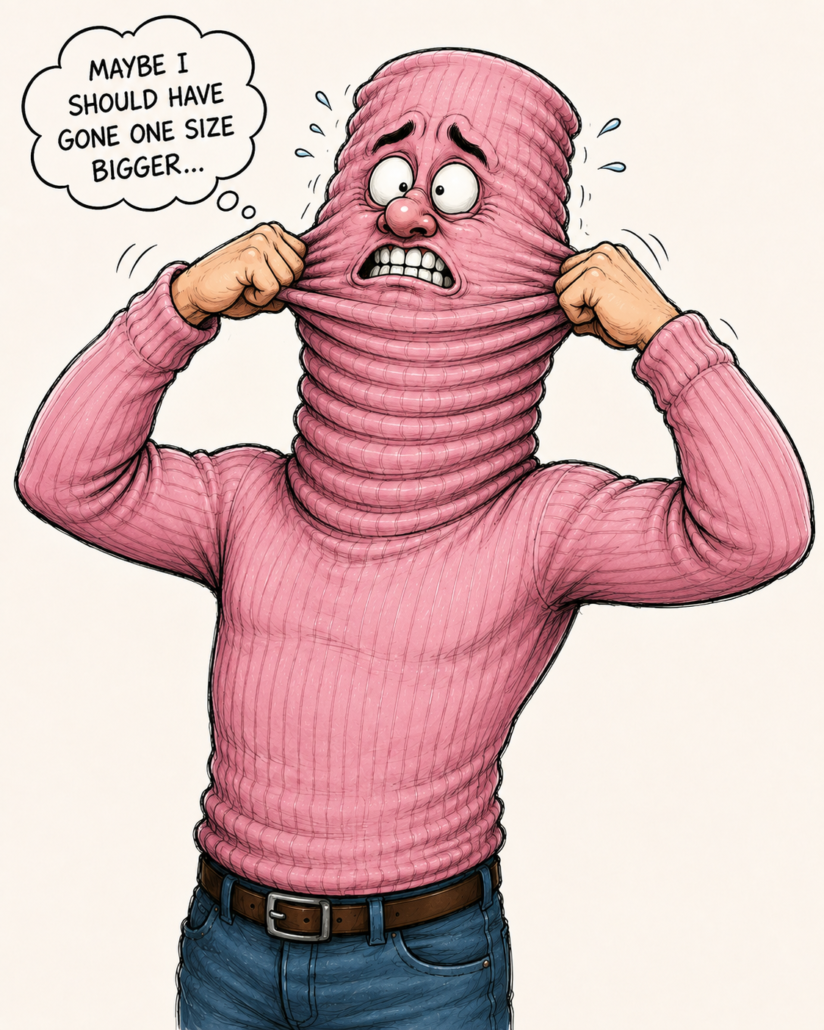
Think of it as a turtleneck that has become a little too enthusiastic about the turtle part.
In young boys, a non-retractile foreskin is usually completely normal. In adult men, however, a foreskin that becomes progressively tighter may indicate inflammation, infection or scarring and deserves assessment.
The good news is that not every tight foreskin requires circumcision. Treatment depends on why it has become tight, how severe it is and how much trouble it is causing.
What is phimosis?
The foreskin, or prepuce, is the fold of skin covering the glans penis. Normally it is sufficiently elastic to retract comfortably.
With phimosis, the opening becomes too narrow to pass easily over the glans.
There are two broad types.
Physiological phimosis
In babies and young boys, the foreskin is naturally attached to the glans and often cannot be retracted. This is a normal part of development and usually resolves gradually as the child grows.
It should not be forcibly pulled back. The foreskin is not a stubborn jar lid. Forceful retraction can cause tearing, bleeding and eventually scarring.
Pathological phimosis
Pathological phimosis develops when the foreskin becomes narrowed because of inflammation, infection or scarring.
This is particularly important in adult men.
If your foreskin previously retracted normally but has progressively become tighter, something has changed and it is worth finding out why.
What Causes Phimosis in Adults?
Recurrent inflammation or infection
Repeated episodes of balanitis (inflammation of the glans) or balanoposthitis (inflammation of both the glans and foreskin) may eventually produce scarring.
Symptoms can include redness, swelling, itching, discomfort, discharge or an unpleasant odour.
One episode may simply be irritating. Repeated episodes are your foreskin submitting a formal complaint.
Lichen sclerosus / Balanitis xerotica obliterans (BXO)
Lichen sclerosus, sometimes called balanitis xerotica obliterans or BXO when affecting the penis, is an important cause of acquired phimosis.
The foreskin may become:
- White or unusually pale
- Thickened
- Scarred
- Less elastic
- Progressively tighter
A characteristic white fibrotic ring can develop around the foreskin opening.
Once significant fibrosis develops, the foreskin behaves less like elastic skin and more like a tiny belt that somebody has pulled one notch too far.
Lichen sclerosus may also involve the urethral opening and occasionally cause narrowing of the urinary passage.
Longstanding penile lichen sclerosus is associated with an increased risk of penile cancer, so persistent or suspicious changes should always be medically assessed.
Diabetes
Recurrent balanitis and phimosis can occasionally be the unexpected messenger announcing previously undiagnosed diabetes.
Elevated glucose levels can encourage fungal and bacterial infections, producing repeated inflammation and eventual scarring.
For this reason, men presenting with recurrent balanitis or newly acquired phimosis may be advised to have their blood glucose checked.
Your foreskin probably isn’t where you expected your diabetes screening programme to begin, but medicine has a sense of humour.
Trauma and scarring
Repeatedly forcing a tight foreskin backwards can cause small tears. These heal with further scar formation, producing the unfortunate cycle:
tightness → tearing → healing → scarring → even more tightness.
Trying harder is therefore not always the solution.
If it repeatedly cracks or tears, stop wrestling with it and have it assessed.
What Are the Symptoms?
Some men have surprisingly few symptoms. Others discover that their foreskin has developed a personality of its own.
Symptoms may include:
- Difficulty or inability to retract the foreskin
- Pain when attempting retraction
- Painful erections
- Cracking or splitting of the foreskin
- Bleeding after intercourse
- Recurrent redness or inflammation
- Recurrent balanitis
- Difficulty cleaning beneath the foreskin
- Discomfort during sexual intercourse
- Ballooning of the foreskin during urination
- Difficulty directing the urinary stream
Severe phimosis can occasionally interfere significantly with urination.
If passing urine starts resembling an unpredictable garden sprinkler, it may be time for a urological opinion.
Phimosis and Sex
A tight foreskin often makes its presence particularly well known during an erection.
Some men can retract the foreskin perfectly well when the penis is flaccid but experience tightness, pain or tearing when erect.
Repeated tearing during intercourse can create additional scar tissue and make the problem progressively worse.
Phimosis does not necessarily cause erectile dysfunction. However, if every erection comes with the anticipation of pain, splitting or bleeding, enthusiasm can understandably begin to decline.
Sex should not require protective headgear.
How Is Phimosis Diagnosed?
Fortunately, diagnosis usually doesn’t require complicated machinery.
Your urologist will examine the penis and assess:
- The degree of narrowing
- Whether the foreskin can be partially or completely retracted
- The presence of a fibrotic or scarred ring
- Evidence of balanitis
- Changes suggesting lichen sclerosus
- The appearance of the glans
- The urethral opening
- Any unusual skin lesion
Blood or urine tests may occasionally be required, particularly when recurrent infection raises the possibility of diabetes.
A biopsy may be recommended if there is an unusual lesion or concern regarding lichen sclerosus, precancerous changes or penile cancer.
Treatment Options
Treatment is tailored to the underlying cause and severity.
Not every tight foreskin needs an appointment with the operating theatre.
1. Observation
Mild phimosis without significant symptoms may simply be observed.
Good hygiene and avoiding forceful retraction are important.
Physiological phimosis in children generally does not require surgery unless specific complications develop.
2. Topical Steroid Treatment
A topical corticosteroid cream or ointment may be prescribed for selected patients.
It is applied to the tight portion of the foreskin, usually for several weeks, sometimes combined with careful and gentle stretching.
The emphasis is on gentle.
This is stretching, not a tug-of-war.
Steroid treatment can reduce inflammation and improve elasticity and tends to work best when there is relatively little established scarring.
A heavily fibrotic foreskin or advanced lichen sclerosus is less likely to respond permanently.
3. Treat the Underlying Infection or Inflammation
When balanitis is present, the underlying cause should be addressed.
Treatment may involve antifungal or antibacterial medication where appropriate, treatment of inflammatory skin disease and attention to penile hygiene.
Repeated infections should also prompt consideration of underlying conditions such as diabetes.
Simply treating each infection without asking why it keeps returning is rather like repeatedly mopping the floor without looking for the leaking pipe.
4. Preputioplasty
A preputioplasty is a foreskin-preserving surgical procedure in which the narrowed area is widened.
Its major advantage is that the foreskin is retained.
It may be an option for selected men who wish to avoid circumcision, but it is less suitable for severe scarring, extensive lichen sclerosus or recurrent inflammatory disease.
There is also a possibility that narrowing may recur.
5. Circumcision
Circumcision remains the definitive surgical treatment for significant or recurrent phimosis.
The narrowed foreskin is surgically removed, permanently exposing the glans.
Circumcision may be recommended for:
- Severe or scarred phimosis
- Recurrent balanitis
- Repeated tearing or bleeding
- Failure of topical treatment
- Painful erections or intercourse
- Significant lichen sclerosus
- Recurrent urinary problems
- Suspicious or abnormal foreskin tissue
Circumcision is usually performed as a day procedure under local or general anaesthesia.
Essentially, when the turtleneck has become irreparably tight, sometimes the most reliable solution is to remove the turtleneck.
What Happens After Circumcision?
Some swelling, bruising and increased sensitivity of the glans are normal during the early recovery period.
Dissolvable sutures are commonly used and healing progresses over several weeks.
Sexual intercourse and masturbation are generally avoided until the wound has adequately healed, often around 4–6 weeks, although recovery varies between individuals.
Possible complications include bleeding, infection, wound problems, scarring, cosmetic dissatisfaction and altered sensation.
Your surgeon will discuss these risks and the expected recovery before surgery.
Phimosis vs Paraphimosis: Don’t Confuse the Two
These names sound annoyingly similar, but the distinction matters.
Phimosis means the foreskin cannot be pulled back normally.
Paraphimosis occurs when a tight foreskin has been pulled behind the glans but then becomes trapped and cannot be brought forward again.
The trapped foreskin can form a constricting band, causing increasing swelling, pain and eventually impaired blood flow.
Paraphimosis requires urgent medical attention.
If the foreskin is trapped behind the glans and the penis is becoming increasingly swollen, painful or discoloured, don’t wait for it to reconsider its position. Seek urgent medical care.
When Should You See a Urologist?
Make an appointment if you develop persistent difficulty retracting the foreskin, recurrent infections, painful erections, repeated tearing or bleeding, progressive tightening, white or scarred areas, urinary difficulties or any persistent lump, ulcer or abnormal penile lesion.
In particular, new phimosis developing in an adult should be assessed.
The Bottom Line
Phimosis is common, treatable and certainly nothing to be embarrassed about.
Mild cases may respond to topical treatment and gentle stretching. Infection or inflammation should be appropriately treated. More significant scarring may require preputioplasty or circumcision.
Most importantly, don’t allow embarrassment to turn a relatively straightforward problem into a much bigger one.
Guys, don’t suffer in silence.
Urologists spend their working lives talking about bladders, prostates, testicles, erections and foreskins. You are extremely unlikely to surprise us.
If your foreskin has become progressively tighter, keeps tearing, becomes repeatedly infected or simply isn’t behaving the way it used to, come and have it assessed.
Drop the embarrassment and come and see your friendly urologist in Brisbane.
Consultations are available at The Wesley Hospital, Caboolture and Bribie Island.
Make an appointment to see Dr Jo.
This information is intended for general patient education and does not replace individual medical assessment or advice.


Leave a Reply
Want to join the discussion?Feel free to contribute!