
Vasectomy: A Guide to Permanent Male Contraception
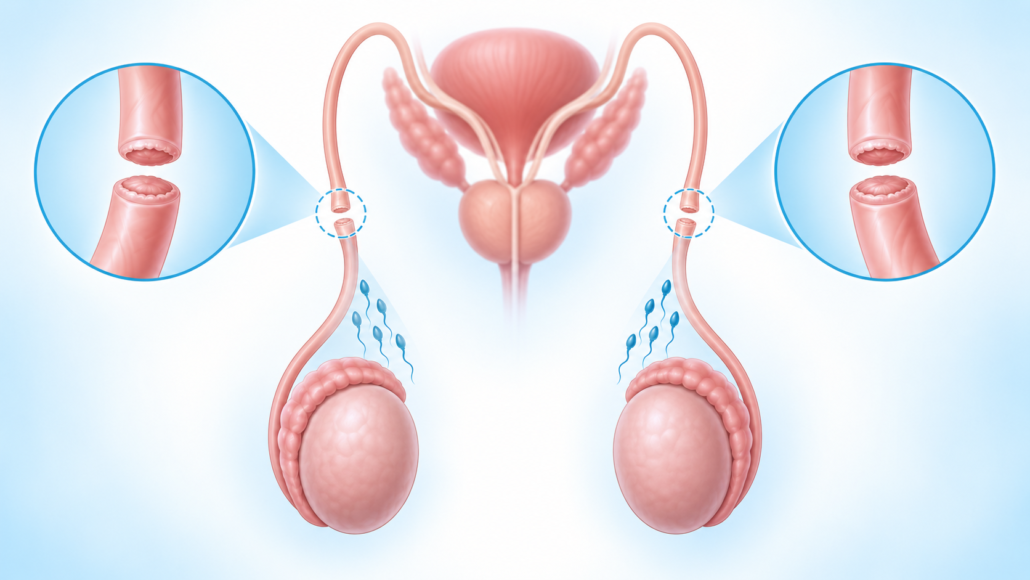
Vasectomy is a safe, effective and permanent method of male contraception. It is a relatively minor surgical procedure that prevents sperm from entering the semen by interrupting the vas deferens, the tubes that carry sperm from the testicles.
For men and couples who are confident that their family is complete, vasectomy provides highly reliable contraception without the need for ongoing medication or contraceptive devices.
What Happens During a Vasectomy?
Sperm are produced in the testicles and mature within the epididymis. During ejaculation, sperm normally travel through a tube called the vas deferens, where they ultimately mix with fluid produced by the prostate and seminal vesicles to form semen.
During a vasectomy, each vas deferens is divided and sealed so that sperm can no longer reach the ejaculate.
Importantly, vasectomy does not stop the testicles from producing sperm. The sperm that continue to be produced are naturally broken down and absorbed by the body.
Who Should Consider a Vasectomy?
Vasectomy may be appropriate for men who:
- Have completed their family and do not want more children.
- Do not wish to have children in the future.
- Want a highly effective permanent form of contraception.
- Have a partner for whom pregnancy would represent a significant health risk.
- Prefer male sterilisation rather than their partner undergoing a more invasive sterilisation procedure.
- Wish to avoid the need for long-term hormonal or barrier contraception.
The most important consideration is that vasectomy should be regarded as permanent.
Although vasectomy reversal is possible, successful reversal cannot be guaranteed. Men who are uncertain about future fertility should carefully consider alternative contraception or, in selected circumstances, sperm banking before proceeding.
How Is Vasectomy Performed?
Vasectomy is usually performed as a day procedure, commonly under local anaesthetic, although sedation or general anaesthesia may occasionally be appropriate.
A conventional or no-scalpel technique may be used.
The vas deferens is identified through a small opening in the scrotal skin. A short segment of the vas may be removed, and the divided ends are then sealed using techniques such as cautery, ligation and/or fascial interposition.
The procedure generally takes approximately 15–30 minutes.
Patients are usually able to return home shortly afterwards.
What Should I Expect After the Procedure?
Mild discomfort, bruising and swelling of the scrotum are common during the first few days.
Simple measures can help recovery, including:
- Wearing supportive underwear.
- Using simple analgesia as recommended.
- Avoiding strenuous physical activity and heavy lifting for several days.
- Keeping the wound clean and dry according to your surgeon’s instructions.
- Avoiding sexual activity until discomfort and swelling have settled.
Most men can return to sedentary work relatively quickly, while men involved in heavy physical work may require a longer recovery period.
Vasectomy Does Not Work Immediately
This is one of the most important facts to understand about vasectomy.
A man is not sterile immediately after the procedure.
Sperm that were already present beyond the site of the vasectomy may remain within the reproductive tract for a period after surgery.
For this reason, another reliable method of contraception must be used until a post-vasectomy semen analysis confirms that the procedure has been successful.
Your urologist will advise when the semen test should be performed according to the protocol being followed.
Do not stop contraception simply because a certain number of weeks or ejaculations have passed. Wait until appropriate semen testing has confirmed success.
How Effective Is Vasectomy?
Vasectomy is one of the most effective forms of contraception available.
However, no contraceptive procedure can be regarded as absolutely 100% effective. Rarely, the divided ends of the vas deferens can reconnect, a process known as recanalisation.
Recanalisation may occur early after surgery and be detected on semen testing, or very rarely occur later after an initially successful vasectomy.
This is one reason why post-vasectomy semen analysis is an essential part of the procedure rather than an optional extra.
Does Vasectomy Affect Testosterone?
No.
Vasectomy does not remove or damage the testicles, and testosterone production continues normally.
A vasectomy should therefore not cause:
- Loss of masculinity.
- Reduced testosterone levels.
- Loss of facial or body hair.
- Reduced muscle mass.
- Premature ageing.
Does Vasectomy Affect Erections or Sexual Function?
Vasectomy does not normally affect the ability to obtain or maintain an erection.
It also does not interfere with orgasm.
The nerves and blood vessels responsible for erections are not interrupted during a routine vasectomy.
Will Ejaculation Be Different?
Most of the volume of semen comes from the prostate and seminal vesicles, rather than from sperm.
Consequently, ejaculation continues after vasectomy and the appearance and volume of the semen are generally essentially unchanged.
The difference is microscopic: once the vasectomy has been successful, sperm are no longer present in the ejaculate.
What Are the Possible Complications?
Vasectomy is generally a low-risk procedure, but complications can occur.
Bleeding and Haematoma
Bleeding into the scrotum can result in swelling, bruising or a collection of blood known as a haematoma.
Small haematomas usually settle with conservative management. Large or expanding haematomas occasionally require further treatment.
Infection
Infection of the skin or deeper scrotal tissues is uncommon but may occur. Symptoms can include increasing pain, redness, swelling, discharge or fever.
Pain and Swelling
Some degree of discomfort and swelling is expected during the initial recovery period and usually settles.
Sperm Granuloma
Sperm may occasionally leak from the divided end of the vas and produce a small inflammatory lump known as a sperm granuloma.
These are often harmless but can occasionally be tender.
Epididymal Congestion
Some men develop aching or discomfort around the epididymis following vasectomy, possibly related to pressure within the sperm-carrying system.
This is usually temporary but can occasionally persist.
Post-Vasectomy Pain Syndrome
A small proportion of men experience persistent or recurrent testicular or scrotal pain lasting for months or longer after vasectomy.
This is known as chronic post-vasectomy pain or post-vasectomy pain syndrome.
Treatment depends upon severity and may include:
- Anti-inflammatory or pain medication.
- Pelvic floor or other targeted therapy where appropriate.
- Nerve-directed treatment.
- Spermatic cord procedures.
- Epididymectomy in selected cases.
- Vasectomy reversal in carefully selected patients.
Further surgery is rarely required, but persistent pain is an important complication to discuss before deciding on vasectomy.
Vasectomy Failure and Recanalisation
Occasionally sperm remain present because the vas deferens has reconnected or the procedure has otherwise failed to achieve sterility.
Persistent sperm on semen analysis may require further testing and, occasionally, a repeat vasectomy.
Very rarely, late recanalisation can occur after a previously satisfactory semen analysis, meaning that pregnancy remains possible even after initial clearance.
Does Vasectomy Increase the Risk of Prostate Cancer?
Vasectomy has been extensively studied in relation to prostate cancer and other long-term health concerns.
Current evidence has not established vasectomy as a cause of prostate cancer, and vasectomy is not generally considered a reason to alter routine prostate cancer screening or assessment.
Men should continue appropriate prostate health checks based on their age, family history, symptoms and individual risk factors.
Can a Vasectomy Be Reversed?
Yes, but reversal is considerably more complex than the original vasectomy.
Vasectomy reversal involves microsurgically reconnecting the reproductive tract, usually with a vasovasostomy or, when necessary, a vasoepididymostomy.
Success depends on several factors, including:
- The length of time since vasectomy.
- The condition of the vas deferens and epididymis.
- The surgical technique required.
- The experience of the microsurgeon.
- The fertility and age of both partners.
Successful return of sperm to the semen does not necessarily guarantee pregnancy.
For this reason, a vasectomy should never be undertaken on the assumption that it can simply be reversed later.
Alternatives to Vasectomy
Men who are uncertain about permanent contraception should consider reversible alternatives.
Depending upon individual circumstances, these may include condoms or contraceptive methods used by the female partner, including hormonal contraception, intrauterine devices and contraceptive implants.
The choice should take into account effectiveness, side effects, medical history, personal preference and future fertility plans.
When Should I Seek Medical Attention After Vasectomy?
Contact your doctor or urologist if you develop:
- Increasing rather than improving scrotal pain.
- Significant or rapidly increasing swelling.
- Heavy bleeding.
- Increasing redness or discharge from the wound.
- Fever or feeling systemically unwell.
- Persistent testicular pain.
- A concerning new scrotal lump.
The Bottom Line
Vasectomy is a highly effective, relatively simple and permanent form of male contraception.
For appropriately selected men who have completed their families, it can remove the need for ongoing contraception while leaving testosterone production, erections, orgasm and ejaculation essentially unchanged.
The key points are to understand that vasectomy should be considered permanent, complications such as chronic scrotal pain and failure can occur, and the procedure does not provide immediate contraception.
Most importantly, continue contraception after vasectomy until your post-vasectomy semen analysis has confirmed that it is safe to stop.
This information is intended for general education and does not replace individual medical advice. Your urologist can discuss whether vasectomy is appropriate for you, the technique used, expected recovery and the post-vasectomy semen-testing protocol.




Leave a Reply
Want to join the discussion?Feel free to contribute!