Ureteroscopy and Fulguration Lesion

Why is it done?

  • Viewing suspicious lesions in upper urinary tracts (ureter and renal pelvis)
  • Flexible uretero-renoscopy to review inside of the renal pelvis and renal calyces
  • Removal of the lesion using laser
  • Rigid is better for the ureteric inspection


How is it done?

  • Patients will receive general anaesthesia.
  • Prophylactic antibiotics are given.
  • The correct kidney is identified and marked while you are awake
  • You would have had a cystoscopy with retrograde pyelogram 10 days prior with the placement of a ureteric stent to prepare your ureter
  • A cystoscopy will be done first to remove the stent, and 2 guidewires will be placed to enable access up the ureter
  • Depending on the position of the lesion, either a rigid or flexible uretero-renoscope will be used.
  • Suspicious lesions may be biopsied and fulgurated.
  • Laser fulguration or Diathermy may be used.
  • Catheters will be removed the next morning depending on the presence of blood in the urine
  • Extended use of a ureteric stent may be advised, depending on the degree of bleeding


Complications

  • Ureteric perforation
  • Stricturing / Narrowing
  • Disruption of ureter
  • Stent Irritation
  • Procedure abandoned due to bleeding


 Download Information Sheet

Wes Ureteroscopy and Fulgeration lesion

Copyright 2019 Dr Jo Schoeman

Ureterotomy

What is it?

  • Opening up of a very narrowed/ obstructed ureteric opening. Either by cold knife or laser.
  • Where a congenital / acquired narrowing in the ureteric opening occurs.
  • This procedure is used to open the ureter and ease the urine flow. It can cause Vescio ureteric reflux.

Why is it done?

  • Congenital narrowing of the ureteric opening in the bladder as per a Ureterocele.
  • Previous bladder surgery where the ureteric orifice was involved: i.e. Bladder tumour resection.
  • Where conservative measures have failed: i.e. Stenting, Dilatation etc.
  • To prevent renal function deterioration.
  • Stenting or nephrostomy placement would have been done in the acute state to relief an obstructed and infected system.

How is it done?

  • Patients will receive a general anesthesia.
  • Prophylactic antibiotics is given.
  • The correct kidney is identified and marked while you are awake.
  • This will be an endoscopic procedure.
  • A cystoscopy will be done with placement of ureteric guidewire.
  • Laser will be used to cut the stricture open.
  • The alternative is using endoscopic scissors (when available).
  • A ureteric stent is left with an Indwelling Urethral catheter.
  • A ureteric stent is placed for 6 weeks and an indwelling catheter overnight.

What next?

  • You may be in hospital for 1-2 days.
  • You may have continuous intravenous antibiotics on board.
  • You may have persistent hematuria.
  • The stent may be uncomfortable with pain radiating to your affected kidney every time you urinate.
  • Your stent will be removed on a separate occasion in 6 weeks with a flexible cystoscopy under Local Anesthesia.
  • A follow-up appointment will be scheduled for 6 weeks to review your symptoms.
  • A further follow-up may be arranged with a CT IVP to check on the end result of the ureter.
  • DON’T SUFFER IN SILENCE, OR YOU WILL SUFFER ALONE!


Download Information Sheet

Wes Ureterotomy

Urodynamic Studies and Cystoscopy – Female

  • Urodynamics is a collective name for a number of tests of bladder functions.
  • The main test is called Cystometry, which measures your bladder’s ability to store and pass urine.
  • Flow Rate measures the top speed and average speed of your urine flow
  • A Voiding Cystogram will be done while you are emptying your bladder to exclude a neurological cause and Vesico-Ureteric Reflux


Why is it done?

Urinary problems, especially incontinence, may affect women of any age. Commonly more in over-65s.

Problems such as these usually increase with age and is associated with a history of spinal injury, the onset of Diabetes, Parkinsons and history of Cerebro-Vascular Incidents. Longstanding bladder outlet obstruction is a common cause.

Your symptoms may include:

  • Loss of urine while coughing, sneezing, laughing or exercising
  • Sudden and/or frequent urge to pass urine, occasional urge incontinence.
  • Getting up at night frequently to pass urine
  • Difficulty in emptying your bladder
  • Recurrent bladder infections

Results from urodynamic tests may demonstrate the reason why you have the symptoms you have, and allows an opportunity to offer you the best treatment for your problems.

How is it done?

  • You may first be asked to pass urine into a special toilet – Flowmeter- to measure how quickly your bladder is able to empty.
  • You may have a bladder scan immediately after you have passed urine to assess how well your bladder has emptied.
  • Following this, a small plastic tube called a catheter will be inserted into your bladder so it can be filled with fluid.
  • It also has a fine sensor on the end which records the pressures in your bladder.
  • A second catheter is placed in the vagina. These lines will record pressures measured in your abdomen.
  • You will be asked to do a series of exercises (cough, laugh, strain) with a full bladder to see how bad your leakage is. This is called a leak test.
  • If no leaking has been observed, these tests may be repeated in the standing position
  • Don’t worry, you will not be expected to do anything which you are not normally able to do easily.
  • Where a neurogenic bladder is suspected, the fluid placed in your bladder will contain radiological contrast medium, to exclude vesicoureteric reflux and to anatomically define the bladder anatomy and posterior urethra.
  • The information contained in this brochure is intended to be used to aid in obtaining a diagnosis and/or evaluate the effects of treatment
  • During the procedure, you will be asked questions about the sensations in your bladder.
  • You will also be asked to do some of the things which might trigger the problem you have (e.g. cough, strain, jog, stand up, or listen to the sound of running water).
  • Let the person doing the test know when your bladder feels full.
  • Finally, you will be asked to empty your bladder again, with the two fine sensors still in place. This will be done with X-ray imaging. The sensors are then removed.
  • Post voided residual volumes are checked either with ultrasound measurement or by aspirating urine through the bladder catheter.
  • This is followed by a Flexible Cystoscopy (see Flexible Cystoscopy)
  • The procedure is now complete, and you can get dressed
  • Jo will discuss the findings with you and formulate management options specific to your problem


Flexible Cystoscopy

  • Once the procedure is done, the area is cleaned again.
  • Local anaesthetic placed again in the urethra
  • A Flexible camera (cystoscope) is passed with water opening the urethra as is progresses.
  • The urethra, prostatic urethra and bladder are inspected.
  • You could experience light bleeding and burning with initial urination afterwards


Complications

  • No matter how carefully the test is performed urine infections can sometimes occur after it.
  • You should drink more water than usual for a day or two to flush out any bacteria.
  • You may be advised to take antibiotics for a short period of time after the test


Download Information Sheet

Wes Urodynamic Studies-Women

Copyright 2019 Dr Jo Schoeman

Urodynamic Studies and Cystoscopy – Male

  • Urodynamics is a collective name for a number of tests of bladder functions.
  • The main test is called Cystometry, which measures your bladder’s ability to store and pass urine.
  • Flow Rate measures the top speed and average speed of your urine flow
  • A Voiding Cystogram will be done while you are emptying your bladder to exclude a neurological cause and Vesico-Ureteric Reflux


Why is it done?

Urinary problems, especially incontinence, may affect men of any age. Commonly more in over-65s.

Problems such as these usually increase with age and are associated with a history of spinal injury, the onset of Diabetes, Parkinsons and history of Cerebro-Vascular Incidents. Longstanding bladder outlet obstruction is a common cause.

Your symptoms may include:

  • Loss of urine while coughing, sneezing, laughing or exercising
  • Sudden and/or frequent urge to pass urine, occasional urge incontinence.
  • Getting up at night frequently to pass urine
  • Difficulty in emptying your bladder
  • Recurrent bladder infections

Results from urodynamic tests may demonstrate the reason why you have the symptoms you have, and allows an opportunity to offer you the best treatment for your problems.


How is it done?

  • You may first be asked to pass urine into a Flowmeter to measure how quickly your bladder is able to empty.
  • You may have a bladder scan immediately after you have passed urine to assess how well your bladder has emptied.
  • Following this, a small plastic tube called a catheter will be inserted into your bladder so it can be filled with fluid.
  • It also has a fine sensor on the end which records the pressures in your bladder.
  • A second catheter is placed in the rectum (men). These lines will record pressures measured in your abdomen.
  • You will be asked to do a series of exercises (cough, laugh, strain) with a full bladder to see how bad your leakage is. This is called a leak test.
  • If no leaking has been observed, these tests may be repeated in the standing position
  • Don’t worry, you will not be expected to do anything which you are not normally able to do easily.
  • Where a neurogenic bladder is suspected, the fluid placed in your bladder will contain radiological contrast medium, to exclude vesicoureteric reflux and to anatomically define the bladder anatomy and posterior urethra.
  • The information contained in this brochure is intended to be used to aid in obtaining a diagnosis and/or evaluate the effects of treatment
  • During the procedure, you will be asked questions about the sensations in your bladder.
  • You will also be asked to do some of the things which might trigger the problem you have (e.g. cough, strain, jog, stand up, or listen to the sound of running water).
  • Let the person doing the test know when your bladder feels full.
  • Finally, you will be asked to empty your bladder again, with the two fine sensors still in place. This will be done with X-ray imaging. The sensors are then removed.
  • Post voided residual volumes are checked either with ultrasound measurement or by aspirating urine through the bladder catheter.
  • This is followed by a Flexible Cystoscopy (see Flexible Cystoscopy)
  • The procedure is now complete, and you can get dressed
  • Jo will discuss the findings with you and formulate management options specific to your problem


Flexible Cystoscopy

  • Once the procedure is done, your old fellow is cleaned again.
  • Local anaesthetic placed again in the urethra
  • A Flexible camera (cystoscope) is passed with water opening the urethra as is progresses.
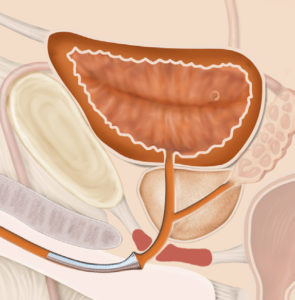
  • The urethra, prostatic urethra and bladder are inspected.
  • You could experience light bleeding and burning with initial urination afterwards


Complications

  • No matter how carefully the test is performed urine infections can sometimes occur after it.
  • You should drink more water than usual for a day or two to flush out any bacteria.
  • You may be advised to take antibiotics for a short period of time after the test


Download Information Sheet

Wes Urodynamic Studies-Men

Copyright 2019 Dr Jo Schoeman

Urolift

Minimal invasive management for the relief of LUTS (lower urinary tract symptoms)

Why is it done?

  • This procedure is performed when the prostate gland is causing LUTS and you want an alternative to medication without the complications of a permanent procedure.
  • Symptoms include:
    • a weak stream,
    • nightly urination,
    • frequent urination,
    • inability to urinate,
    • kidney failure due to the obstruction,
    • bladder stones,
    • recurrent bladder infections.
  • Medication such as Flomaxtra, Urorec, Minipress etc.  should always be given as a first resort.
  • This is an alternative to medication, where the ejaculatory function is to be preserved.
  • Prostate cancer first needs to be ruled out by doing a PSA, and when indicated, with a 3T MRI scan of the prostate with an abnormal PSA with a possible prostate biopsy of any suspicious lesions.
  • Usually, a trial of alpha-blockers would be attempted
  • Prostate sizes up to 80-100 cc with NO mid lobe.

https://www.youtube.com/watch?v=e20Ak49YD6E

How is it done?

  • Patients will receive general anesthesia.
  • A cystoscopy is performed by placing a camera in the urethra with the help of a lubricant jelly and an irrigate fluid.
  • The inside of the bladder is viewed for pathology. If any suspicious lesions are seen, a biopsy will be taken.
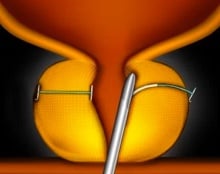
  • The device is placed through the cystoscopy sheath.
  • Prostate lobes are drawn apart similar to opening a curtain.
  • Occasionally a Bladder Neck Incision may be done if the bladder neck is too narrow.
  • Prophylactic antibiotics will be given to prevent any infections.


Complications

Side–effects

  • Ejaculation will not be affected as with medication, TURP and TUVP, therefore no retrograde ejaculation, thus preserving sexual function.
  • Fertility is not guaranteed. If it is an issue, DON’T DO IT!
  • Some urinary urge symptoms especially in the first 6 weeks.
  • May experience a slower stream initially due to swelling
  • Some urgency symptoms.
  • Possible infection due to cystoscopy (<2%)
  • Rare cases of stone formation on clips.
  • Further enlargement of prostate lobes within 3-5 years requiring a definite procedure.
  • NB! Each person is unique and for this reason, symptoms vary!


Download Information Sheet

Wes UROLIFT

Copyright 2019 Dr Jo Schoeman

UROLUME / Memocath Urethral Stent

Minimal invasive management for the relief of lower urinary tract symptoms (LUTS) or urinary retention caused by a urethral stricture

Why is it done?

  • This procedure is performed when concentric scarring in the urethra causes LUTS and /or Urinary Retention
  • Symptoms include: a weak stream, nightly urination, frequent urination, inability to urinate, (LUTS) and Urinary Retention
  • This is alternative to an invasive procedure where long periods of anesthetic are contraindicated.
  • Usually for chronically sick patients who cannot undergo surgery yet are active enough not to want a permanent catheter.
  • Patients who don’t want to / cannot do intermittent self-dilatation of these strictures
  • Don’t want a permanent Indwelling Catheter

How is it done?

  • Patients will receive sedation with local anesthetic gel placed in the urethra.
  • A cystoscopy is performed by placing a camera in the urethra with the help of a lubricant jelly and an irrigate (fluid).
  • The measurements of the urethral are taken (length)
  • Appropriate length coil is chosen.
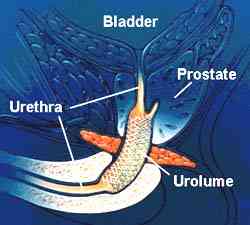
  • The device is placed through the cystoscopy sheath, to sit snug in the prostate urethra stretching over the length of the stricture
  • Prophylactic antibiotics will be given to prevent any infections.


Complications

Side–effects

  • Persistent pain in penile shaft
  • Pain in Perineum when seated
  • Migration of the device
  • Erosion of device
  • Possible infection
  • Long term yields the risk for encrustation and recurrent infections
  • NB! Each person is unique and for this reason, symptoms vary!


Download Information Sheet

Wes UROLUME Urethral Stent

Copyright 2019 Dr Jo Schoeman

Varicocelectomy – Laparoscopic

Ligation of the testicular veins as they enter the retroperitoneal space through the internal inguinal ring.

Why is it done?

  • Painful scrotal varices
  • Male infertility
  • Exclude: Renal mass causing this!

How is it done?

  • This procedure is done under general anesthetic.
  • Two options are available: Laparoscopic and open (inguinal/flank).
  • Laparoscopy: involves 3 small incisions spaced in a triangle on the lower abdomen.
  • The veins are clipped and cut as they enter the abdomen from the scrotum.
  • Subcutaneous skin sutures (which need not be removed) are used in closing
  • A dressing is then applied, which should be removed after 72 hours.
  • A local anaesthetic is injected into the wound, thus giving post-operative pain relief for the next 4-6 hours.
  • A catheter will be inserted overnight.

What to expect after the procedure?

  • Any anaesthetic has its risks and the anaesthetist will explain such risks.
  • Bleeding is a common complication.
  • A haematoma (blood collection under the skin) may form and needs to be reviewed by Dr Schoeman as soon as possible. Bruising is normal.
  • An infection of the wound may occur and requires immediate review.
  • Shoulder pain, as air is trapped under the diaphragm.
  • A further complication may be that the testis may become smaller after the operation.
  • DANGER SIGNS: A wound that swells immediately, fever, or puss. Contact Dr Schoeman or the hospital immediately as this may occur in up to 10-15% of all cases.
  • There is up to a 50-60% recurrence rate after any procedure

What next?

  • The dressing should be kept dry for the initial 72 hours after surgery and then removed by soaking in a bath until it comes off easily.
  • The dressing may sometimes adhere to the wound causing slight bleeding on removal. Don’t panic, the bleeding will stop.
  • On discharge, a prescription may be issued for patients to collect.
  • Patients should schedule a follow-up appointment with Dr Schoeman 2 weeks after the procedure.
  • There will be signs of bruising for at least 10 days.
  • The suture-line will be hard and indurated for at least 8-10 weeks.
  • Sick leave will be granted for 14 days.
  • Please direct any further queries to Dr Schoeman’s rooms.
  • PLEASE CONTACT THE HOSPITAL DIRECT WITH ANY POST-OPERATIVE CONCERNS AND RETURN TO THE HOSPITAL SHOULD THERE BE ANY SIGNS OF SEPSIS.


Download Information Sheet

Wes Varicocoelectomy Laparoscopic

Varicocoelectomy – Open

Open infra-inguinal ligation of testicular vein-plexus


Why is it done?

  • Painful scrotal varices.
  • Male infertility.
  • Exclude: Renal mass causing this!

How is it done?

  • This procedure is done under general anesthetic.
  • Two options are available: Laparoscopic and open (inguinal/flank),
  • Open inguinal approach: A single incision is made in the groin overlying the spermatic cord. The underlying muscle layers are then opened.
  • The spermatic cord is isolated and opened. Each individual vein is isolated and tied off individually taking care not to injure the artery, or vas.
  • Subcutaneous skin sutures (which need not be removed) are used in closing, unless stated otherwise by Dr Schoeman.
  • A dressing is then applied, which should be removed after 72 hours.
  • A local anesthetic is injected into the wound, thus giving post-operative pain relief for the next 4-6 hours.
  • A catheter will be inserted overnight.

What to expect after the procedure?

  • Any anesthetic has its risks, and the anesthetist will explain such risks.
  • Bleeding is a common complication.
  • A hematoma (blood collection under the skin) may form and needs to be reviewed by Dr Schoeman as soon as possible. Bruising is normal.
  • An infection of the wound may occur and requires immediate review.
  • A further complication may be that the testis may become smaller after the operation.
  • DANGER SIGNS: A wound that swells immediately, fever, or puss. Contact Dr Schoeman or the hospital immediately as this may occur in up to 10-15% of all cases.
  • There is high recurrence rate after any procedure.

What next?

  • The dressing should be kept dry for the initial 72 hours after surgery and then removed by soaking in a bath until it comes off easily.
  • The dressing may sometimes adhere to the wound causing slight bleeding on removal. Don’t panic, the bleeding will stop.
  • On discharge, a prescription may be issued for patients to collect.
  • Patients should schedule a follow-up appointment with Dr Schoeman 2 weeks after the procedure.
  • There will be signs of bruising for at least 10 days.
  • The suture-line will be hard and indurated for at least 8-10 weeks.
  • Sick leave will be granted for 14 days.
  • Please direct any further queries to Dr Schoeman’s rooms.
  • PLEASE CONTACT THE HOSPITAL DIRECT WITH ANY POST-OPERATIVE CONCERNS AND RETURN TO THE HOSPITAL SHOULD THERE BE ANY SIGNS OF SEPSIS.


Download Information Sheet

Wes Varicocoelectomy Open

Vasectomy

Male sterilization procedure. With cord block for pain relief.


Why is it done?

  • For sterilization
  • For completed family numbers
  • For legal reasons such as sterilization of a mentally handicapped adult or minor. In such instances a court order needs to be obtained prior to the consultation.


How is it done?

  • This procedure is done under general anesthetic.
  • A single, 5mm cut is made on the midline raphe (line in the middle of scrotum).
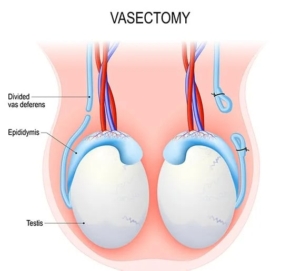
  • The 2 vas deferii (rubbery cord) are then individually extracted through this incision.
  • A 0.5 cm piece of each vas is then removed and sent to pathology for confirmation.
  • The edges of the cords are then coagulated, tied off with a suture and then buried at different levels of the scrotal wall.
  • A dressing is then applied, which should be removed after 72 hours.
  • A local anesthetic is injected around the vas deferii and into the wound, thus giving post-operative pain relief for the next 4-6 hours.

NB! You are required to bring 2 pairs of tight new undies for post-operative scrotal support.

What to expect after the procedure

  • Any anesthetic has its risks, and the anesthetist will explain such risks.
  • Bleeding is a common complication.
  • A hematoma (blood collection under the skin) may form and needs to be reviewed by Dr Schoeman as soon as possible.
  • An infection of the wound can occur and requires immediate review.
  • Owing to the nature of the surgery and the soft skin of the scrotum, bruising may appear to be much worse than it is and is no cause for alarm.
  • DANGER SIGNS: A scrotum that swells immediately to the size of a football, fever, or puss. Contact Dr Schoeman or the hospital immediately as this may occur in up to 5 % of all cases.

What next?

  • The dressing should be removed 72 hours after the procedure by soaking in a bath until it comes off with ease.
  • The dressing may sometimes adhere to the wound causing slight bleeding on removal. Don’t panic, the bleeding will stop.
  • Condoms (protected intercourse) must be used for the next 3 months, as viable sperm are still present in the seminal vesicles (behind the prostate).
  • A semen analysis will be requested 3 months after the procedure. Only if there are no viable sperm in the collection, may one proceed with unprotected intercourse.
  • Patients will be informed of the semen analysis results by Dr Schoeman’s rooms.
  • Should you have a persist sperm count, you should continue with contraceptive.
  • If after 6 months you still have immotile sperm cells, you may get special clearance to drop your contraceptives, speak to Jo
  • PLEASE CONTACT THE HOSPITAL DIRECTLY WITH ANY POST-OPERATIVE CONCERNS AND RETURN TO THE HOSPITAL SHOULD THERE BE ANY SIGNS OF SEPSIS.

Download Information Sheet

Wes Vasectomy

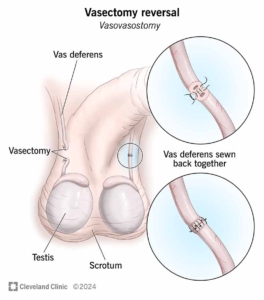
Vaso-Vasostomy (Reversal)

Surgical reversal of vasectomy using microscopy/ loops with cord block for pain relief post-operatively.


Why is it done?

  • To reverse a vasectomy (sterilization).
  • Please bear in mind that this procedure has a 50% success rate if performed:
    • Within 10 years of the vasectomy.
    • On younger patients (<45 years).

How is it done?

  • This procedure is performed under general anesthetic.
  • A single incision is made on the midline raphe of the scrotum.
  • Each testis and vas deference is then individually extracted through this incision.
  • The defect in the vas is identified and prepared for re-anastomosis. with 6.0 Nylon
  • If semen is present, these may be sent off for analysis to confirm semen viability.
  • A large suture material is placed as support inside the lumen and tied outside on the skin. This will be removed in the rooms 5-7 days after the procedure.
  • A dressing is then applied, which should be removed after 72 hours.
  • A local anesthetic is injected around the vas deferii and into the wound, thus giving post-operative pain relief for the next 4-6 hours.
  • No strenuous movements are permitted for at least 14 days.

NB! You are required to bring 2 pairs of tight new undies for post -operative scrotal support.

What to expect after the procedure?

  • Any anesthetic has its risks, and the anesthetist will explain all such risks.
  • Bleeding is a common complication.
  • A hematoma (blood collection under the skin) may form and needs to be reviewed by Dr Schoeman as soon as possible. Bruising is normal.
  • An infection of the wound can occur and requires immediate attention.
  • There is a failure rate of 50%.
  • Owing to the nature of the surgery and the soft skin of the scrotum, bruising may appear to be much worse than it actually is and is no cause for alarm.
  • DANGER SIGNS: A scrotum that swells immediately to size of a football, fever, puss. Contact Dr Schoeman or the hospital immediately as this may occur in up to 5% of all cases.

What next?

  • The dressing should be kept dry for the initial 72 hours after surgery and then soaked in a bath until the dressing comes off with ease.
  • The dressing may sometimes adhere to the wound causing slight bleeding on removal. Don’t panic, the bleeding will stop.
  • Do not tug at the sutures!
  • A semen analysis will be requested 3 months after the procedure. Hopefully there will be viable sperm. The first analysis may not always be good, and a few specimens may be required.
  • PLEASE CONTACT THE HOSPITAL DIRECTLY WITH ANY POST OPERATIVE CONCERNS AND RETURN TO THE HOSPITAL IMMEDIATELY SHOULD THERE BE ANY SIGNS OF SEPSIS.

Download Information Sheet

Wes Vaso-Vasostomy