
Tranexamic Acid for Radiation Cystitis: Benefits, Duration and Important Risks
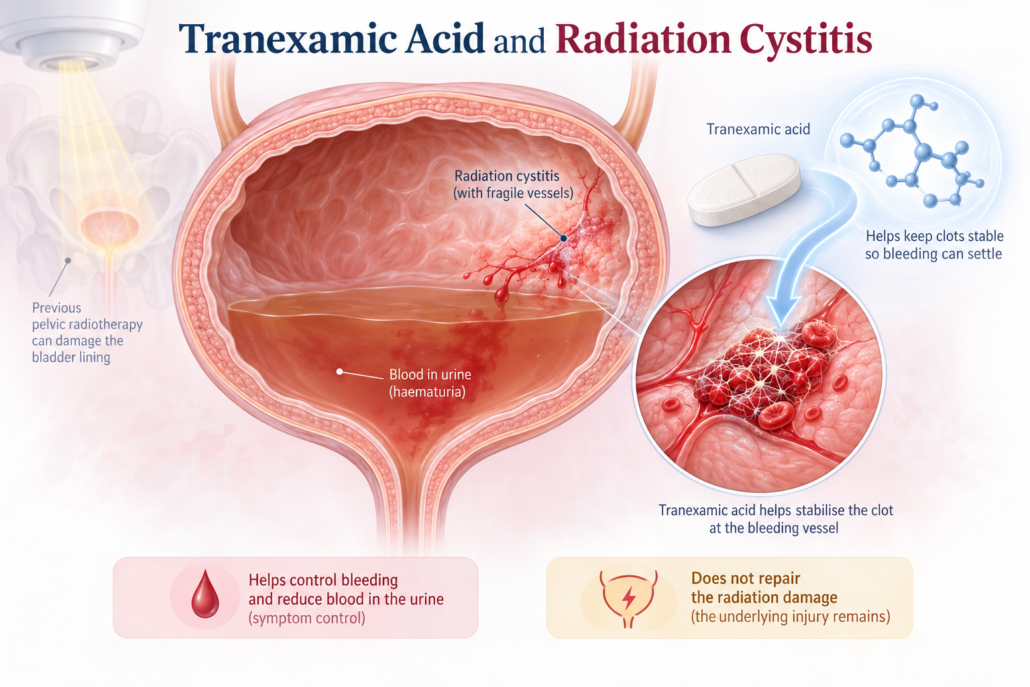
Blood in the urine after pelvic radiotherapy can be frightening. It may appear months or even many years after treatment for prostate, bladder, rectal or gynaecological cancer. One possible cause is radiation cystitis: delayed injury to the bladder lining and its small blood vessels.
Tranexamic acid is sometimes considered when bleeding is troublesome. It can help stabilise blood clots, but it does not repair the radiation injury itself and it is not suitable for every patient. In urinary tract bleeding, preventing a clot from dissolving may reduce bleeding but may also allow a larger clot to obstruct the bladder or ureter. Careful patient selection and medical supervision are therefore essential.
Seek urgent medical attention if you cannot pass urine, are passing large clots, feel faint or breathless, develop fever or flank pain, or the bleeding is heavy or worsening.
What is radiation cystitis?
Radiotherapy can cause progressive damage to the bladder’s small blood vessels. These vessels may become fragile and bleed easily. Patients may experience visible haematuria, urinary frequency, urgency, pain or recurrent clot retention.
Radiation cystitis should not be assumed simply because a patient has previously received radiotherapy. Infection, urinary stones, recurrent or new cancer, kidney disease and medication-related bleeding must also be considered. Assessment may include urine testing and culture, a full blood count, renal function, imaging of the upper urinary tract and cystoscopy. Biopsy is used selectively because irradiated tissue heals poorly.
How does tranexamic acid work?
The body normally breaks down blood clots through a process called fibrinolysis. Tranexamic acid blocks the binding of plasminogen and plasmin to fibrin, slowing this breakdown. It is therefore an antifibrinolytic medicine: it helps a clot remain in place rather than acting as a blood-clotting factor itself.
For radiation cystitis, tranexamic acid is intended to control active bleeding. It does not remove abnormal radiation-induced blood vessels, reverse fibrosis or prevent future bleeding once the medicine is stopped.
How effective is it for radiation cystitis?
The evidence is limited. Tranexamic acid has been used for haematuria from several causes, and a small randomised emergency-department study found that intravenous treatment reduced the amount of bladder irrigation required to clear the urine. However, it did not significantly reduce haemoglobin loss or transfusion requirements. Importantly, this study included mixed causes of haematuria and was not designed specifically for radiation cystitis.
The Canadian Urological Association best-practice report concluded that evidence was insufficient to make a formal recommendation for tranexamic acid in radiation-induced haemorrhagic cystitis. Later narrative reviews have reached a similar conclusion. Intravesical tranexamic acid, placed directly into the bladder, has shown encouraging results in small emergency-department studies of gross haematuria, but evidence specific to radiation cystitis is still inadequate and this remains a specialist, non-standard use.
In practice, tranexamic acid may be considered as a temporary adjunct in selected patients while the cause and severity of bleeding are assessed, or while more definitive treatment is arranged. It should not delay bladder washout, clot evacuation, cystoscopic treatment, hyperbaric oxygen therapy, embolisation or other appropriate care when these are required.
How long can tranexamic acid be used?
There is no well-supported universal duration for radiation cystitis. The Australian product information for oral tranexamic acid describes treatment of haematuria while blood remains macroscopically visible, but radiation cystitis is a recurrent condition and that instruction should not be interpreted as approval for indefinite therapy.
For this indication, treatment is generally best regarded as a short, medically supervised course for an active bleeding episode. The exact dose and duration depend on:
- whether bleeding is mild, ongoing or causing clot retention;
- whether the source is the bladder or upper urinary tract;
- kidney function, because tranexamic acid is largely eliminated in the urine;
- previous blood clots, cardiovascular risk and pro-thrombotic medicines;
- anticoagulant or antiplatelet therapy; and
- the response to treatment and need for definitive therapy.
There is no good evidence supporting continuous long-term tranexamic acid as prophylaxis for recurrent radiation cystitis. If bleeding has not clearly improved within a short course, recurs promptly after treatment, or requires repeated courses, the diagnosis and management plan should be reassessed. Longer or repeated use should occur only under specialist supervision, with renal function and thrombotic risk reviewed.
Patients should not start, extend, repeat or stop prescribed tranexamic acid without discussing it with their treating clinician.
Important side effects
Common or less serious adverse effects may include:
- nausea, vomiting, diarrhoea or abdominal discomfort;
- headache, dizziness or fatigue; and
- muscle or joint discomfort.
Potentially serious adverse effects include:
Blood clots
Deep-vein thrombosis, pulmonary embolism, stroke, heart attack and other arterial or venous thromboses are uncommon but potentially serious. Risk assessment is particularly important in patients with an active or previous clot, known thrombophilia, active malignancy, prolonged immobility or concurrent pro-thrombotic medication.
Urgent assessment is required for new unilateral leg pain or swelling, sudden chest pain, shortness of breath, coughing blood, weakness on one side, difficulty speaking or sudden severe headache.
Clot retention and urinary obstruction
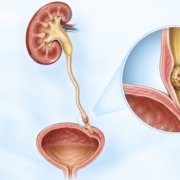
Tranexamic acid may stabilise clots within the urinary tract. This can contribute to painful bladder clot retention. It is particularly concerning when bleeding arises from a kidney or ureter, because a clot may obstruct the ureter and cause flank pain, hydronephrosis or loss of kidney function. Upper-tract haematuria therefore warrants particular caution and specialist assessment.
Kidney impairment
Most tranexamic acid is excreted unchanged through the kidneys. The dose must be reduced when renal function is impaired; accumulation increases the risk of toxicity, including neurological adverse effects. Significant renal impairment may make treatment inappropriate or require a substantially altered regimen.
Seizures
Seizures are a recognised, dose-related risk, reported particularly with high intravenous doses and when the medicine accumulates in renal impairment. A history of seizures requires careful consideration.
Visual disturbance
Rare visual effects, including altered colour vision, have been reported. New visual symptoms require prompt review and usually discontinuation pending medical advice. Ophthalmic monitoring may be considered when prolonged treatment is unavoidable.
Severe allergy
Facial or throat swelling, wheeze, breathing difficulty or a widespread blistering rash requires emergency care.
Who may not be suitable for treatment?
Tranexamic acid may be contraindicated or require particular caution in people with:
- active thromboembolic disease or a substantial history or risk of thrombosis;
- significant kidney impairment;
- upper urinary tract bleeding or suspected ureteric obstruction;
- a history of seizures;
- acquired disturbances of colour vision;
- disseminated intravascular coagulation unless managed by an experienced clinician; or
- hypersensitivity to tranexamic acid.
Medication review is essential. Anticoagulants and antiplatelet agents can worsen bleeding, but stopping them may cause stroke, pulmonary embolism, heart attack or coronary-stent thrombosis. They should not be stopped merely because haematuria develops without an individual risk assessment involving the prescribing clinician. Likewise, combining tranexamic acid with pro-thrombotic medicines requires caution.
Where does it fit in the management pathway?
Management is guided by severity. Initial care may include resuscitation, correction of significant anaemia or coagulopathy, a large-bore catheter, manual washout and continuous bladder irrigation. Cystoscopy permits clot evacuation, exclusion of tumour and cautery or laser treatment of bleeding areas.
For persistent or recurrent radiation cystitis, options may include intravesical agents, hyperbaric oxygen therapy, selective arterial embolisation and, rarely, urinary diversion or cystectomy. Hyperbaric oxygen is one of the better-studied treatments because it aims to improve tissue oxygenation and new blood-vessel formation rather than merely suppressing an episode of bleeding.
Tranexamic acid may have a role as a bridge or adjunct in a carefully selected patient. Its value must always be balanced against the danger of thrombosis and urinary tract obstruction.
The take-home message
Tranexamic acid can reduce haematuria in some patients, but evidence specifically for radiation cystitis is weak. It is not a cure and should usually be used only for a short, active bleeding episode under medical supervision. There is no established safe or effective duration for continuous long-term use in radiation cystitis. Kidney function, clotting history, the anatomical source of bleeding and concurrent medication must be reviewed before treatment.
Visible haematuria after radiotherapy always deserves proper investigation, particularly if it is recurrent, contains clots or is accompanied by difficulty passing urine.
This article provides general information and does not replace individual medical advice. Tranexamic acid is a prescription medicine in Australia; its use for radiation cystitis must be individualised by the treating clinician.
References
- Goucher G, Saad F, Lukka H, Kapoor A. Canadian Urological Association Best Practice Report: Diagnosis and management of radiation-induced hemorrhagic cystitis. Can Urol Assoc J. 2019;13(2):15–23. doi:10.5489/cuaj.5788
- Moharamzadeh P, Ojaghihaghighi S, Amjadi M, Rahmani F, Farjamnia A. Effect of tranexamic acid on gross hematuria: a pilot randomized clinical trial study. Am J Emerg Med. 2017;35(12):1922–1925. doi:10.1016/j.ajem.2017.09.012
- Abramowitz D, et al. Clinical management of radiation cystitis: a narrative review. AME Med J. 2021;6:30. Clinical management of radiation cystitis
- Choi H, et al. Impact of intravesical administration of tranexamic acid on gross hematuria in the emergency department: a before-and-after study. Am J Emerg Med. 2023;68:118–122. doi:10.1016/j.ajem.2023.03.010
- Pfizer Australia. Cyklokapron (tranexamic acid) Australian Product Information. Current product information should be checked through the Therapeutic Goods Administration or the sponsor before prescribing. Australian product information
- DailyMed. Tranexamic acid injection—prescribing information. US National Library of Medicine. DailyMed drug labelling
- Chauncey JM, Wieters JS. Tranexamic Acid. In: StatPearls. Updated 2025. NCBI Bookshelf





Leave a Reply
Want to join the discussion?Feel free to contribute!