
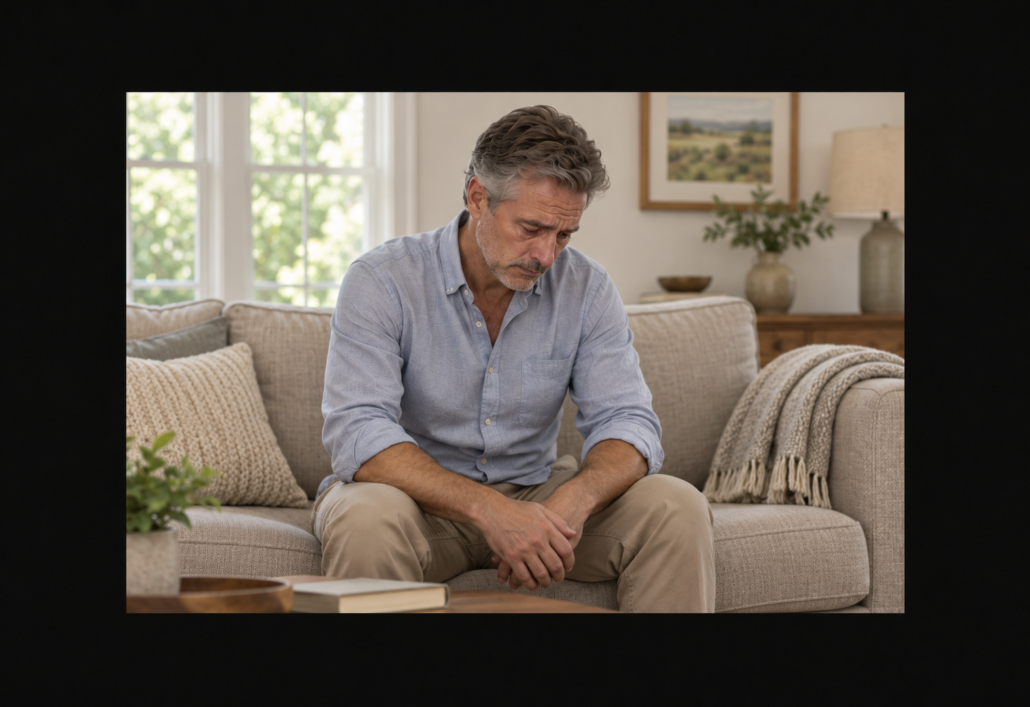
Movember: Men’s mental health
Movember: Men’s mental health and suicide prevention in Australia
Content note: This article discusses suicide. If you are in immediate danger, call 000. Support contacts are listed below.
Movember gives us a visible reminder to talk about men’s health. The moustache can start a conversation, but the more important work is noticing when someone is struggling, listening without judgement and helping them connect with support.
Mental health difficulties are common, treatable and not a personal failure. Suicide is complex: it rarely has one cause, and a difficult period does not mean a person is destined to reach crisis. Timely support, connection and practical help can make a difference.
The Australian picture
The latest Australian Bureau of Statistics (ABS) release available for this article covers deaths registered in 2025. It recorded 3,283 deaths by suicide, including 2,425 males—73.9% of the total. The male age-standardised rate was 17.3 deaths per 100,000 males. The 2025 figures are preliminary and may be revised as coronial investigations are completed. [1]
Age-standardised rates allow comparisons between populations with different age structures. The age-specific rates below are deaths per 100,000 people in the same age group; they describe population patterns, not an individual’s likelihood of suicide.
| Age group | Male suicide rate in 2025 (per 100,000) | What the ABS reported about recorded risk factors |
|---|---|---|
| 15–24 | 9.5–18.1 (15–19: 9.5; 20–24: 18.1) | Suicide ideation was the most commonly recorded risk factor for people under 25. For children aged 5–17, recorded factors also included education, family and peer relationships, social environment and prior self-harm. |
| 25–44 | 19.7–26.0 (25–29: 19.7; 30–34: 23.1; 35–39: 26.0; 40–44: 23.3) | Relationship circumstances were the most commonly recorded risk factor in this age range. Psychoactive substance use was also frequently recorded. |
| 45–64 | 23.0–26.8 (45–49 was the peak at 26.8) | Mood disorders, including depression, were the most commonly recorded risk factor for people aged 45–84. |
| 65–84 | 16.2–22.8 | Rates varied across these age bands; mood disorders were commonly recorded. Illness, pain and disability may also affect wellbeing and quality of life. |
| 85 and over | 24.9 | Limitation of activities due to illness or disability was the most commonly recorded risk factor in this age group. |
These age bands summarise the ABS’s five-year age data. In 2025, the highest male age-specific rate was among men aged 45–49 (26.8 per 100,000); the largest proportion of male deaths occurred among men aged 35–39 (10.7%). Both figures matter, but they measure different things. [1]
The ABS also records risk factors mentioned in preliminary death registrations. In 2025, the most frequently recorded factors across all people who died by suicide were mood disorders (35.8%), suicidal ideation (30.7%), problems in spousal relationship circumstances (26.7%), a personal history of self-harm (24.3%), and anxiety or stress-related disorders (21.9%). Several factors can be recorded for one person. These are not proof that any single factor caused a death, and the data may change as investigations are finalised. [1]
Mental health concerns can look different from one man to another
In the ABS National Study of Mental Health and Wellbeing, conducted in 2020–2022, 18.3% of males aged 16–85 reported a 12-month mental disorder. Anxiety disorders were reported by 13.3%, affective disorders (including depression) by 6.5%, and substance-use disorders by 4.4%. The equivalent substance-use figure for females was 2.1%. The survey found the highest prevalence of any 12-month mental disorder among males aged 16–24 (32.4%); prevalence declined across older age groups. These are survey estimates, not current-year suicide rates, and they do not mean that everyone with a mental disorder is suicidal. [2]
Depression and anxiety may involve persistent low mood, loss of interest, worry, panic, irritability, poor concentration, sleep changes or feeling overwhelmed. Some men describe distress mainly through anger, pulling away from family or friends, working excessively, taking more risks, or relying more heavily on alcohol or other drugs. These signs are not a diagnosis, but a lasting change from someone’s usual self is a good reason to check in. [3]
There is no single cause
Mental health and suicide risk develop through an interaction of individual, social and economic circumstances. A person may be affected by one issue or many at once. Factors that can contribute to distress include:
- depression, anxiety, trauma, other mental health conditions or a previous episode of self-harm;
- relationship conflict, separation, family stress, loneliness or bereavement;
- financial pressure, unemployment, job insecurity, workplace stress or legal problems;
- harmful alcohol or other drug use, which can worsen mood, judgement and coping;
- chronic illness, pain, disability, sleep problems or loss of independence;
- discrimination, bullying, violence, social exclusion or barriers to culturally safe care;
- limited social support, or feeling unable to ask for help.
These are possible contributors, not a checklist that predicts what one person will do. A 2025 analysis of the Australian Ten to Men longitudinal study found that the onset of suicidal thoughts was associated with depressive symptoms, disability, financial stress, lower education, sexual orientation and a history of partner violence. The study also found that suicidal thoughts remitted for many men over time, an important reminder that suicidal thinking can change and support can help. Associations in a study do not establish that a factor causes an outcome. [4]
Ideas about having to cope alone or always appear strong can make it harder for some men to talk openly or seek help. This is not true of every man, and strength, responsibility and care for others can also support recovery. A 2025 Australian review found a broad range of formal and informal services for men, while noting that evidence about their effectiveness remains uneven. Services are more useful when they are accessible, respectful and responsive to the person in front of them. [5]
How to support a mate, partner or family member
Movember shares the ALEC approach, developed by R U OK?, as a simple guide for a supportive conversation: [6]
- Ask how he is going and mention a change you have noticed: “You haven’t seemed yourself lately. How are things really going?”
- Listen without judgement or rushing to solve everything. Give him time to speak.
- Encourage action: offer to help contact a GP, counsellor or trusted person, or to go with him to an appointment.
- Check in again. A message or planned catch-up can show that your support continues after the first conversation.
If you are worried he may be thinking about suicide, ask clearly and calmly whether he is thinking about suicide. Take the answer seriously. You do not need to manage the situation alone: involve a trusted person and contact a crisis service or health professional. If there is immediate danger, call 000 or go to an emergency department.
Getting help in Australia
- Immediate danger: call 000 or attend an emergency department.
- Lifeline: call 13 11 14 for 24/7 crisis support. [7]
- Suicide Call Back Service: call 1300 659 467 for 24/7 telephone and online counselling. [8]
- MensLine Australia: call 1300 78 99 78 for telephone and online counselling for men. [9]
- Beyond Blue: call 1300 22 4636 for mental health support and information. [10]
- Your GP: can discuss symptoms, safety, treatment options and referrals. If you are not sure where to start, a GP appointment is a practical first step.
If you are supporting someone, stay connected and help them access care. If you are struggling yourself, you deserve support too. You do not have to wait until things feel unbearable before reaching out.
A Movember conversation can matter
Movember’s focus on prevention, early intervention and social connection is a useful invitation to check in, not only during November, but throughout the year. The first conversation does not need to be perfect. Ask, listen, help with one next step and follow up.
This article is general information and is not a substitute for individual medical or mental health advice.
References
- Australian Bureau of Statistics. Intentional self-harm (suicide) deaths, 2025. Preliminary registered-death data; includes age-specific rates and risk factors.
- Australian Bureau of Statistics. National Study of Mental Health and Wellbeing, 2020–2022.
- Movember. Spot the signs of poor mental health.
- Haregu T, Armstrong G. Understanding the onset and remission of suicidal thoughts in Australian men: Findings from the Ten to Men study. Australian & New Zealand Journal of Psychiatry. 2025. doi:10.1177/00048674251333572.
- Slade A, Reily NM, Fujimoto H, et al. Men’s mental health and suicide prevention service landscape in Australia: a scoping review. BMC Public Health. 2025;25:1593. doi:10.1186/s12889-025-22676-6.
- Movember. ALEC conversation strategy. Movember credits R U OK? for developing the ALEC model.
- Lifeline Australia. Lifeline Crisis Support.
- Suicide Call Back Service. Get support.
- MensLine Australia. Contact MensLine.
- Beyond Blue. Men’s mental health.



Leave a Reply
Want to join the discussion?Feel free to contribute!