
Protecting the Rectum During Prostate Radiotherapy: A Patient Guide
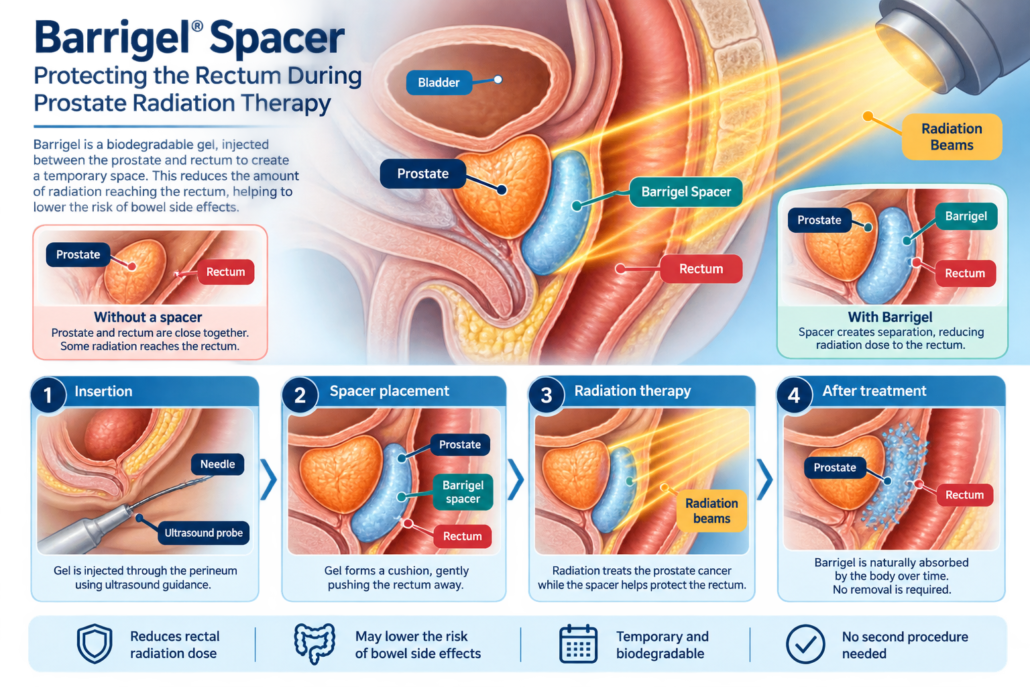
Radiotherapy is an established treatment for many men with prostate cancer. Modern planning and image-guidance techniques can direct radiation accurately, but the prostate lies immediately in front of the rectum. Because the two organs are so close, part of the rectal wall may receive radiation during treatment.
Radiation teams use several methods to limit exposure to surrounding healthy tissue. For selected patients, one option is to place a temporary biodegradable material between the prostate and rectum before radiotherapy planning.
This article explains why bowel effects occur, how rectal spacing works, its possible benefits and limitations, and the questions patients should discuss with their treating team. It does not recommend a particular product, device or brand.
Why can prostate radiotherapy affect the bowel?
The front wall of the rectum normally sits very close to the back of the prostate. Radiation directed at the prostate may therefore also reach a small amount of nearby rectal tissue.
Possible bowel effects during or after radiotherapy include:
- increased bowel frequency
- urgency
- loose stools or diarrhoea
- mucus discharge
- rectal discomfort
- bleeding
- inflammation known as radiation proctitis
Many bowel symptoms are mild and settle after treatment, but some develop later or persist. Risk varies with the radiation technique, dose, fractionation schedule, individual anatomy, bowel health, medicines and previous pelvic treatment.
Rectal bleeding after radiotherapy should not automatically be attributed to radiation. Other causes, including haemorrhoids, polyps, inflammatory bowel disease and bowel cancer, may require investigation.
How is the rectum protected?
Protection begins with careful radiotherapy planning rather than with a spacer alone. Strategies may include:
- intensity-modulated or volumetric-modulated radiotherapy
- image guidance before and during treatment
- accurate bladder and bowel preparation
- management of rectal gas or stool
- individualised dose constraints
- limiting movement of the prostate
- selecting an appropriate radiation schedule
- a temporary rectal spacer in selected patients
A spacer is therefore an additional planning tool, not a substitute for high-quality radiation oncology.
What is a rectal spacer?
A rectal spacer is a temporary biodegradable material placed into the tissue plane between the prostate and the anterior rectal wall. Increasing this distance may reduce the radiation dose received by the rectum.
Materials used in currently available spacer systems include:
- polyethylene-glycol hydrogel
- stabilised hyaluronic-acid gel
These materials have different handling and imaging characteristics. They should not be assumed to have identical evidence, contraindications or safety profiles.
A spacer does not treat prostate cancer. Its role is to alter the anatomy temporarily while radiation treats the cancer.
Do all men having prostate radiotherapy need a spacer?
No. Many patients can receive carefully planned radiotherapy without one.
Potential benefit depends on factors such as:
- the natural distance between the prostate and rectum
- prostate size and shape
- tumour position and extent
- radiation dose and treatment schedule
- the ability to meet rectal dose constraints without a spacer
- previous prostate or pelvic procedures
- bowel disease
- bleeding risk and relevant medicines
- whether pelvic lymph nodes are also being treated
- local expertise and access
For some patients, the predicted reduction in rectal dose may be clinically meaningful. For others, the benefit may be small, uncertain or outweighed by the insertion risk.
The decision is usually made with the radiation oncologist. A urologist or another trained proceduralist may also be involved.
What does the evidence show?
Clinical studies of biodegradable rectal spacers generally show that increasing the distance between the prostate and rectum can reduce the radiation dose delivered to parts of the rectal wall.
A multicentre randomised trial involving 201 men receiving hypofractionated prostate radiotherapy evaluated a hyaluronic-acid spacer. The study reported improved rectal dosimetry and fewer acute grade 2 or worse gastrointestinal adverse events in the spacer group than in the control group.
These findings are relevant but require context:
- dosimetric improvement does not guarantee that an individual patient will avoid bowel symptoms
- trial participants and treatment protocols may differ from patients treated in routine practice
- evidence for short-term bowel outcomes is stronger than evidence for some long-term outcomes
- results for one spacer material or insertion technique should not automatically be applied to another
- operator experience and correct placement affect both benefit and risk
Patients should ask how the published evidence applies to their planned radiotherapy technique and personal anatomy.
How is a spacer inserted?
The procedure is generally performed before radiotherapy planning.
Under ultrasound guidance, a needle is passed through the perineum—the skin between the scrotum and anus—into the potential space between the prostate and rectum. The tissue plane is checked carefully, and the spacer material is then introduced while its position is monitored.
Depending on the patient and treating centre, the procedure may use:
- local anaesthesia
- sedation
- general anaesthesia
Fiducial markers used to help target radiotherapy may sometimes be inserted during the same procedure.
The exact preparation, antibiotic policy, management of anticoagulants and post-procedure care vary. Patients should follow the instructions given by their treating team.
Why does correct placement matter?
The spacer needs to create suitable separation along the part of the rectum closest to the planned radiation target. Too little separation, marked asymmetry or injection into the wrong tissue plane may reduce the expected dosimetric benefit.
Incorrect placement may also injure the rectal wall, prostate, urethra, bladder or nearby blood vessels. Training, real-time imaging, careful patient selection and recognition of abnormal anatomy are therefore important.
Some hyaluronic-acid materials can be broken down with an enzyme if significant malposition is recognised. This does not make incorrect placement harmless or remove the need for prevention, prompt assessment and appropriate management.
Who may be unsuitable?
Suitability depends on the particular device instructions, the patient’s anatomy and the clinical situation. Reasons to avoid or reconsider insertion may include:
- infection or inflammation near the proposed injection site
- inability to identify a safe tissue plane
- tumour extending into the space behind the prostate
- extensive scarring from previous surgery or treatment
- significant rectal or anorectal disease
- uncorrected bleeding disorder
- anticoagulant or antiplatelet therapy that cannot be managed safely
- allergy or hypersensitivity relevant to the proposed material
- significant immunosuppression
- a situation in which the expected dosimetric benefit is minimal
The approved Australian instructions for use for the exact device should be checked by the treating clinician.
Anticoagulant and antiplatelet medicines must not be stopped without advice from the clinician who manages them. Interrupting these medicines can cause stroke, heart attack, thrombosis or other serious harm.
Possible short-term effects
Temporary effects may include:
- perineal discomfort or bruising
- minor bleeding
- a sensation of rectal fullness
- discomfort when opening the bowels
- urinary frequency or burning
- a weaker urinary stream
- constipation
The pattern and duration vary. New, severe or worsening symptoms require clinical review.
Uncommon but important complications
Spacer insertion is invasive and can cause serious complications, even when performed carefully.
Reported or plausible complications include:
- infection, prostatitis or pelvic abscess
- bleeding or haematoma
- urinary retention
- significant rectal or pelvic pain
- spacer malposition or migration
- injection into the rectal wall, prostate or another unintended site
- injury to the urethra, bladder, rectum or blood vessel
- rectal ulceration or tissue necrosis
- embolic or vascular complications
- fistula formation
- need for further treatment, hospital admission or surgery
Severe pain, fever, difficulty passing urine, heavy bleeding, worsening bowel symptoms or feeling systemically unwell after the procedure should be assessed promptly.
What happens to the spacer?
Biodegradable spacers are intended to remain during the radiotherapy period and then gradually break down and be absorbed.
The expected duration and degradation process depend on the material. A second operation is not normally required solely to remove an appropriately placed biodegradable spacer.
Different spacer materials
The choice should not be reduced to a promotional comparison between brand names. Relevant clinical differences may include:
| Consideration | Hyaluronic-acid gel | Polyethylene-glycol hydrogel |
|---|---|---|
| Primary purpose | Temporary prostate–rectum separation | Temporary prostate–rectum separation |
| Typical placement | Transperineal, image-guided | Transperineal, image-guided |
| Biodegradable | Yes | Yes |
| Handling | Deposited and shaped during injection | Forms a hydrogel after delivery |
| Imaging | Visibility depends on material and imaging method | Some formulations are designed for greater CT visibility |
| Evidence | Randomised and observational studies are available | Randomised, prospective and observational studies are available |
| Key limitation | Insertion-related risk and dependence on correct placement | Insertion-related risk and dependence on correct placement |
This table is descriptive, not a claim that one material is safer or more effective. Head-to-head observational comparisons may be affected by patient selection, injected volume, operator technique, learning curve and treatment planning. They cannot by themselves establish universal superiority.
What about previous surgery or salvage radiotherapy?
Previous prostate procedures, pelvic surgery, focal therapy, radiotherapy or inflammation may alter the tissue plane behind the prostate. This can make placement more difficult or unsuitable.
The evidence for spacers in salvage or re-irradiation settings is less established than for primary prostate radiotherapy. These cases require individual assessment in an experienced multidisciplinary setting.
Questions to ask before deciding
- What bowel risks are associated with my proposed radiotherapy plan?
- Can the required rectal dose limits be met without a spacer?
- What additional benefit is expected in my anatomy?
- What spacer material is proposed, and is the exact device included in the ARTG for this intended use?
- What evidence supports it for my radiation schedule?
- Who will perform the procedure, and what is their experience?
- What are the recognised contraindications and complications?
- How will my anticoagulant or antiplatelet medicines be managed?
- What symptoms after insertion require urgent review?
- What are the alternatives if I choose not to have a spacer?
- Are there additional costs or gaps?
Australian regulatory considerations
The Australian Register of Therapeutic Goods (ARTG) is the public database of therapeutic goods that may be legally supplied in Australia, unless an exemption or another authorised access pathway applies. An ARTG entry records the particular sponsor and intended purpose; it is not a general recommendation that the product is best for an individual patient.
Device inclusion, instructions for use, contraindications, availability and reimbursement can change. The treating team should confirm the current ARTG entry and approved instructions for the exact device proposed.
The bottom line
The rectum lies close to the prostate and may receive some radiation during prostate-cancer treatment. Modern planning and image guidance are the foundation of rectal protection.
A biodegradable rectal spacer can create temporary separation and may reduce rectal radiation exposure in selected patients. It does not treat the cancer, cannot guarantee freedom from bowel effects and introduces procedural risks of its own.
The decision should be individualised according to anatomy, the proposed radiation plan, expected dosimetric benefit, medical history, bleeding risk and local expertise. It should be made before radiotherapy planning through an informed discussion with the treating radiation oncology team.
This article provides general disease education and does not replace individual medical advice. It does not promote or recommend a particular therapeutic device, spacer material, brand, clinician or health service.
References and further reading
- Therapeutic Goods Administration — About the Australian Register of Therapeutic Goods
- Therapeutic Goods Administration — Advertising health products
- European Association of Urology — Prostate Cancer Guidelines
- Cancer Council Australia — Radiation therapy
- Prostate Cancer Foundation of Australia — Treatment information
- Mariados NF et al. Hyaluronic Acid Spacer for Hypofractionated Prostate Radiation Therapy: A Randomized Clinical Trial. JAMA Oncology. 2023;9(4):511–518
- The current Australian instructions for use for any device proposed to the individual patient





Leave a Reply
Want to join the discussion?Feel free to contribute!