
The Long Foreskin: When a Little Extra Skin Is Just… Extra
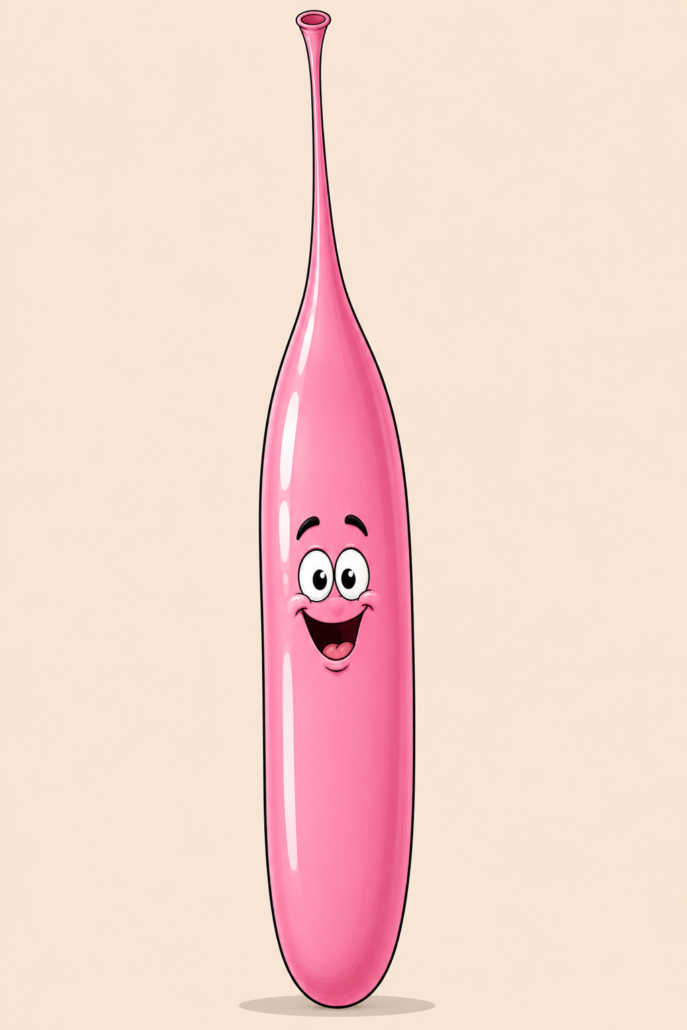
Foreskins come in all shapes and sizes. Some are short, some sit neatly over the tip of the penis, and others extend well beyond the glans, occasionally giving the penis the appearance that it has ordered the extra-long sleeve option.
A long foreskin, sometimes described medically as a redundant or elongated prepuce, is usually simply a normal anatomical variation. Length alone is not a disease and does not automatically require treatment.
The important question is not “How long is it?” but rather:
Does it cause any problems?
What is a long or redundant foreskin?
The foreskin, or prepuce, is the fold of skin covering the glans (head) of the penis. Its length varies considerably between men.
In some men, the foreskin extends only slightly beyond the glans when the penis is flaccid. In others, there may be a considerable amount of skin extending beyond the tip.
The appearance can also change substantially between the flaccid and erect states. A foreskin that looks impressively generous when flaccid may retract quite normally during an erection.
There is therefore no particular measurement at which a foreskin suddenly becomes “too long.”
If it retracts comfortably, causes no symptoms and can be kept clean, there is generally no medical reason to shorten it.
Can a very long foreskin cause problems?
Most men with a long foreskin have no problems whatsoever.
Occasionally, however, additional foreskin can contribute to several issues.
Hygiene
A longer foreskin may make cleaning beneath the foreskin slightly more important.
Smegma, dead skin cells and moisture can accumulate underneath the foreskin if it is not regularly retracted and washed. This may produce irritation or an unpleasant smell.
Fortunately, the solution is usually wonderfully low-tech: water, gentle washing and regular hygiene.
Aggressive scrubbing, strong soaps, antiseptics and fragranced products can actually irritate this rather sensitive real estate.
Recurrent balanitis
Balanitis is inflammation of the glans. When both the glans and foreskin are inflamed, the condition is called balanoposthitis.
Symptoms may include:
- Redness
- Swelling
- Itching or burning
- Discomfort
- Discharge
- Unpleasant odour
- Difficulty retracting the foreskin
Recurrent inflammation deserves assessment because there may be an underlying cause such as infection, dermatitis, diabetes or a chronic inflammatory skin condition.
Difficulty retracting the foreskin
A long foreskin and a tight foreskin are not the same thing.
A very long foreskin that retracts easily is generally harmless. If the opening is too narrow to retract comfortably over the glans, however, this is phimosis.
Phimosis can cause discomfort, recurrent infections, painful erections or difficulty with sexual activity.
Paraphimosis
Occasionally a tight foreskin is pulled behind the glans and becomes trapped there. The foreskin swells and cannot be returned to its normal position.
This is called paraphimosis.
Unlike having a long foreskin, paraphimosis is not merely an interesting anatomical conversation starter. It can compromise blood flow to the glans and requires urgent medical attention.
Problems during sex
Some men with considerable redundant foreskin notice excessive movement or bunching of the skin during intercourse.
Others experience:
- Irritation
- Small tears
- Discomfort
- Difficulty using condoms
- Foreskin becoming trapped behind the glans
- Problems associated with an accompanying short frenulum
Importantly, many men with long foreskins have completely normal and comfortable sexual function.
Urination
A long foreskin may occasionally balloon during urination or cause the urinary stream to spray.
A little post-urination dribbling from urine retained beneath a long foreskin can also occur.
If the foreskin opening is normal and there are no other symptoms, this is often more inconvenient than medically significant. Persistent ballooning associated with a very narrow opening, pain or difficulty passing urine should be assessed.
Does a long foreskin increase the risk of cancer?
Having a long foreskin by itself does not mean that a man will develop penile cancer.
Penile cancer is uncommon, particularly in Australia. Important risk factors include persistent HPV infection, smoking, chronic inflammation and certain foreskin disorders such as lichen sclerosus.
Any persistent penile ulcer, lump, thickened area, bleeding lesion, unusual discharge or change in the skin should therefore be examined rather than waiting for it to disappear.
The penis, regrettably, has never been particularly good at diagnosing itself.
Does a long foreskin need treatment?
Usually, no.
If the foreskin:
- Retracts comfortably
- Can be cleaned easily
- Does not cause recurrent infections
- Does not interfere with urination
- Does not cause pain during erections or intercourse
- Does not bother the patient cosmetically
then no treatment is required.
The medical principle here is refreshingly simple:
If it isn’t causing a problem, there may be nothing to fix.
Conservative management
When symptoms are minor, treatment may involve improving foreskin hygiene and treating any underlying inflammation or infection.
Where there is associated mild phimosis, a doctor may recommend a course of topical corticosteroid cream combined with gentle stretching.
Forceful stretching should be avoided. Small tears can produce scarring, and scarring can make the foreskin progressively tighter, turning a relatively minor problem into a considerably more stubborn one.
Surgical options
Surgery may be considered when there are significant or recurrent problems.
Circumcision
Circumcision removes the foreskin and permanently exposes the glans.
It is a reliable treatment for recurrent balanitis, troublesome phimosis and certain chronic foreskin diseases.
Potential complications include bleeding, infection, altered sensation, cosmetic dissatisfaction, wound problems and, rarely, more significant complications.
Foreskin-preserving surgery
Not every foreskin problem requires complete circumcision.
Depending upon the anatomy and underlying problem, procedures such as preputioplasty can widen a tight foreskin while preserving much of the foreskin.
In selected men with excessive redundant skin but an otherwise healthy foreskin, surgical shortening may also be discussed.
The appropriate operation depends upon the reason for treatment rather than simply the number of centimetres of foreskin involved.
What about appearance?
Some men simply dislike having a long foreskin.
That is a legitimate concern to discuss with a urologist, but cosmetic surgery deserves careful consideration because surgery permanently changes normal anatomy.
It is particularly important to distinguish between a genuinely troublesome anatomical issue and anxiety created by comparisons with pornography, photographs or other men.
There is an enormous range of normal penile anatomy.
Normal does not come in one factory setting.
When should you see a urologist?
Consider seeking medical advice if you have recurrent infections, difficulty retracting or replacing the foreskin, painful erections, tearing or bleeding, problems during intercourse, difficulty passing urine, persistent skin changes or simply uncertainty about whether your foreskin is normal.
A foreskin that suddenly becomes swollen and trapped behind the glans requires urgent assessment, particularly if the glans becomes increasingly swollen, painful or discoloured.
The bottom line
A very long foreskin is usually a variation of normal anatomy rather than a medical condition.
There is no prize for having the shortest foreskin, and fortunately no excess-baggage fee for having the longest.
What matters is function.
If your foreskin retracts normally, stays healthy, allows comfortable erections and intercourse, and can be kept clean, its length alone is unlikely to require treatment.
If it becomes tight, painful, repeatedly inflamed or simply troublesome, however, a urological assessment can determine whether conservative treatment or surgery is appropriate.
When it comes to foreskins, longer isn’t necessarily better or worse. Sometimes it is simply… longer.





Leave a Reply
Want to join the discussion?Feel free to contribute!