
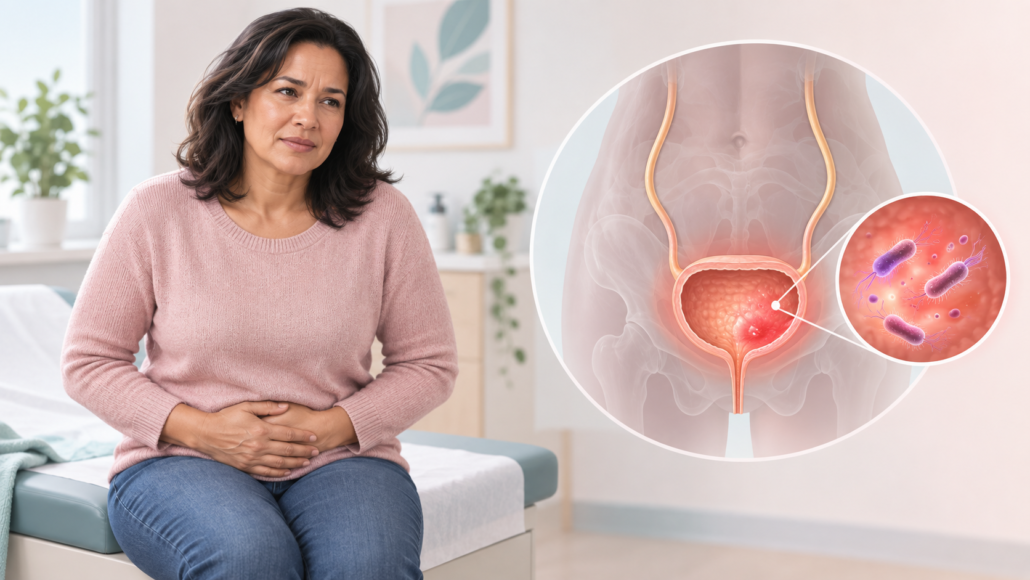
Recurrent Urinary Tract Infections: Causes, Investigation and Prevention
Urinary tract infections are common, uncomfortable and sometimes disruptive to everyday life. For some people, however, they keep returning despite apparently appropriate treatment.
A recurrent urinary tract infection, or recurrent UTI, is generally defined as:
- Two or more symptomatic infections within six months; or
- Three or more symptomatic infections within 12 months.
Recurrent UTIs are much more common in women, but they also occur in men, particularly when there is prostate disease, incomplete bladder emptying, urinary stones, catheter use or an abnormality of the urinary tract.
The key to successful management is not simply prescribing another antibiotic. We need to confirm that the symptoms are genuinely caused by infection, identify why infections are recurring and develop an individual prevention strategy.
What symptoms suggest a UTI?
A lower urinary tract infection, or cystitis, commonly causes:
- Burning or stinging when passing urine
- Increased urinary frequency
- Urgency
- Passing small amounts of urine
- Lower abdominal discomfort
- Blood in the urine
- Cloudy or strong-smelling urine
Fever, shaking, flank or kidney pain, vomiting, confusion or feeling seriously unwell may indicate infection involving the kidneys or bloodstream and requires prompt medical assessment.
Is it always an infection?
Not every episode of burning, urgency or bladder discomfort is caused by bacteria. Similar symptoms may result from:
- Genitourinary syndrome of menopause or vaginal atrophy
- Overactive bladder
- Interstitial cystitis/bladder pain syndrome
- Pelvic-floor muscle dysfunction
- Urethral or vaginal inflammation
- Sexually transmitted infections
- Urinary stones
- Bladder cancer
- Prostatitis
- Incomplete bladder emptying
Repeated antibiotics given without confirming infection can delay the correct diagnosis and increase antibiotic resistance.
Whenever practical, a midstream urine sample should be collected for culture before commencing antibiotics. The European Association of Urology recommends confirming recurrent cystitis with urine cultures.
Why do urinary infections keep returning?
Most UTIs are caused by bacteria, commonly Escherichia coli, travelling from the bowel or genital region into the urinary tract. Recurrence may represent reinfection with a new organism or relapse involving the same organism.
Common contributing factors in women
These include:
- Sexual intercourse
- Spermicide or diaphragm use
- A new sexual partner
- Pregnancy
- Menopause and loss of vaginal oestrogen
- Vaginal or pelvic-organ prolapse
- Urinary incontinence
- Incomplete bladder emptying
- Diabetes
- Previous antibiotic exposure
- Urinary stones or obstruction
- Catheterisation or urinary-tract procedures
Causes that are particularly important in men
Recurrent UTI in a man usually warrants further assessment. Possible contributors include:
- Benign prostate enlargement and bladder-outlet obstruction
- Chronic bacterial prostatitis
- Urethral stricture
- Urinary stones
- High residual urine volumes
- Catheter use
- Previous urinary surgery or instrumentation
- Neurological bladder dysfunction
How are recurrent UTIs investigated?
Assessment begins with a careful history and review of previous urine-culture results. The clinician may consider:
- Urinalysis and urine culture during symptomatic episodes
- Examination for vaginal atrophy or pelvic-organ prolapse
- Measurement of the amount of urine remaining after voiding
- Kidney and bladder ultrasound
- Assessment of urinary flow
- Blood tests, including kidney function and diabetes screening
- Evaluation for prostatitis in men
- Cystoscopy or CT imaging in selected patients
Routine cystoscopy or extensive imaging is not necessary for every otherwise healthy woman. Further investigation becomes more important when there is visible blood in the urine, recurrent kidney infection, persistent pain, stones, unusual organisms, poor bladder emptying, previous urinary surgery or failure of standard prevention.
Treating an acute infection
A symptomatic, culture-confirmed infection is usually treated with a short course of antibiotics selected according to:
- The urine-culture result
- Previous antibiotic exposure
- Allergies
- Kidney function
- Pregnancy status
- Local bacterial-resistance patterns
Suitable patients who recognise their symptoms reliably may be offered a prearranged “self-start” antibiotic course, ideally after submitting a urine sample.
A positive urine culture without urinary symptoms is called asymptomatic bacteriuria. It usually should not be treated, except in specific situations such as pregnancy or before certain urological procedures. Treating asymptomatic bacteriuria unnecessarily may increase adverse effects and antibiotic resistance without preventing future infections.
A stepwise prevention strategy
Prevention should normally begin with correction of contributing factors and non-antibiotic measures. Medication or antibiotic prophylaxis can then be introduced when the expected benefit outweighs the risks.
1. Hydration and bladder habits
For people who normally drink relatively little, increasing water intake may reduce infection frequency. One clinical trial found benefit from an additional 1.5 litres of water daily in premenopausal women whose usual fluid intake was below 1.5 litres per day.
Other practical measures include:
- Avoiding prolonged delays in passing urine
- Emptying the bladder after intercourse if this appears helpful
- Treating constipation
- Avoiding spermicides when infections are temporally associated with their use
- Managing prolapse or incomplete bladder emptying
- Reviewing catheter technique and necessity
- Optimising diabetic control
Many traditional recommendations: such as a particular wiping direction, special underwear or mandatory post-coital voiding, have limited supporting evidence. They are generally harmless but should not be presented as guaranteed prevention.
2. Vaginal oestrogen
Vaginal oestrogen is one of the best-supported non-antibiotic treatments for postmenopausal women with recurrent UTIs, particularly when vaginal dryness, irritation or discomfort is present.
It may be supplied as a cream, pessary or vaginal tablet. Local treatment helps restore the vaginal tissues and protective bacterial environment. It is different from systemic menopausal hormone therapy and produces much lower systemic hormone exposure.
Temporary local irritation or spotting may occur. Women with a history of oestrogen-sensitive cancer should discuss treatment with their treating specialists. Oral oestrogen has not demonstrated the same UTI-prevention benefit.
The EAU gives vaginal oestrogen a strong recommendation for prevention in postmenopausal women.
3. Methenamine hippurate
Methenamine hippurate is a urinary antiseptic rather than a conventional antibiotic. In acidic urine, it is converted into formaldehyde, which suppresses bacterial growth.
The ALTAR randomised trial found that methenamine hippurate was not inferior to daily low-dose antibiotics for preventing recurrent UTIs in women over 12 months, although the antibiotic group experienced slightly fewer infections.
Methenamine can be a useful antibiotic-sparing option for selected patients without significant urinary-tract abnormalities. It may not be suitable in severe kidney or liver impairment and must not be combined with sulfonamide antibiotics. Alkalinising urinary products may reduce its effectiveness. Medical supervision is therefore important.
4. Cranberry products
Cranberry products may modestly reduce recurrent UTIs in some women, but products and doses vary greatly. Evidence is supportive but inconsistent, and there is no universally accepted dose.
Cranberry should be considered an optional supplement rather than a replacement for investigation or proven treatment. Patients taking warfarin should discuss cranberry products with their doctor because of a potential interaction.
5. D-mannose
D-mannose has been widely promoted as preventing E. coli from adhering to the bladder lining. Earlier small studies suggested benefit, but a larger placebo-controlled trial found that daily D-mannose did not significantly reduce medically attended recurrent UTIs.
It may still be chosen by some patients, but expectations should be realistic. Current evidence is weak and contradictory.
6. Probiotics
Some vaginal Lactobacillus preparations may help restore protective vaginal flora, but results depend on the bacterial strain and formulation. Evidence remains insufficient to recommend all commercially available oral or vaginal probiotics as equivalent treatments.
Prophylactic antibiotics
When infections remain troublesome despite correcting reversible causes and trying appropriate non-antibiotic measures, prophylactic antibiotics may be considered.
Post-coital prophylaxis
A single antibiotic dose taken after intercourse may be appropriate when infections are clearly related to sexual activity. It reduces total antibiotic exposure compared with daily treatment.
Continuous low-dose prophylaxis
A low-dose antibiotic may be prescribed nightly or at another regular interval, commonly for three to six months and sometimes longer. Options may include nitrofurantoin, trimethoprim, cefalexin or intermittent fosfomycin, depending on culture results, renal function, allergies and Australian resistance patterns.
Daily and post-coital prophylaxis appear similarly effective when correctly matched to the patient’s infection pattern.
Potential disadvantages include:
- Thrush, nausea or diarrhoea
- Allergic reactions
- Selection of resistant bacteria
- Clostridioides difficile infection
- Drug-specific toxicity
Long-term nitrofurantoin, for example, can rarely affect the lungs, liver or peripheral nerves and requires appropriate clinical monitoring. Infections may return after prophylaxis is stopped.
For these reasons, antibiotic prophylaxis should be reviewed periodically rather than continued automatically.
Bladder instillations
The correct term is bladder or intravesical instillation. A small catheter is passed into the bladder, and a solution is introduced and retained for a prescribed period.
Hyaluronic acid, alone or combined with chondroitin sulphate, is intended to replenish the bladder’s protective glycosaminoglycan layer. Studies suggest that these treatments may:
- Reduce the number of recurrent infections
- Increase the time before the next infection
- Improve associated bladder pain, urgency or frequency in some patients
However, the evidence is based on relatively small and mixed-quality studies. The EAU makes only a weak recommendation for these instillations after less-invasive prevention strategies have failed.
Treatment usually requires an initial series followed by maintenance instillations. Disadvantages include cost, inconvenience, temporary discomfort and the small infection or urethral-trauma risk associated with catheterisation.
Antibiotic bladder instillation, most often gentamicin, is used off-label in selected patients, particularly those performing intermittent catheterisation or those with neurological bladder dysfunction and resistant infections. Evidence is mainly observational, and treatment should be supervised by an experienced urologist or infectious-diseases team. It is not routine first-line therapy for otherwise healthy patients.
Are vaccines available for recurrent UTIs?
Several bacterial immunoactive products are sometimes described as UTI “vaccines,” although they are different from conventional childhood vaccines and are not routinely available or approved in every country.
Examples include:
- OM-89 or Uro-Vaxom: an oral preparation containing bacterial lysates from selected E. coli strains
- MV140 or Uromune: a sublingual spray containing inactivated whole-cell bacteria
- StroVac: an injectable bacterial preparation available in limited settings
- Other experimental products, including ExPEC vaccines
MV140 has produced encouraging results in a randomised trial and observational studies. However, the EAU notes that the certainty of the overall evidence remains low and currently recommends immunomodulatory prophylaxis mainly within a well-regulated clinical-trial setting.
These products should not be advertised as a guaranteed cure. Regulatory approval, supply and access vary, and some may be unapproved or available only through special-access pathways in Australia. Patients should discuss the evidence, cost, regulatory status and alternatives with their urologist before considering treatment.
When should you seek urgent help?
Prompt medical assessment is important if urinary symptoms are accompanied by:
- Fever or shaking chills
- Kidney or flank pain
- Vomiting or inability to keep fluids down
- Confusion, faintness or severe weakness
- Pregnancy
- Inability to pass urine
- Significant visible blood or blood clots
- Rapid deterioration or concern about sepsis
Men, children, pregnant women, immunocompromised patients and people with urinary obstruction, catheters or known kidney disease generally require earlier assessment.
The take-home message
Recurrent UTIs are real and can have a substantial effect on comfort, confidence, sexual relationships, work and quality of life. Management should go beyond repeated short courses of antibiotics.
A sensible strategy is to:
- Confirm symptomatic episodes with urine cultures.
- Exclude conditions that mimic infection.
- Identify stones, obstruction, residual urine, prolapse, vaginal atrophy or prostate disease.
- Correct reversible causes.
- Introduce evidence-based non-antibiotic prevention.
- Consider methenamine or carefully selected antibiotic prophylaxis when necessary.
- Reserve bladder instillations and immunoactive treatments for appropriately selected patients after an informed discussion.
Treatment should always be individualised according to the patient’s culture results, anatomy, medical history and personal preferences.
So, if you suffer with chronic or recurrent infections, ask your GP for a referral to your Brisbane, Caboolture Urologist, Dr Jo Schoeman for further advice.
References and further reading
- European Association of Urology. EAU Guidelines on Urological Infections. Section on recurrent cystitis.
- American Urological Association, Canadian Urological Association and Society of Urodynamics, Female Pelvic Medicine & Urogenital Reconstruction. Recurrent Uncomplicated Urinary Tract Infections in Women Guideline.
- National Institute for Health and Care Excellence. Urinary tract infection—recurrent: antimicrobial prescribing, NG112.
- Harding C, Mossop H, Homer T, et al. Alternative to prophylactic antibiotics for the treatment of recurrent urinary tract infections in women: the ALTAR non-inferiority trial. BMJ. 2022;376.
- Williams G, Hahn D, Stephens JH, et al. Cranberries for preventing urinary tract infections. Cochrane Database of Systematic Reviews. 2023.
- Hayward G, Mort S, Hay AD, et al. D-mannose for prevention of recurrent urinary tract infection among women. JAMA Internal Medicine. 2024.
- Infectious Diseases Society of America. Clinical practice guideline for the management of asymptomatic bacteriuria.
- Australian Commission on Safety and Quality in Health Care. Antimicrobial stewardship resources.
This information is intended for general education and does not replace individual medical assessment. Antibiotic choice and preventive treatment should be guided by urine cultures, kidney function, allergies, pregnancy status, local resistance patterns and current Australian prescribing guidance.


Leave a Reply
Want to join the discussion?Feel free to contribute!