
A Temporary Stent for Benign Prostatic Enlargement: Temporary Treatment Without a Permanent Implant
Benign prostatic hyperplasia or BPH is a non-cancerous enlargement of the prostate. As the prostate grows, it may compress the urethra and interfere with emptying the bladder.
Typical symptoms include:
- A weak or interrupted urinary stream
- Difficulty starting urination
- Straining to pass urine
- Urinary frequency or urgency
- Getting up repeatedly at night
- Dribbling after urination
- A feeling that the bladder has not emptied completely
Medication is often the first treatment. However, tablets do not help every patient and may cause dizziness, tiredness, reduced ejaculation, erectile difficulties or reduced libido. The iTind procedure offers selected men a minimally invasive alternative to long-term medication or conventional prostate surgery.
What is iTind / Temporary Stent?
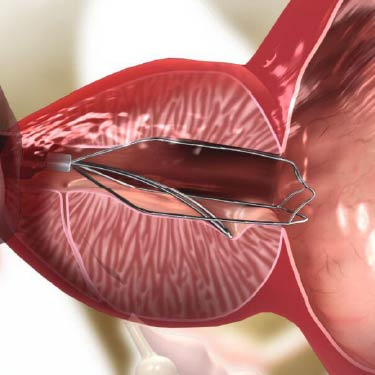
The iTind is a small temporary device made from nitinol, a flexible nickel–titanium alloy with “shape memory.”
It is sometimes called a temporary prostatic stent, although it differs from a traditional stent because it is not intended to remain permanently within the prostate. The device is left in place for only five to seven days and is then removed completely.
While in position, three expanding struts apply controlled pressure to specific areas of the prostate and bladder neck. This remodels the prostatic urethra and creates channels through which urine can flow more easily.
The procedure does not:
- Permanently implant metal within the prostate
- Remove prostate tissue
- Use laser, heat or steam
- Prevent future prostate treatments if symptoms return
Who may benefit from iTind?
iTind may be considered for men who have bothersome urinary symptoms caused by BPH and who:
- Have obtained insufficient benefit from medication
- Have developed side effects from BPH tablets
- Prefer not to take daily medication indefinitely
- Want a less invasive alternative to TURP or laser surgery
- Wish to minimise the risk of ejaculatory or erectile side effects
- Prefer not to have a permanent prostatic implant
- Have prostate size and anatomy suitable for the device
The procedure is generally best suited to men with moderate-to-severe symptoms and a prostate measuring approximately 25–75 mL, without a significantly obstructing median lobe.
These measurements are a guide rather than a guarantee of suitability. The shape of the prostate, severity of obstruction and function of the bladder are as important as prostate size.
Assessment before treatment
Urinary symptoms are not always caused by an enlarged prostate. Similar problems can result from infection, urethral narrowing, bladder weakness, an overactive bladder, neurological disease, medication or, less commonly, cancer.
Assessment may therefore include:
- Medical history and examination
- International Prostate Symptom Score
- Urine testing
- PSA testing when appropriate
- Urinary-flow measurement
- Ultrasound measurement of residual urine
- Prostate ultrasound or other imaging
- Flexible cystoscopy
- Urodynamic testing in selected patients
Any urinary infection should be treated before the procedure.
Patients taking aspirin, warfarin, clopidogrel, apixaban, rivaroxaban or other blood-thinning medication require an individual management plan. Do not stop blood thinners without instructions from your prescribing doctor and urologist.
How is the iTind procedure performed?
Insertion
The folded iTind device is passed through the urethra using a small cystoscope. It is positioned in the prostatic urethra immediately below the bladder neck and then released.
The procedure is usually performed as day surgery. Depending on the patient and treatment setting, local anaesthetic, intravenous sedation or a short general anaesthetic may be used.
A soft retrieval string remains attached to the device and passes out through the urethra. It is usually secured to the penis until the device is removed.
Most patients can return home on the same day without a urinary catheter. Occasionally, temporary catheterisation is necessary if the patient is unable to pass urine.
The treatment period
The device remains inside the prostate for five to seven days. Its struts gradually apply pressure to the prostate and bladder neck, creating three longitudinal channels within the urinary passage.
Patients remain at home during this treatment period.
Removal
The device must be removed after five to seven days. It is collapsed into a soft catheter and withdrawn in one piece, usually during a brief outpatient visit.
Local anaesthetic gel is often sufficient, although additional pain relief or sedation may be offered when appropriate. No metal or permanent implant remains inside the prostate after removal.
What should I expect while the device is in place?
The five-to-seven-day treatment period is generally the most uncomfortable part of the process. Common temporary symptoms include:
- Pelvic or perineal pressure
- Burning or stinging when passing urine
- Urinary urgency and frequency
- Discomfort at the tip of the penis
- Bladder spasms
- Light bleeding in the urine
- Interrupted sleep
- Awareness of the retrieval string
- A temporarily weak or irregular urinary stream
These symptoms are usually mild to moderate and commonly improve soon after the device is removed.
Patients should generally avoid heavy lifting, vigorous exercise, cycling and sexual activity while the device and retrieval string are in place. Follow the particular instructions provided by your urologist.
The retrieval string should not be pulled, cut, repositioned or removed by the patient.
How can pain and discomfort be managed?
Pain varies considerably between patients. Some men experience only mild pressure, while others find urinary urgency, bladder spasm or discomfort from the retrieval string more troublesome.
A pain-management plan may include the following measures.
Paracetamol
Paracetamol is usually the first choice for mild-to-moderate discomfort. Take it according to your doctor’s instructions or the directions on the packet.
Check cold, influenza and combination pain medicines carefully, as these may also contain paracetamol. Do not exceed the recommended daily dose.
Patients with significant liver disease or heavy alcohol consumption should discuss paracetamol use with their doctor.
Anti-inflammatory medication
An anti-inflammatory medicine such as ibuprofen may help reduce pain and inflammation when medically appropriate.
These medications may not be suitable for patients with:
- Kidney impairment
- Stomach ulcers or gastrointestinal bleeding
- Heart failure or certain cardiovascular conditions
- Asthma triggered by anti-inflammatory medication
- Bleeding disorders
- Anticoagulant or antiplatelet treatment
Check with your urologist, general practitioner or pharmacist before taking an anti-inflammatory medication.
Medication for bladder irritation
An alpha blocker may occasionally be continued or prescribed temporarily to help urine flow. A bladder-calming medication may be considered if urgency or bladder spasms are particularly troublesome.
These medicines are not necessary for every patient and have their own potential side effects.
Practical measures
It may also help to:
- Maintain normal hydration without forcing excessive fluids
- Reduce coffee, tea, cola drinks, alcohol and energy drinks
- Avoid constipation
- Wear loose, supportive underwear
- Avoid heavy lifting and strenuous exercise
- Take pain relief early rather than waiting until discomfort becomes severe
Strong opioid medication is not usually required. It may worsen constipation and, in susceptible patients, contribute to difficulty emptying the bladder.
Severe or increasing pain is not considered something that should simply be tolerated. Contact the treating practice if the discomfort is not controlled by the recommended measures.
What happens after removal?
Burning, urinary urgency and light bleeding may continue briefly after the device is removed, but these symptoms should progressively improve.
Some patients notice an improvement in their stream soon after removal. For others, improvement develops more gradually over several weeks as irritation settles and the remodelled urinary channels stabilise.
Many patients return to normal daily activities within a few days. Your urologist will advise when you may resume strenuous exercise and sexual activity.
Follow-up may include:
- Review of urinary symptoms
- Repeat symptom scoring
- A urinary-flow test
- Measurement of residual urine
- Discussion about continuing or stopping BPH medication
Do not stop established prostate medication unless advised to do so.
Side effects and possible complications
Most side effects are temporary and occur while the device is in place. Reported problems include:
- Burning during urination
- Urinary frequency and urgency
- Pelvic discomfort or pain
- Blood in the urine
- Temporary difficulty passing urine
- Urinary tract infection
- Bladder spasm
- Movement or incorrect positioning of the device
- Temporary catheterisation
- Failure to obtain sufficient symptom relief
Published studies report different complication rates, but most events have been mild and self-limiting. Temporary haematuria, dysuria, urgency and pelvic discomfort are the most frequently reported problems.
Acute urinary retention, urinary infection or significant bleeding are less common but important complications.
When should I seek urgent medical attention?
Contact your urologist or attend an emergency department if you:
- Cannot pass urine
- Develop fever, shaking or chills
- Feel generally unwell or confused
- Develop severe or increasing pelvic pain
- Pass large blood clots
- Have heavy or persistent bright-red bleeding
- Cannot keep fluids down
- Notice that the retrieval string or device has moved
- Develop pain that is not controlled by the agreed treatment plan
Does iTind affect erections or ejaculation?
One of the principal attractions of iTind is its favourable sexual side-effect profile.
Clinical studies have reported preservation of erectile and ejaculatory function in most treated patients. This contrasts with tissue-removing prostate procedures, which may carry a significant risk of retrograde or absent ejaculation.
Nevertheless, no treatment can guarantee that sexual or ejaculatory function will remain unchanged in every patient.
How effective is iTind?
Studies have demonstrated average improvements in:
- Urinary symptom scores
- Quality of life
- Peak urinary-flow rate
- The patient’s perception of urinary function
The improvement may be less dramatic than that achieved with a tissue-removing operation such as TURP or laser enucleation. The advantage is that iTind is less invasive, usually requires little recovery time and has a low reported risk of sexual side effects.
It is therefore best viewed as a balance between symptom improvement and treatment invasiveness.
How long does the benefit last?
Although the implant remains in place for only five to seven days, the channels produced within the prostate may remain open for several years.
Prospective studies have demonstrated sustained benefit for more than four years in some appropriately selected patients. This does not mean that iTind is guaranteed to last for four years—or that it will provide lifelong relief.
BPH may continue to progress as a man ages. Some patients will eventually need to restart medication or undergo another procedure. Longer-term evidence for iTind remains more limited than that available for established procedures such as TURP or laser enucleation.
Because nothing is left permanently inside the prostate, iTind does not generally prevent later treatment. Options may include medication, another minimally invasive procedure, TURP, GreenLight laser treatment, HoLEP or another form of prostate surgery.
Who should not undergo iTind?
Contraindications described in the manufacturer’s information include:
- Active urinary tract infection
- Acute prostatitis
- Known prostate cancer
- Known bladder cancer
- An artificial urinary sphincter or another implant within the urethra
- Bladder atonia or a non-contractile bladder
- Neurogenic bladder dysfunction
- Urinary obstruction caused by a urethral stricture or something other than BPH
The procedure may also be unsuitable or less predictable in men with:
- A significantly obstructing median prostatic lobe
- A prostate outside the best-studied size range
- Severe chronic urinary retention
- Very high residual urine volumes
- Recurrent urinary infections
- Bladder stones
- Significant ongoing haematuria
- Advanced bladder weakness
- A need for rapid and substantial removal of obstructing tissue
- Anatomy that prevents safe cystoscopic access
Previous prostate surgery, urethral surgery, nickel sensitivity and blood-thinning medication require individual consideration.
Patients with obstruction causing kidney impairment, repeated retention, recurrent infections, bladder stones or significant bleeding may receive more reliable relief from a definitive tissue-removing procedure.
Advantages of iTind
Potential advantages include:
- Minimally invasive day procedure
- No cutting, laser, steam or thermal energy
- No permanent implant
- Usually no postoperative catheter
- Rapid return to ordinary activities
- Low reported risk of new erectile dysfunction
- Low reported risk of ejaculatory dysfunction
- Does not usually compromise future BPH treatment
Limitations of iTind
Potential limitations include:
- Discomfort during the treatment week
- A retrieval string for five to seven days
- A second procedure to remove the device
- Not suitable for every prostate shape or size
- Less improvement than some tissue-removing procedures
- Possibility of persistent or recurrent symptoms
- Potential need for future medication or surgery
- Less very-long-term evidence than TURP or laser enucleation
Is iTind the right treatment for me?
iTind is not simply a smaller version of TURP. It offers a different compromise: a less invasive procedure with no permanent implant and a favourable sexual side-effect profile, but generally more modest improvement and less long-term evidence than tissue-removing surgery.
The best treatment depends on:
- The severity of your symptoms
- The size and shape of your prostate
- The amount of urinary obstruction
- Bladder strength and residual urine
- Previous treatment
- General health and medication
- The importance of preserving ejaculation
- Your willingness to accept possible future retreatment
A urological assessment is essential to confirm that BPH is responsible for the symptoms and to compare iTind fairly with medication, Rezūm, UroLift, TURP, GreenLight laser, HoLEP and other appropriate treatments.
This information is intended for general education and does not replace individual medical advice. Treatment suitability, availability and costs vary. Always follow the instructions provided by your treating urologist.
References
- Sandhu JS, et al. Management of Lower Urinary Tract Symptoms Attributed to Benign Prostatic Hyperplasia: AUA Guideline Amendment 2023. Journal of Urology. 2024.
- Chughtai B, et al. The iTind Temporarily Implanted Nitinol Device for the Treatment of Lower Urinary Tract Symptoms Secondary to Benign Prostatic Hyperplasia: A Multicentre, Randomised, Controlled Trial. Urology. 2021;153:270–276.
- Kadner G, et al. Second generation of temporary implantable nitinol device in men with lower urinary tract symptoms: two-year results of the MT-02 study. World Journal of Urology. 2020;38:3235–3244.
- Amparore D, et al. Three-year results following treatment with the second-generation temporary implantable nitinol device. Prostate Cancer and Prostatic Diseases. 2021;24:349–357.
- Amparore D, et al. Temporary implantable nitinol device for BPH-related lower urinary tract symptoms: over 48-month results. Minerva Urology and Nephrology. 2023;75:743–751.
- NICE: iTind for lower urinary tract symptoms caused by BPH.
- Olympus: iTind clinical and procedural information.




Leave a Reply
Want to join the discussion?Feel free to contribute!